 Skip to content

How to Get a Custom Dog Brace: The WIMBA Process in 7 Steps
If your dog is limping, favouring one leg, or recovering from surgery, it can be difficult to know what happens between “my vet mentioned a brace” and having a device fitted. This guide explains how to get a custom dog brace through WIMBA, in plain language and from the pet parent’s point of view.
The custom dog brace process is not an online product purchase. It begins with a diagnosis and a defined support goal, then moves through case selection, product-specific measurements, digital design, 3D printing, professional fitting, gradual introduction, and follow-up. Understanding how to get a custom dog brace also helps you recognise which decisions belong to your veterinary team and which daily tasks belong to you.
WIMBA currently provides carpal, tarsal, and stifle orthoses plus an adjustable cervical collar for selected upper-cervical cases. These are external medical devices that support an existing joint or body region. They do not diagnose the cause of lameness, repair every injured structure, or replace surgery when surgery is indicated.4
The short answer for pet parents
If you are wondering how to get a custom dog brace, start with a veterinary assessment—not a device order. WimbaAPP is an ordering platform for veterinary professionals, and the prescribing clinic remains responsible for selecting the pathway, submitting the clinical information, checking the finished device, and setting the wear and rehabilitation plan.9
How to Get a Custom Dog Brace: Your 7-Step Journey
The sequence below is a practical overview rather than a guarantee that every case will follow identical timing. For most pet parents, learning how to get a custom dog brace is also learning where those individual clinical decisions may change the route. Complex diagnostics, wound healing, swelling, clinic availability, incomplete measurements, or a need for specialist review can change the order or length of individual stages.
STEP 1
Notice a change and arrange an examination
Limping, toe-touching, slipping, a lowered wrist or hock, difficulty rising, reduced activity, or a postoperative support need may be the first clue. These signs do not tell you which structure is affected. If you are researching how to get a custom dog brace, avoid choosing the joint or product from appearance alone: paw pain, tendon injury, joint instability, fracture, arthritis, and neurological weakness can look similar at home.
Seek prompt veterinary care for complete inability to bear weight, major trauma, obvious deformity, rapidly increasing swelling, severe pain, an open wound, sudden neurological weakness, or an unexpected postoperative setback. Do not apply an online brace while waiting, because pressure or restriction in the wrong place may obscure the problem or worsen discomfort.
STEP 2
Confirm the diagnosis and mechanical goal
Your veterinarian will examine your dog and may recommend radiographs, ultrasound, advanced imaging, neurological assessment, or referral, depending on the presentation. The goal is not simply to label the leg as “weak.” The team needs to identify the affected structure, direction and severity of instability, skin condition, pain, range of motion, and whether surgery or another treatment should take priority. This examination is the clinical foundation for how to get a custom dog brace safely.
This diagnostic stage determines whether a veterinary brace for dogs has a specific job. For example, a device may be intended to limit excessive carpal extension, control selected tarsal motion, support a suitable CrCL-deficient stifle, or restrict selected C1–C2 movement. Learning how to get a custom dog brace means understanding that the prescription begins with what movement should be allowed, restricted, or guided.
STEP 3
Decide whether WIMBA matches the case
Not every dog who limps needs a WIMBA dog brace. The diagnosis, available surgical options, expected tissue healing, body size, limb shape, skin and sensation, behaviour, activity, and your ability to manage daily application all affect candidacy. A custom device is not automatically appropriate simply because it is personalised.
If your clinic is unsure how to get a custom dog brace through WIMBA, a veterinary professional can submit the history, diagnosis, examination findings, images, and proposed goal for a WIMBA Case Consult. The Clinical Support Team can advise whether a current device and Go or Pro pathway may match the case, but the treating professional retains clinical responsibility.4
Pet parents can also use the WIMBA Provider Map to locate an experienced clinic. If there is no provider nearby, your usual veterinary team can contact WIMBA for guidance rather than transferring care automatically. This is another practical way to learn how to get a custom dog brace without trying to select the device yourself.
STEP 4
Choose the correct Go, Pro, or collar pathway
The original draft treated Go as one seven-measurement method and described WimbaBOX as an alternative to WimbaSCAN. Current workflows are product-specific. Knowing how to get a custom dog brace requires distinguishing the three pathways below.4
Carpus or Tarsus Go
For selected mild and less complex limb cases, the clinic takes two required weight-bearing photographs and the current product-specific manual measurements. No WimbaSCAN is required.5,6 The app’s measurement card—not a generic list—defines the data needed for this custom dog brace process.
Carpus, Tarsus, or Stifle Pro
For more complex, multiplanar, or stifle cases, an appropriately equipped Provider Pro performs WimbaSCAN and submits the requested manual measurements and clinical information.7 WimbaBOX is the equipment kit used to capture the scan; it is not a second measurement method.
Cervical Collar Go
The cervical collar is not individually scan-modelled like a Pro limb orthosis. It is an adjustable, 3D-printed device available in five sizes and selected from three patient measurements. The veterinary professional reviews the suggested size and confirms the order.8
What about sedation? Plaster casting is not part of these WIMBA measurement workflows, and sedation is not a routine requirement for photographs, manual measurements, or WimbaSCAN. However, your veterinarian may recommend sedation for separate diagnostic procedures or safe handling in an individual patient. That distinction matters when planning how to get a custom dog brace: a non-invasive measurement visit does not remove the need for appropriate diagnostics. Never delay necessary imaging because the brace-measurement step itself is usually non-invasive.
STEP 5
The clinic captures and submits the patient data
WimbaAPP is designed for veterinary professionals. For families asking how to get a custom dog brace, this means the ordering platform remains behind the scenes. Your clinic creates or verifies its account, selects the prescribed product, follows the current measurement sequence, and uploads the required photographs, scan data, diagnosis, and supporting clinical information.9 Pet parents do not independently perform a Pro scan or place the clinical order.
Accurate data matter. The team checks the patient and side, measurement units, limb position, visible landmarks, image quality, scan completeness, and consistency with the diagnosis. When learning how to get a custom dog brace, this may look like a brief administrative stage, but incomplete or contradictory information can delay production or affect the intended geometry.
The measurement visit does not replace the examination. It converts the clinical prescription into the dataset needed for the selected WIMBA dog brace. If swelling, wound location, pain, or limb position has changed since the diagnosis, the clinic may pause and reassess before submitting.
STEP 6
WIMBA designs, 3D-prints, and ships the device
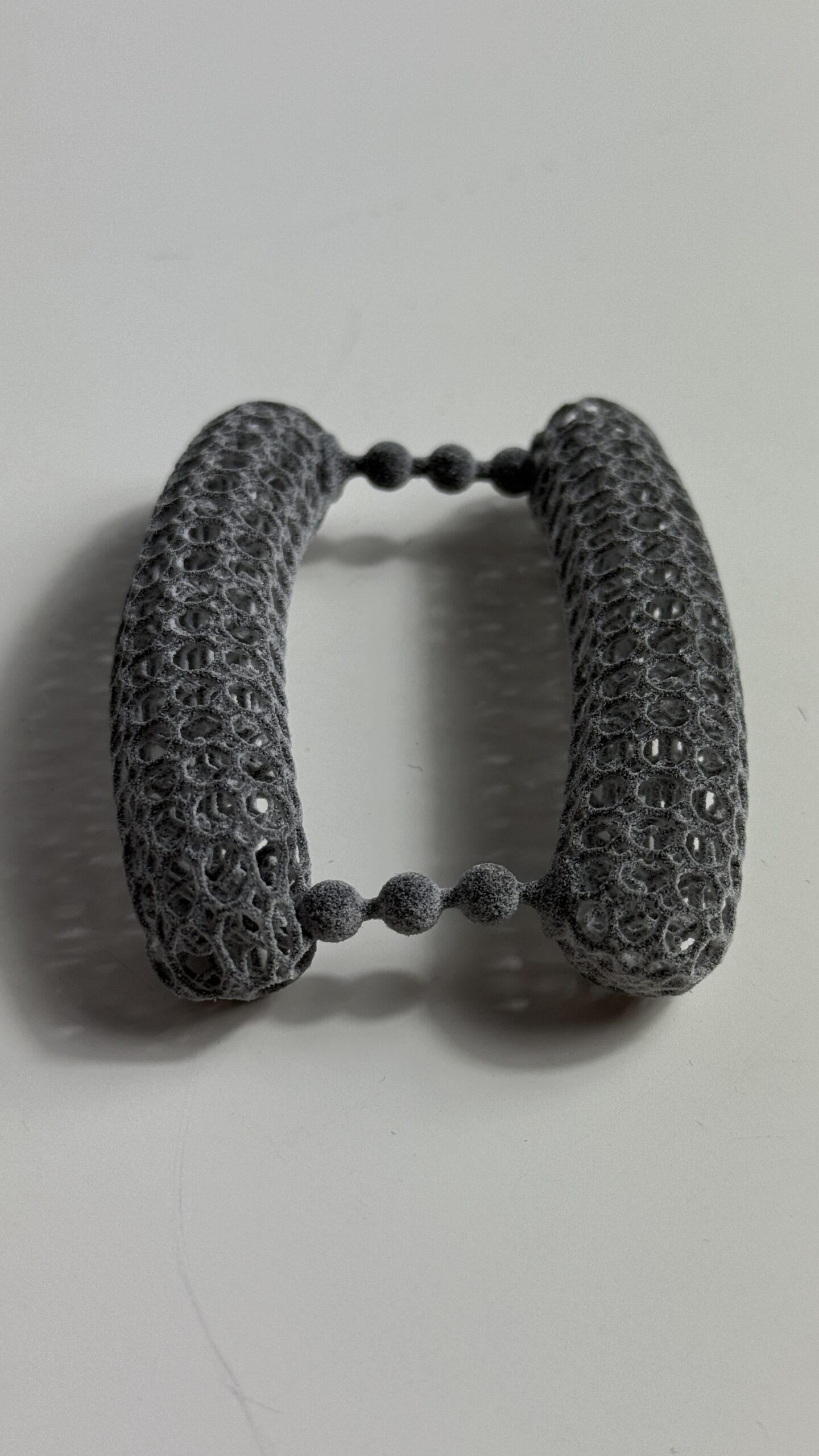
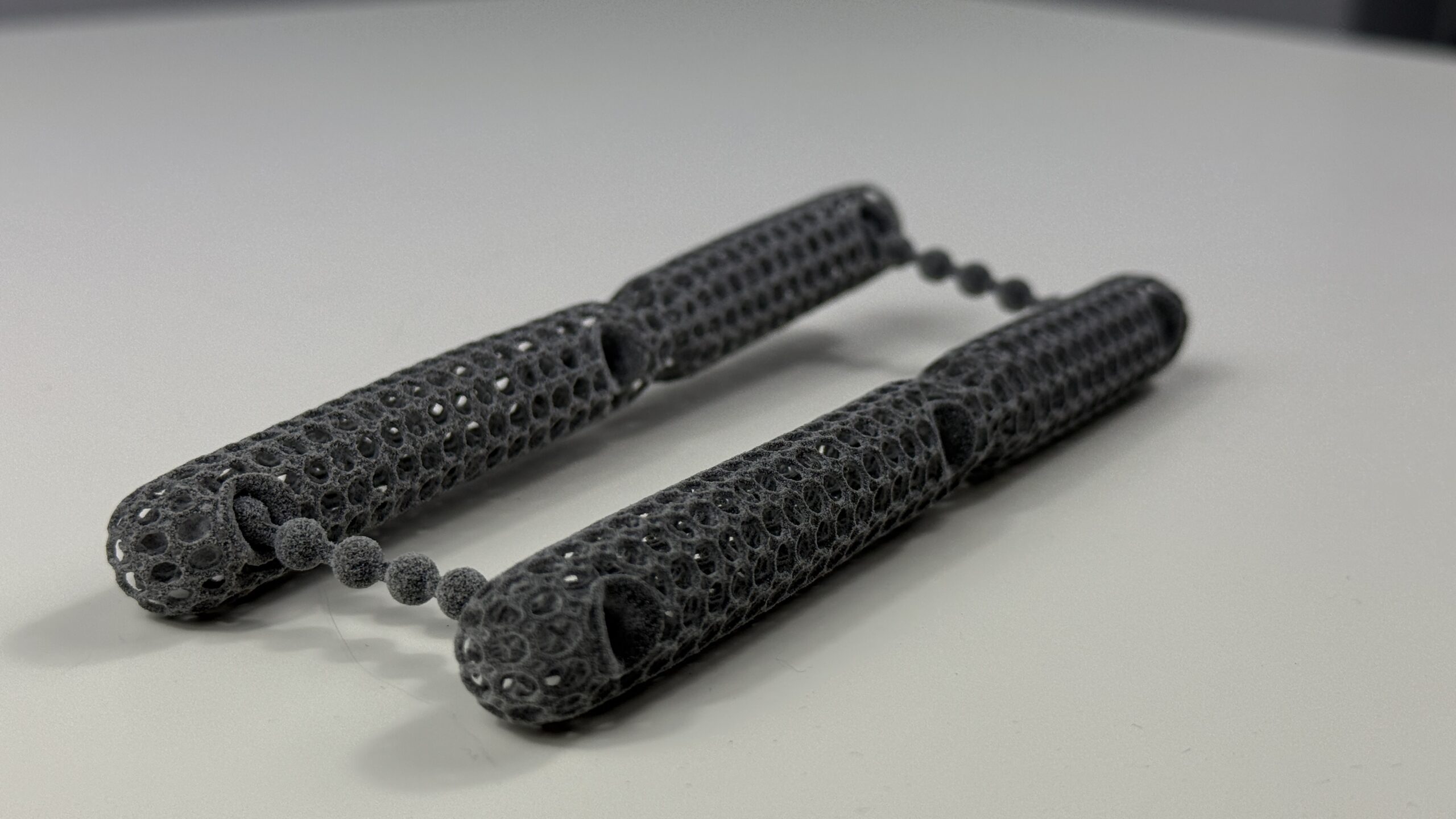
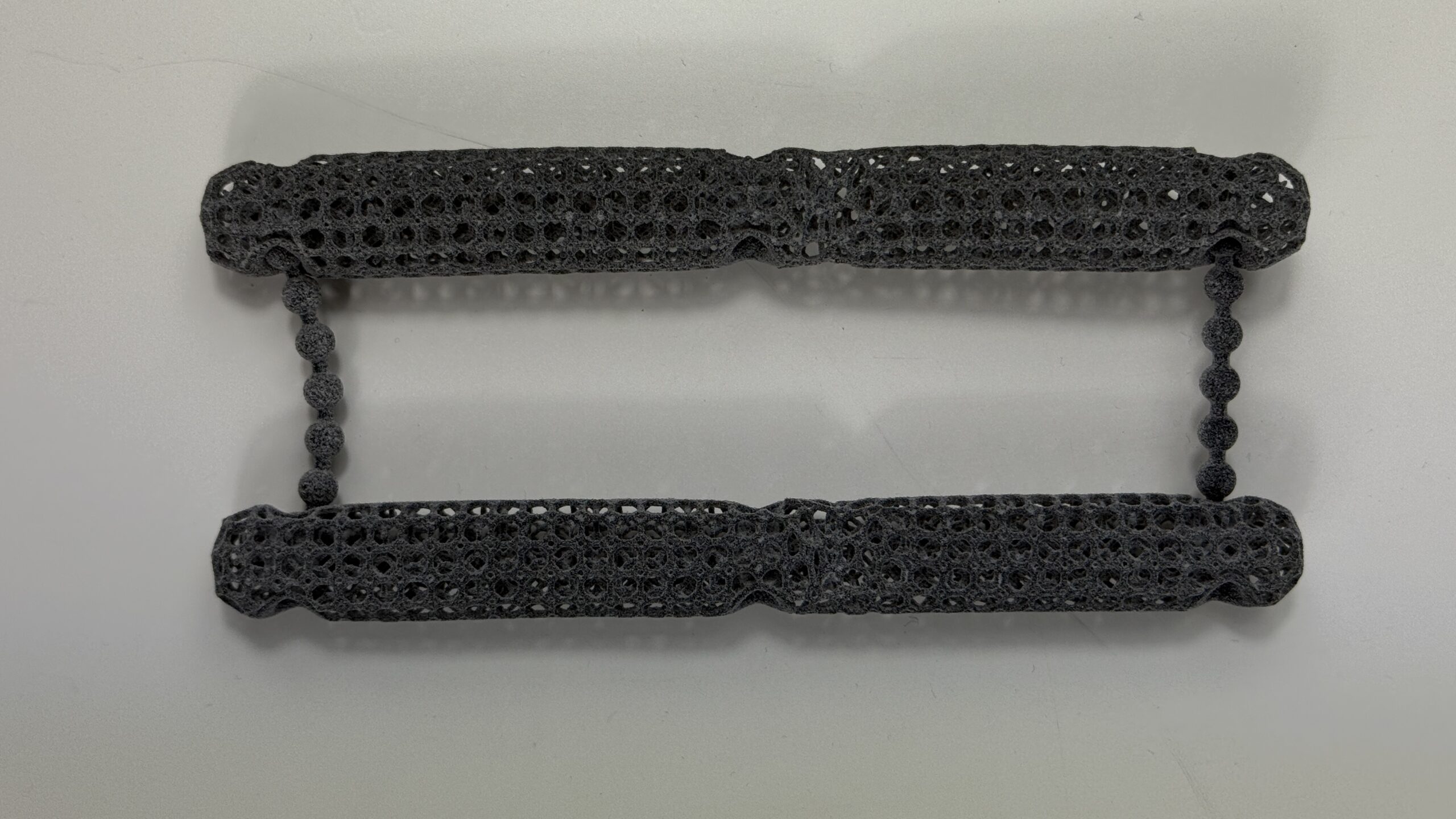
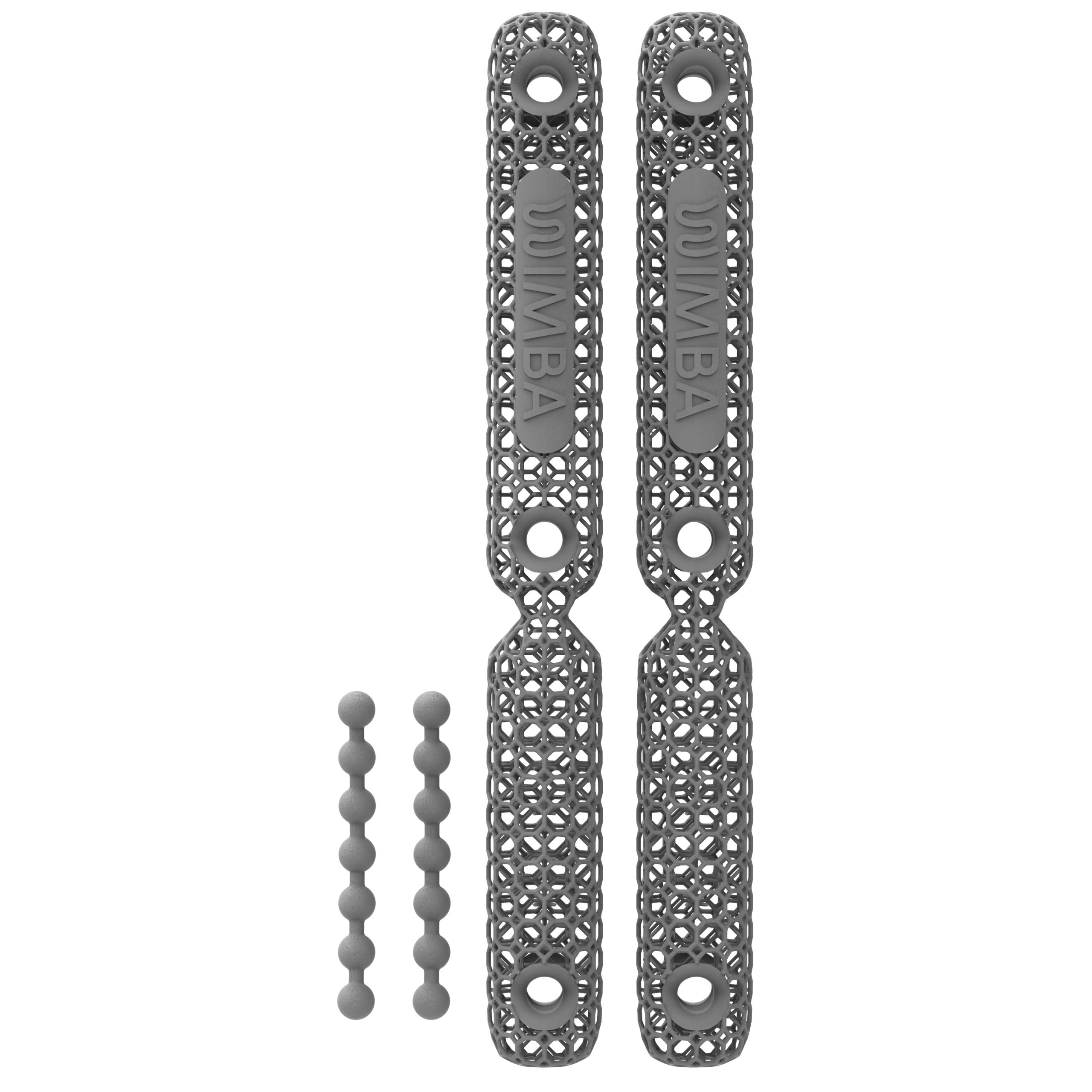
After the required information is accepted, WIMBA translates the photographs and measurements or WimbaSCAN dataset into the prescribed geometry. This is the manufacturing stage in how to get a custom dog brace, not a new clinical assessment. Limb orthoses are produced using HP Multi Jet Fusion. WIMBA’s current material information describes PA11 for the main rigid frame, PA12 for components such as Tokens and hinge caps, and flexible TPU for selected limb-contact inserts.11
These materials and digital manufacturing do not guarantee that the first dog orthosis fitting will be perfect or that healing will be faster. The device still needs to match the prescription, sit correctly on the moving patient, avoid focal pressure, and be tolerated during the intended activity.
How long does it take? Current Carpus Go, Tarsus Go, and Stifle Pro product pages state a production target of about 10 business days after complete data and order processing, followed by shipping to the practice.5,6,7 This is not a guaranteed door-to-fitting date. Clinical review, incomplete data, holidays, region, customs, courier time, and the clinic’s fitting schedule can extend the total custom dog brace process.
STEP 7
Professional fitting, acclimatisation, and follow-up
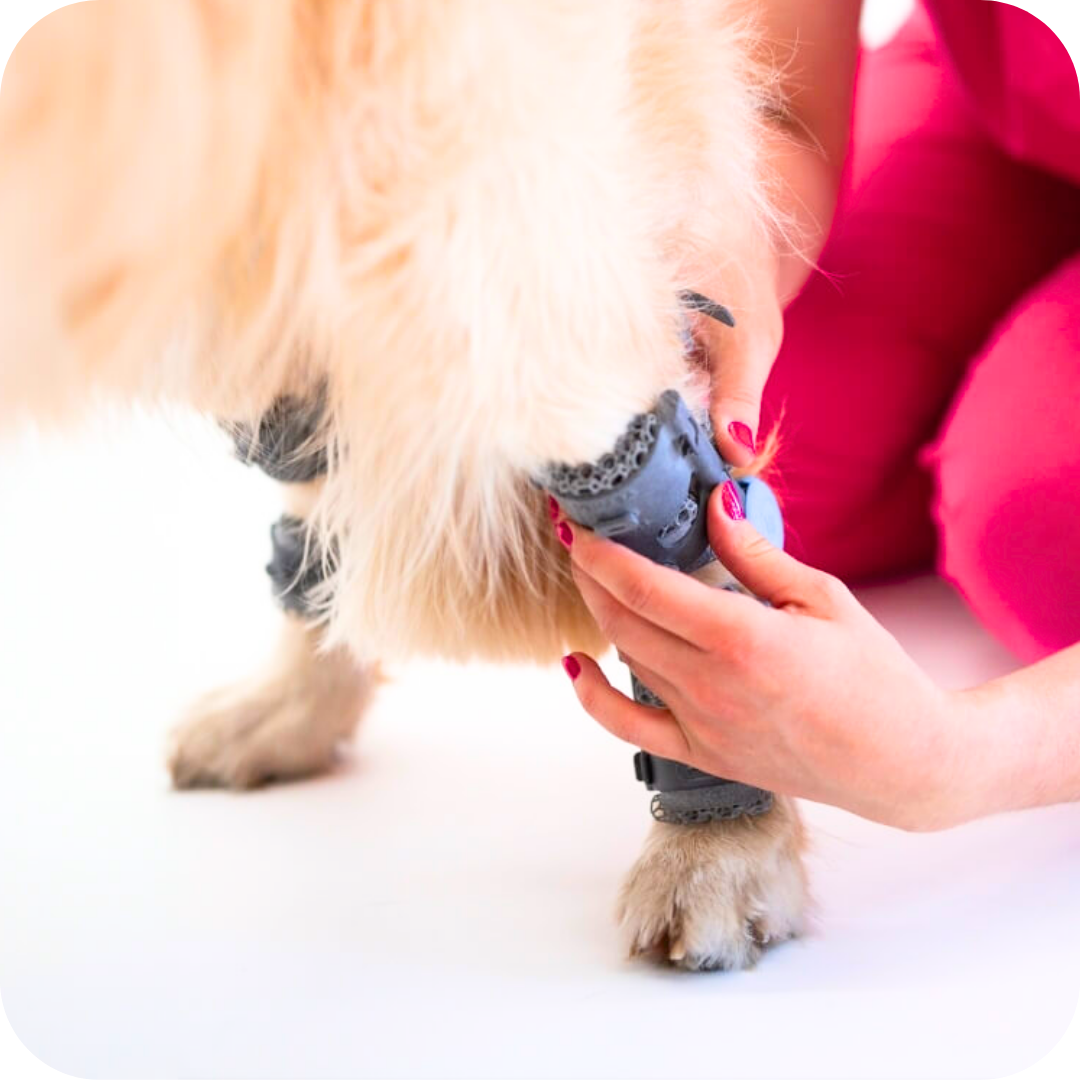
The device is delivered to the clinic for dog orthosis fitting. For pet parents, this is the hands-on part of how to get a custom dog brace. The treating professional checks the correct patient and side, frame position, joint alignment, strap tension, edge clearance, circulation, skin contact, suspension, and whether the device rotates or slips during controlled walking. Delivery is the beginning of supported use, not the end of clinical care.
Current Tarsus Go and Stifle Pro manuals describe an introductory starting point of up to 15 minutes of controlled leash walking, no more than three times daily, followed by increases of about 15 minutes every two days if tolerated.10,13 This is not a universal schedule. Surgery, tissue healing, diagnosis, behaviour, pain, and the selected veterinary brace for dogs may require a different plan. Follow the instructions given for your patient and device.
A WIMBA dog brace is not intended for uninterrupted 24-hour wear, and the dog should not be left unattended while wearing it. Remove it for scheduled skin checks, cleaning, rest, and any activity excluded by the treating team. Do not change Tokens or range-of-motion settings unless the prescribing professional directs you to do so.
Daily care includes checking the skin before and after use, confirming that the device is clean and undamaged, and hand-cleaning it according to the product manual. Current limb-device instructions describe lukewarm water, mild soap, and air-drying. Do not apply heat, machine-wash the device, drill or reshape the frame, or add improvised padding that changes alignment.
Remove the brace and contact the treating team
Stop the session for persistent redness, swelling, a blister or open sore, bleeding, marked pain, sudden refusal to use the limb, worsening gait, repeated rotation or slipping, or a damaged component. Skin should not be “toughened” by continued rubbing. A prompt recheck helps distinguish application error, fit change, activity overload, and a new medical problem.
What the Evidence Means for Expectations
Published canine orthosis research is useful but limited. A retrospective report of ten dogs with unilateral cranial cruciate ligament insufficiency described improved affected-limb weight bearing during custom stifle orthosis management, but it did not include a randomised control group.2 The result cannot be generalised to every diagnosis, brace, or dog.
Monitoring is important because complications occur. In a prospective 12-month study of 43 canine orthosis and prosthesis users, skin problems, mechanical issues, and device non-acceptance were reported, and 39 patients experienced at least one complication.1 Not every event was caused by fit alone, but the findings support gradual introduction, skin checks, clear owner education, and planned reassessment.
Rehabilitation also matters independently of the device. A controlled study of 51 dogs after cranial cruciate ligament repair found better force-platform outcomes at six months in a postoperative rehabilitation group than with exercise restriction alone.3 It did not study WIMBA, but it reinforces why a veterinary brace for dogs belongs within a wider treatment plan rather than replacing one. The evidence therefore shapes how to get a custom dog brace responsibly: define expectations, monitor the patient, and keep rehabilitation in the plan.
How to Get a Custom Dog Brace in Practice: Lola
Case Report
Lola: why first fitting and follow-up both matter
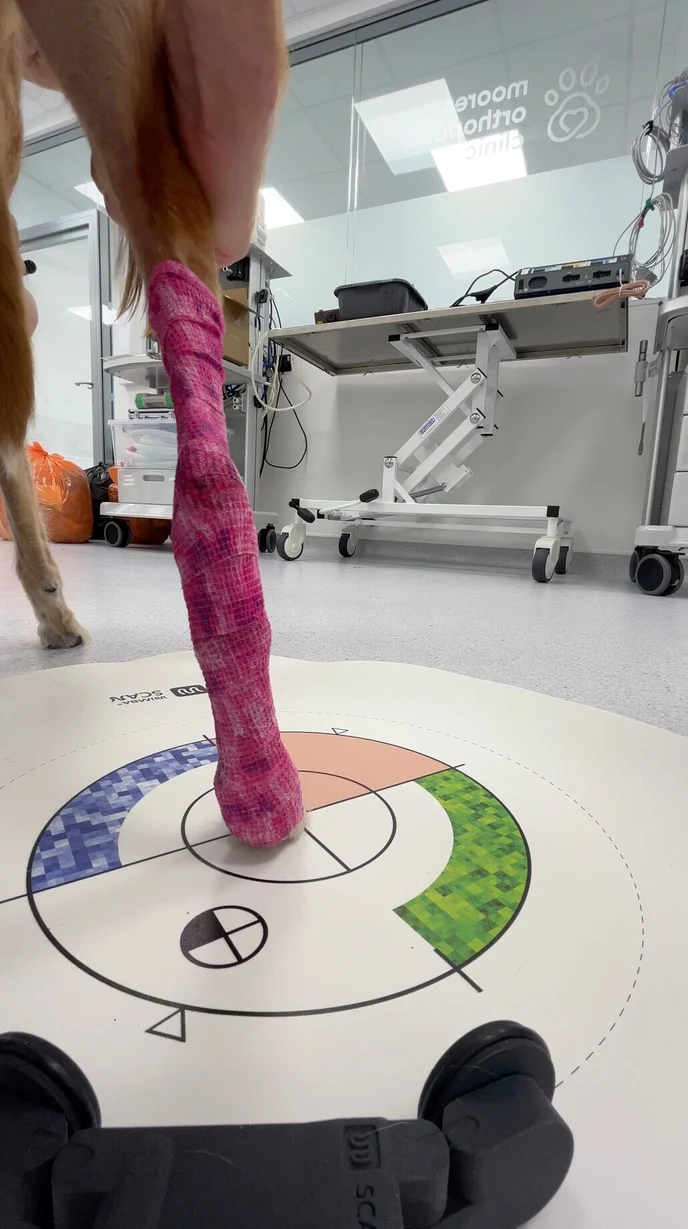
Lola, an 11-year-old Lurcher recovering after Achilles tendon surgery, received Tarsus Orthosis Go two months postoperatively. Swelling caused discomfort at the first fitting, so her team temporarily altered strap use and progressed the configuration as swelling and the wound reduced. Her course shows how to get a custom dog brace with active follow-up.12
Provider: The Moores Orthopaedic Clinic
Solution: WIMBA Tarsus Orthosis GO
What You Can Do While the Device Is Being Made
Planning how to get a custom dog brace also includes the period between measurement and fitting. Use that time to prepare the patient and home rather than testing new activities or waiting passively for delivery.
- Follow the current treatment plan. Do not increase exercise because a brace is coming or delay surgery, wound care, medication, or rehabilitation while waiting.
- Keep activity controlled. Use the lead, surface, ramp, crate, or room restrictions recommended by your veterinary team.
- Protect body condition. Ask for a feeding plan if activity has fallen; excess body weight increases the demand placed on every limb.
- Practise calm handling. Reward your dog for standing quietly while the leg is gently handled, unless touching the area is painful or your clinician advises against it.
- Record a baseline. Short videos on the same non-slip surface can help the team compare gait before and after dog orthosis fitting.
- Confirm the appointment. The device is delivered to the practice, and the clinic needs time for fitting, walking observation, owner teaching, and removal to inspect the skin.
These steps do not shorten manufacturing, but they make the transition safer. They are also a practical part of how to get a custom dog brace without treating delivery day as a sudden return to unrestricted activity.
How to Get a Custom Dog Brace: Questions Before Fitting
- What is my dog’s diagnosis, and which movement should the device control?
- Why is this device appropriate compared with surgery, rehabilitation alone, or another support?
- Is the case eligible for Go, or does it require Pro and WimbaSCAN?
- Which professional should I contact if the brace slips, rotates, or irritates the skin?
- What activities are allowed during the first week and later in recovery?
- When is the first planned recheck, and what signs mean it should happen sooner?
- Who may change Tokens, range-of-motion settings, straps, or other components?
- Which written manual and donning video apply to my exact WIMBA dog brace?
Bring these questions to the clinic rather than trying to solve them from a generic guide. The safest explanation of how to get a custom dog brace is always tied to your dog’s diagnosis, device, and current stage of recovery.
Frequently Asked Questions
How do I order a WIMBA dog brace?
Pet parents do not place the clinical order directly. A veterinary professional examines the patient, confirms the diagnosis and support goal, selects the appropriate Go, Pro, or collar pathway, captures the required data, and orders through WimbaAPP. The finished device is delivered to the practice for professional fitting and owner instruction.
How can I get a custom dog brace if my vet has not used WIMBA?
Your veterinary professional can submit the clinical details for a WIMBA Case Consult and receive pathway guidance. You can also search the WIMBA Provider Map for an experienced clinic. If there is no provider nearby, your usual veterinary team can contact WIMBA; you do not need to diagnose the condition or select the device yourself.
Does my dog need sedation for WIMBA measurements?
Sedation is not a routine requirement for the WIMBA photographs, manual measurements, or WimbaSCAN itself. However, a veterinarian may recommend sedation for separate diagnostic imaging or for safe, low-stress handling in an individual patient. The clinical team—not a general article—should make that decision.
What is the difference between WIMBA Go and WIMBA Pro?
Eligible Carpus Go and Tarsus Go cases use two required photographs and product-specific manual measurements without WimbaSCAN. Pro carpal, tarsal, and stifle devices use WimbaSCAN plus specified manual measurements and clinical data for more complex support. Cervical Collar Go follows a separate three-measurement, five-size selection process.
How long does the custom dog brace process take?
Current Carpus Go, Tarsus Go, and Stifle Pro pages state a production target of about 10 business days after complete patient data and order processing. Shipping, customs, clinical review, corrections to submitted data, and the clinic’s fitting schedule add time. Ask your clinic for the current estimate for your device and region rather than treating 10 days as a guaranteed fitting date.
What should I do if the brace irritates my dog’s skin?
Remove the device and contact the treating team for persistent redness, swelling, abrasion, a blister, open skin, marked pain, repeated slipping, or worsening gait. Do not continue wearing it to toughen the skin or modify the rigid frame yourself. The clinic may need to review application, fit, activity, skin protection, or a change in your dog’s condition.
Start With the Diagnosis, Then Build the Right Pathway
The safest answer to how to get a custom dog brace is a veterinary-led sequence: examination, a defined mechanical goal, the correct Go or Pro pathway, accurate data, professional fitting, gradual acclimatisation, and follow-up. Pet parents can find an experienced provider, while veterinary professionals can submit a case for clinical guidance.
Medical disclaimer: This article is intended for general educational purposes only and is not a substitute for veterinary examination, diagnosis, prescription, postoperative instructions, device-specific user manuals, or an individual rehabilitation plan. Do not order, fit, modify, or progress an orthosis without direction from the treating veterinary or rehabilitation professional. Seek prompt professional care for severe pain, complete non-weight-bearing lameness, major trauma, deformity, rapidly increasing swelling, an open wound, neurological change, device-related skin injury, or an unexpected postoperative setback.
Scientific and Clinical References
- Rosen S, Duerr FM, Elam LH. Prospective evaluation of complications associated with orthosis and prosthesis use in canine patients. Frontiers in Veterinary Science. 2022;9:892662. doi:10.3389/fvets.2022.892662
- Carr BJ, Canapp SO, Meilleur S, Christopher SA, Collins J, Cox C. The use of canine stifle orthotics for cranial cruciate ligament insufficiency. Veterinary Evidence. 2016;1(1). doi:10.18849/ve.v1i1.10
- Marsolais GS, Dvorak G, Conzemius MG. Effects of postoperative rehabilitation on limb function after cranial cruciate ligament repair in dogs. Journal of the American Veterinary Medical Association. 2002;220(9):1325–1330. doi:10.2460/javma.2002.220.1325
- WIMBA. Veterinary Orthotic Devices: A Clinical Guide for Veterinarians. Updated August 7, 2026. Current device, candidacy, fitting, and Go/Pro pathway guide.
- WIMBA. Carpus Orthosis Go. Accessed August 25, 2026. Current measurement and production information.
- WIMBA. Tarsus Orthosis Go. Accessed August 25, 2026. Current measurement and production information.
- WIMBA. Stifle Orthosis Pro. Accessed August 25, 2026. Current WimbaSCAN, ordering, and production information.
- WIMBA. Cervical Collar Go. Accessed August 25, 2026. Current three-measurement and five-size pathway.
- WIMBA. WimbaAPP: Order Pet Orthotics Easily. Accessed August 25, 2026. Professional ordering platform information.
- WIMBA Knowledge Base. Tarsus Orthosis Go User Manual. Accessed August 25, 2026. Wear, fitting, monitoring, and care instructions.
- WIMBA. 3D Printing Materials for Pet Orthotics: Part 2—Ultrasint TPU01 Inserts. Updated February 17, 2026. Current material information.
- WIMBA. Achilles Tendon Injury in Dogs: Case Study Lola. Individual case report.
- WIMBA Knowledge Base. Stifle Orthosis Pro User Manual. Accessed August 25, 2026. Wear, fitting, monitoring, and care instructions.
Related reading: Dog Knee Brace for Ligament Injury: A Clinical Guide · Post-Surgical Dog Brace: 7 Features That Matter During Recovery