 Skip to content

Veterinary orthotic devices can help protect a joint, guide movement, or provide external stability when they are selected for a clearly defined clinical problem. The correct device depends on the anatomical region, direction and severity of instability, skin condition, rehabilitation goals, and the dog’s ability to tolerate an orthosis.
This guide compares the WIMBA carpal, tarsal, stifle, and cervical solutions available to veterinary professionals. It also explains when custom dog braces may be considered, how WIMBA Go differs from WIMBA Pro, and why clinical assessment remains essential before prescribing veterinary orthotic devices.
What Are Veterinary Orthotic Devices?
An orthosis is an externally applied medical device designed to influence the position, motion, or loading of an existing body segment. In canine rehabilitation and orthopaedics, veterinary orthotic devices may be used to support a joint during controlled activity, restrict selected motion, protect vulnerable tissues, or contribute to a broader conservative or postoperative plan.
An orthosis is not a diagnosis and does not treat every cause of lameness. A brace cannot repair an unstable fracture, remove a damaged meniscus, eliminate infection, or replace surgery when surgical treatment is indicated. Its mechanical objective must be linked to examination findings, imaging where required, and a plan for exercise, pain management, and reassessment.
Before selecting an orthosis, define:
- The joint or spinal region requiring support
- The plane and severity of instability
- Whether controlled motion or greater restriction is required
- The intended activity, wear schedule, and rehabilitation goal
- Any skin, wound, neurological, conformational, or behavioural factors that may affect safe use
Veterinary Orthotic Devices by Anatomical Region
WIMBA provides veterinary orthotic devices for the carpal joint, tarsal joint, stifle joint, and selected cervical spine cases. The table below gives a practical overview. It is a starting point rather than a substitute for case-specific assessment.
| Device | Anatomical region | WIMBA pathway | Typical clinical objective |
|---|---|---|---|
| Carpus Orthosis | Front limb, wrist | Go or Pro | Support selected carpal instability and manage range of motion |
| Tarsus Orthosis | Hind limb, hock | Go or Pro | Support selected tarsal instability and protect associated soft tissues |
| Stifle Orthosis | Hind limb, knee | Pro | Provide external support in selected CrCL-deficient or complex stifle cases |
| Cervical Collar | Neck, particularly upper cervical region | Go | Restrict selected cervical motion in suitable small-breed patients |
Carpal Brace for Dogs: Front Limb and Wrist Support
The carpus corresponds functionally to the wrist. A carpal brace for dogs surrounds the distal front limb and can restrict selected flexion, extension, or mediolateral movement depending on the design. These veterinary orthotic devices are considered when the clinical goal is to improve external control of the carpal joint during prescribed activity.
WIMBA Carpus Orthosis Go is intended for selected mild cases, including mild sagittal-plane laxity or hyperextension, carpal osteoarthritis, compensatory overload, and rehabilitation needs. It is ordered using two weight-bearing limb photographs and manual measurements. No WimbaSCAN is required.
When instability is more complex or occurs in more than one plane, a WIMBA Carpus Orthosis Pro may be considered after case review. The Pro pathway uses WimbaSCAN and manual measurements to model the limb. A version with paw support is available when the prescribed design also needs to address the distal limb. The treating professional should not assume that every case of carpal collapse can be managed with a carpal brace for dogs; severe trauma, fractures, marked deformity, or a surgical lesion require appropriate diagnostic and referral decisions.
Carpus Go or Carpus Pro?
- Go: selected mild, predominantly single-plane cases that meet current product indications
- Pro: more complex instability requiring scan-based modelling and control in additional planes
- Pro with Paw Support: selected cases where the clinical plan also requires distal paw support
Explore the WIMBA carpal brace for dogs or submit the case for guidance when the appropriate pathway is uncertain.
Tarsal Brace for Dogs: Hind Limb and Hock Support
The tarsus, commonly called the hock, transfers substantial force during stance and propulsion. A tarsal brace for dogs can be configured to influence tarsal motion and provide external support around the distal hind limb. As with all veterinary orthotic devices, the intended plane of support must match the diagnosed instability.
WIMBA Tarsus Orthosis Go is designed for selected mild cases, including mild sagittal-plane laxity, compensatory overload, tarsal osteoarthritis, and some hyperextension or hyperflexion presentations that fall within current indications. A complete common calcaneal tendon rupture is not automatically a Go indication. The tendon, muscle components, surgical repair status, stance angle, and required range of motion must be evaluated before choosing a tarsal brace for dogs.
WIMBA Tarsus Orthosis Pro is intended for cases requiring scan-based geometry and control across additional planes. A paw-support version is also available for selected distal-limb requirements. Experimental work in six dogs showed that immobilising the tarsal joint did not eliminate strain within the common calcaneal tendon during weight bearing.[4] This is why a tarsal brace for dogs should be integrated with diagnosis, load management, and rehabilitation rather than described as a stand-alone tendon treatment.
Explore the WIMBA tarsal brace for dogs and review the current indications before ordering.
Stifle Brace for Dogs: Knee Support in Selected CrCL Cases
Among veterinary orthotic devices, a stifle brace for dogs is an external hinged orthosis designed to influence motion around the canine knee. WIMBA Stifle Orthosis Pro is a scan-based solution used within veterinarian-led plans for selected stifle instability cases, particularly when cranial cruciate ligament deficiency is being managed non-operatively or when a specialist identifies a suitable protective role.
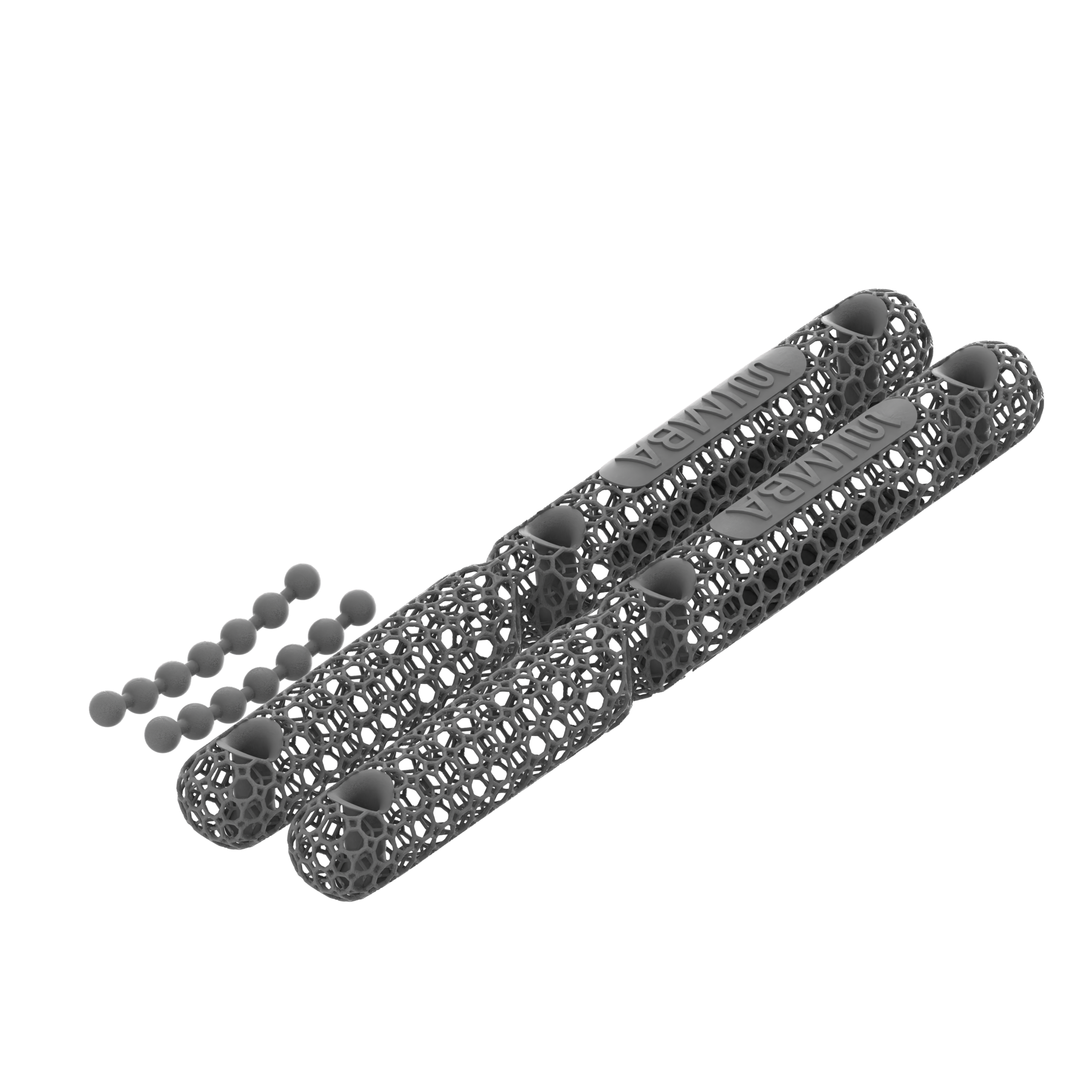
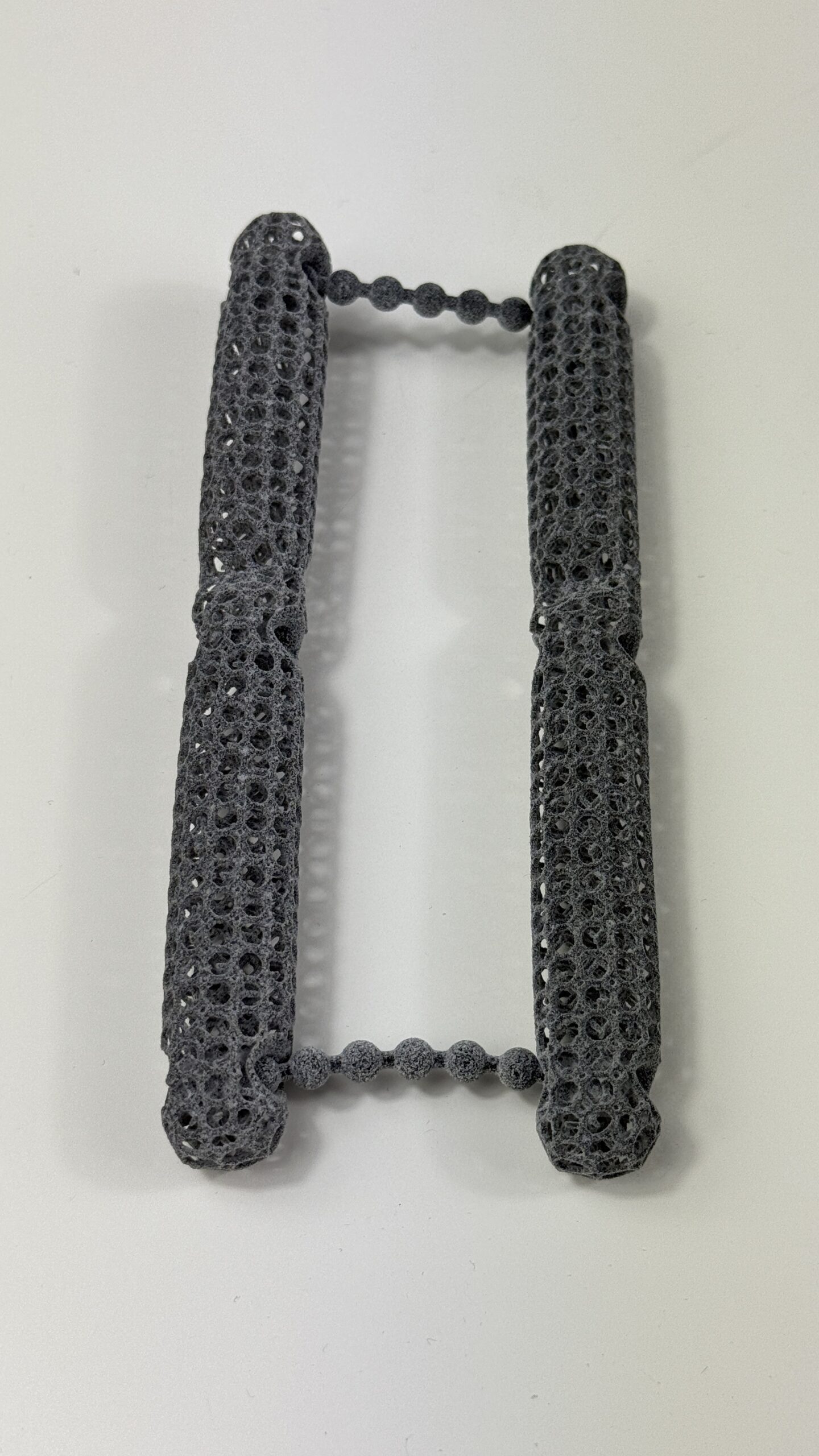
The device uses proximal and distal sections connected by hinges, with replaceable WIMBA Tokens used to prescribe available motion. A stifle brace for dogs does not reproduce the native ligament, guarantee control of cranial tibial translation, or address a meniscal lesion. Surgery remains an important treatment pathway for many dogs with CrCL disease, and orthotic candidacy must be assessed individually.
The evidence for canine stifle orthoses is encouraging but limited. A retrospective study of ten dogs with unilateral CrCL insufficiency reported improved affected-limb weight bearing after custom orthotic management.[1] A separate study in six healthy dogs found that motion restriction from an orthosis was not fully transferred to the underlying stifle and that adjacent-joint movement was also affected.[2] These findings support careful fitting and gait reassessment whenever veterinary orthotic devices cross or influence a major joint.
Explore the WIMBA stifle brace for dogs or request a case consultation before deciding whether the patient is suitable.
Cervical Collar for Selected Neck Conditions
WIMBA Cervical Collar Go differs from limb-based veterinary orthotic devices. It is an adjustable external collar intended for protective care of the cervical spine, particularly the C1-C2 region in the sagittal plane. Current product indications focus on suitable mini-breed dogs and selected conservative or postoperative situations.
A collar must not be prescribed solely because a dog shows neck pain. Neurological examination and diagnostic imaging may be required to identify atlantoaxial instability, disc disease, fracture, inflammatory disease, or another cause. The required degree of restriction, airway safety, swallowing, skin condition, and surgical plan all affect candidacy. Medium and large dogs or cases requiring support outside current indications should be discussed with the relevant specialist.
Review the WIMBA Cervical Collar Go, its available sizes, and the latest patient requirements before ordering.
WIMBA Go vs WIMBA Pro Veterinary Orthotic Devices
The Go and Pro pathways use different data-collection methods and address different levels of complexity. Selecting between them should start with the clinical presentation, not with convenience alone.
WIMBA Go
- Available for carpal and tarsal orthoses and the cervical collar
- Used for selected mild and less complex cases within current indications
- Ordered using manual measurements and required photographs or collar measurements
- Does not require WimbaSCAN
WIMBA Pro
- Available for carpal, tarsal, and stifle orthoses
- Designed for more complex cases and support across additional planes
- Requires WimbaSCAN plus the specified manual measurements
- Includes optional paw-support configurations for selected carpal and tarsal cases
Both pathways produce personalised veterinary orthotic devices through a digital workflow. Go uses a streamlined dataset for eligible cases, while Pro captures three-dimensional limb geometry for more advanced design requirements. Neither pathway removes the need for diagnosis, fitting, owner education, and follow-up.
How Veterinary Orthotic Devices Support Dogs at Different Stages of Recovery
The anatomical breakdown above answers which joint a device supports. A separate, equally important question is which stage of recovery the patient is in, because the clinical objective for the same joint changes considerably between the acute, post-surgical, and long-term phases of a case.
Acute Injury and Pre-Treatment Stabilisation
In the days or weeks immediately after an injury is identified, a veterinary orthotic device may be used to provide temporary external support while the patient is assessed, awaiting surgery, or starting a conservative management plan. The objective at this stage is typically limiting painful or risky motion rather than enabling full activity.
Post-Surgical and Early Rehabilitation
Once a surgeon has defined a postoperative protocol, a device can be used to protect the repair while allowing a controlled, clinician-specified range of motion rather than strict immobilisation. Settings, wearing schedule, and progression should always follow the operating surgeon’s or rehabilitation professional’s plan rather than a generic timeline. Our dedicated guide to dog orthotics for post-surgical recovery covers this stage in more depth.
Long-Term and Chronic Management
Some dogs use an orthotic device for months or for life, including selected cases of chronic instability, degenerative joint disease, neurological conditions, or post-amputation compensation in a remaining limb. At this stage, the clinical focus shifts toward daily comfort, durability, and planned reassessment as the patient’s body condition and activity level change over time. See our guide to dog orthosis for long-term rehabilitation for the assessment and monitoring approach used at this stage.
In practice, many patients move between these stages over time, and the same anatomical device (carpal, tarsal, or stifle) may be reconfigured or refitted as the clinical objective shifts from protection to rehabilitation to long-term support.
Why Custom Dog Braces Require Precise Clinical Planning
Custom dog braces are created from patient-specific photographs and measurements or from a WimbaSCAN dataset, depending on the selected pathway. These veterinary orthotic devices are manufactured using HP Multi Jet Fusion technology and incorporate modular components such as straps, inserts, fasteners, and range-of-motion Tokens according to the product configuration.
Patient-specific geometry can improve anatomical conformity, but “custom” does not automatically mean clinically appropriate. For veterinary orthotic devices to work as intended, the hinge must correspond with the joint region, the frame must avoid focal pressure, and the device must remain stable during gait. Poor case selection or incorrect fitting can still lead to rotation, migration, skin irritation, altered movement, or rejection of the device.
Ready-made sleeves and supports may have a role in selected low-demand situations, but they do not provide the same patient-specific geometry or configurable motion control as custom dog braces. There is not enough comparative veterinary evidence to claim that every custom orthosis will outperform every off-the-shelf product. The relevant question is whether the chosen device can meet the defined biomechanical goal safely.
Patient Selection for Veterinary Orthotic Devices
Successful use of veterinary orthotic devices depends on more than the diagnosis written in the medical record. The clinician must assess the complete patient and determine whether the owner can follow the treatment plan consistently.
- Confirmed clinical problem: The affected structure and direction of instability should be identified through examination and appropriate imaging.
- Suitable anatomy: Limb length, circumference, angulation, joint position, paw involvement, and contralateral-limb function influence device selection.
- Healthy device interface: Active wounds, infection, marked dermatitis, swelling, or fragile skin may make orthotic use unsafe until the problem is addressed.
- Appropriate activity level: Orthoses are intended for the activities specified by the treating professional, not uncontrolled sprinting, jumping, or rough play.
- Patient tolerance: Behaviour, pain, neurological status, and sensitivity to handling affect whether the device can be fitted and used safely.
- Owner adherence: Correct application, skin checks, cleaning, controlled exercise, and scheduled rechecks are essential.
Fitting, Acclimatisation, and Follow-Up
Correct fitting is part of the prescription for veterinary orthotic devices. During the first fitting, the veterinary professional should check joint alignment, frame position, strap tension, edge clearance, limb circulation, and whether the orthosis rotates or slips during controlled walking. The patient should then follow a gradual acclimatisation schedule adapted to its condition and behaviour.
WIMBA veterinary orthotic devices are not designed for continuous 24-hour wear. Dogs should not be left unattended while wearing an orthosis. The device should be removed for scheduled skin inspection, cleaning, and rest as directed by the treating professional. Redness that persists, swelling, abrasions, new pain, altered gait, device damage, or repeated migration requires reassessment.
The wear schedule is not universal. A dog using a carpal brace for dogs during controlled walks may have different requirements from a patient using a stifle brace for dogs within a CrCL rehabilitation plan. Changes in body weight, muscle mass, oedema, coat, activity, or disease status may also alter fit over time.
What the Evidence Says About Veterinary Orthotic Devices
Published research on veterinary orthotic devices remains much smaller than the evidence base for established surgical procedures. The available canine studies differ in device design, diagnosis, rehabilitation protocol, outcome measure, and follow-up, so their findings should not be generalised to every orthosis or patient.
The ten-dog study by Carr and colleagues reported improved weight bearing after custom stifle orthotic management, but it was retrospective and did not include a randomised comparison group.[1] A 2025 report followed only two dogs for 32 days and found improved weight distribution while the knee orthoses were in place; its authors also called for larger studies.[3]
The responsible conclusion is that veterinary orthotic devices may be useful components of carefully selected multimodal plans, while outcomes remain patient- and device-specific. Objective gait assessment, pain evaluation, functional goals, and follow-up should be used whenever possible rather than assuming that wearing a brace alone demonstrates clinical success.
How Veterinary Teams Can Order WIMBA Orthoses
Veterinary professionals can submit patient history, diagnosis, examination findings, photographs, and relevant imaging for a no-cost case consultation. The WIMBA Clinical Team can help identify whether current veterinary orthotic devices match the proposed clinical goal and whether the Go or Pro pathway should be considered.
Once the appropriate category of veterinary orthotic devices is confirmed, the clinic collects the required patient data and places the order through WimbaAPP. WIMBA then prepares the personalised design and manufactures the orthosis using HP Multi Jet Fusion. Final fitting, wear instructions, rehabilitation integration, and clinical follow-up remain with the prescribing veterinary team.
Frequently Asked Questions About Veterinary Orthotic Devices
What veterinary orthotic devices does WIMBA offer?
WIMBA offers veterinary orthotic devices for the carpal, tarsal, and stifle joints, plus an adjustable cervical collar for selected neck conditions. Carpal and tarsal orthoses are available through Go and Pro pathways, the stifle orthosis is a Pro device, and the cervical collar is ordered through Go.
What is the difference between a carpal and tarsal brace?
A carpal brace for dogs supports the wrist region of the front limb. A tarsal brace for dogs supports the hock region of the hind limb. Although the devices may look similar, their geometry, joint alignment, motion settings, and clinical indications are different.
When may a stifle brace for dogs be considered?
A stifle brace for dogs may be considered for a suitable patient with stifle instability, particularly when CrCL deficiency is being managed non-operatively or a specialist identifies a protective role. It does not treat meniscal damage or automatically replace surgical stabilisation.
What is the difference between WIMBA Go and WIMBA Pro?
WIMBA Go uses manual measurements and required photographs or collar measurements for selected mild cases. WIMBA Pro uses WimbaSCAN plus manual measurements for more complex, scan-based orthoses. The patient’s condition and current product indications determine the appropriate pathway.
Are custom dog braces always better than ready-made supports?
Custom dog braces provide patient-specific geometry and can offer configurable joint control, but no brace is automatically suitable because it is custom. Diagnosis, biomechanical goals, fit, patient tolerance, activity, and follow-up determine whether an orthosis is appropriate and effective.
Can a dog wear a WIMBA orthosis all day?
No. WIMBA orthoses are not intended for continuous 24-hour wear, and a dog should not be left unattended while wearing one. The prescribing professional should provide a gradual wear schedule, activity instructions, skin-check routine, and follow-up plan.
Are orthoses and prostheses the same?
Do dogs need different orthotic devices at different stages of recovery?
The anatomical device (carpal, tarsal, or stifle) is usually chosen first, but the configuration, range-of-motion setting, and wearing schedule typically change between the acute, post-surgical, and long-term stages of recovery. A device introduced immediately after injury or surgery is often set for more protection, while a device used for long-term or chronic management is reassessed periodically as the dog’s condition changes.
No. An orthosis supports or influences an existing limb, joint, or body segment. A prosthesis replaces a missing body segment. This guide and the WIMBA pathways described here concern orthoses for existing carpal, tarsal, stifle, and cervical anatomy.
Medical Disclaimer: All information on this website is intended for instruction and information purposes only. The authors are not responsible for any harm or injury that may result. Significant injury risk is possible if you do not seek suitable professional advice about your patient’s specific situation. No guarantees of specific results are expressly made or implied on this website.
Scientific References
- Carr BJ, Canapp SO, Meilleur S, Christopher SA, Collins J, Cox C. The use of canine stifle orthotics for cranial cruciate ligament insufficiency. Veterinary Evidence. 2016;1(1). doi:10.18849/ve.v1i1.10
- Torres BT, Fu Y-C, Sandberg GS, Budsberg SC. Pelvic limb kinematics in the dog with and without a stifle orthosis. Veterinary Surgery. 2017;46(5):642-652. doi:10.1111/vsu.12634
- Muršec A, Pavlović M, Lampe T, Erjavec V. The impact of knee orthoses on lameness and weight distribution in canine after rupture of the cranial cruciate ligament. Animals. 2025;15(4):545. doi:10.3390/ani15040545
- Lister SA, Renberg WC, Roush JK. Efficacy of immobilization of the tarsal joint to alleviate strain on the common calcaneal tendon in dogs. American Journal of Veterinary Research. 2009;70(1):134-140. doi:10.2460/ajvr.70.1.134
Related reading: WimbaAPP for Dog Orthotic Fitting Clinics: The Fastest Way to Start Offering Custom Orthotics · Transforming Veterinary Orthotics & Prosthetics: The WIMBA Story · Breaking the Mold on Pet Orthotics