 Skip to content

Carpal Hyperextension in Dogs: How a Custom Orthosis Restores Stability
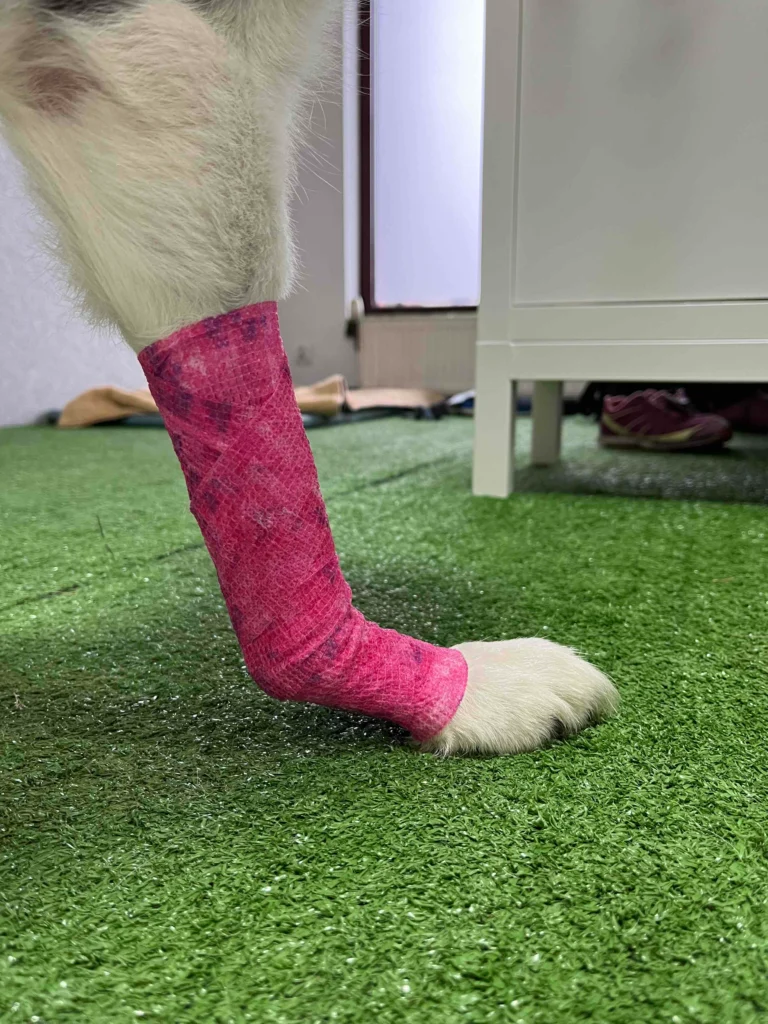
A dog whose front foot suddenly appears to “sink” or flatten at every step — the paw dropping toward the ground instead of holding a normal upright angle — is often showing signs of carpal hyperextension, sometimes called carpal instability or “dropped wrist.” It is one of the more visually striking orthopedic changes an owner can notice, and one that tends to worsen without support. This article focuses on recognizing that change and on why a custom-fitted orthosis behaves differently from an off-the-shelf wrist wrap — illustrated with real cases from WIMBA’s patient files. If your dog’s front leg bends the wrong way or he walks on his wrist, a veterinary examination should find the cause first, and sudden onset, pain, or swelling after an injury calls for prompt assessment. Depending on the diagnosis, support may include activity restriction, rehabilitation, and a custom orthosis. For the fuller clinical picture, including diagnosis, puppies, and when surgery is discussed, see our complete guide to carpal hyperextension treatment.
A Quick Refresher on Carpal Hyperextension
The canine carpus (wrist) relies almost entirely on ligaments rather than muscle for support, which is why it’s mechanically vulnerable to a wide range of causes: congenital laxity in growing puppies, post-surgical or post-traumatic instability, degenerative age-related change, or immune-mediated arthritis. Because these causes differ so much in onset and progression, an accurate diagnosis from a veterinarian is always the necessary starting point before any bracing decision. For the full breakdown of causes, symptoms, and diagnosis, see WIMBA’s complete clinical guide to carpal hyperextension — the rest of this article picks up from there, focusing on what everyday management with a custom orthosis actually looks like.[1][2]
How It Affects Gait and Quality of Life
Even a mild carpal instability changes how a dog loads its front limb. Weight that should be distributed up through the leg is instead pushed into a joint that can’t hold its position, which shortens stride, alters the normal roll of the paw, and increases strain on the shoulder and elbow above it as the dog compensates. Dogs with more advanced or bilateral hyperextension may show visible sinking at both front wrists, reluctance to stand for long periods, skin irritation or pressure sores over the front of the carpus, and a general drop in activity and confidence. Left unmanaged, chronic compensatory loading can contribute to secondary problems elsewhere in the front-limb chain, which is why early, consistent support matters as much as the initial diagnosis.
How a Custom Carpal Orthosis Helps
The management goal for most carpal hyperextension cases is support without full immobilization. A custom Carpal Orthosis is built to hold the joint within a safe, controlled range — resisting the collapse into hyperextension during weight-bearing — while still allowing enough natural flexion and extension for the dog to walk, stand, and move through daily activity. This is a meaningfully different approach from a rigid, fully locked splint, which can protect the joint but also disuses the surrounding muscle and restricts normal gait mechanics if worn long-term.
What the Published Evidence Actually Shows
Published evidence supports a carefully selected and monitored role for bracing, but it is still limited. In a retrospective series of 14 athletic dogs with unilateral carpal ligament instability, carpal bracing combined with rehabilitation improved stability and reduced lameness. A later prospective study included five carpal-hyperextension patients in its carpal-orthosis group and found possible functional improvement, but it had no untreated control group, so the effect of the device could not be isolated from time or concurrent treatment.[3][4]
A brace is not a universal alternative to surgery. In a multicentre cohort of 261 pancarpal arthrodeses, carpal hyperextension was the most common diagnosis; postoperative complications were reported in 34–41% of the two main plate groups, while most dogs assessed at median follow-up had no or mild lameness.[5]
In practice, this kind of targeted support looks different across cases:
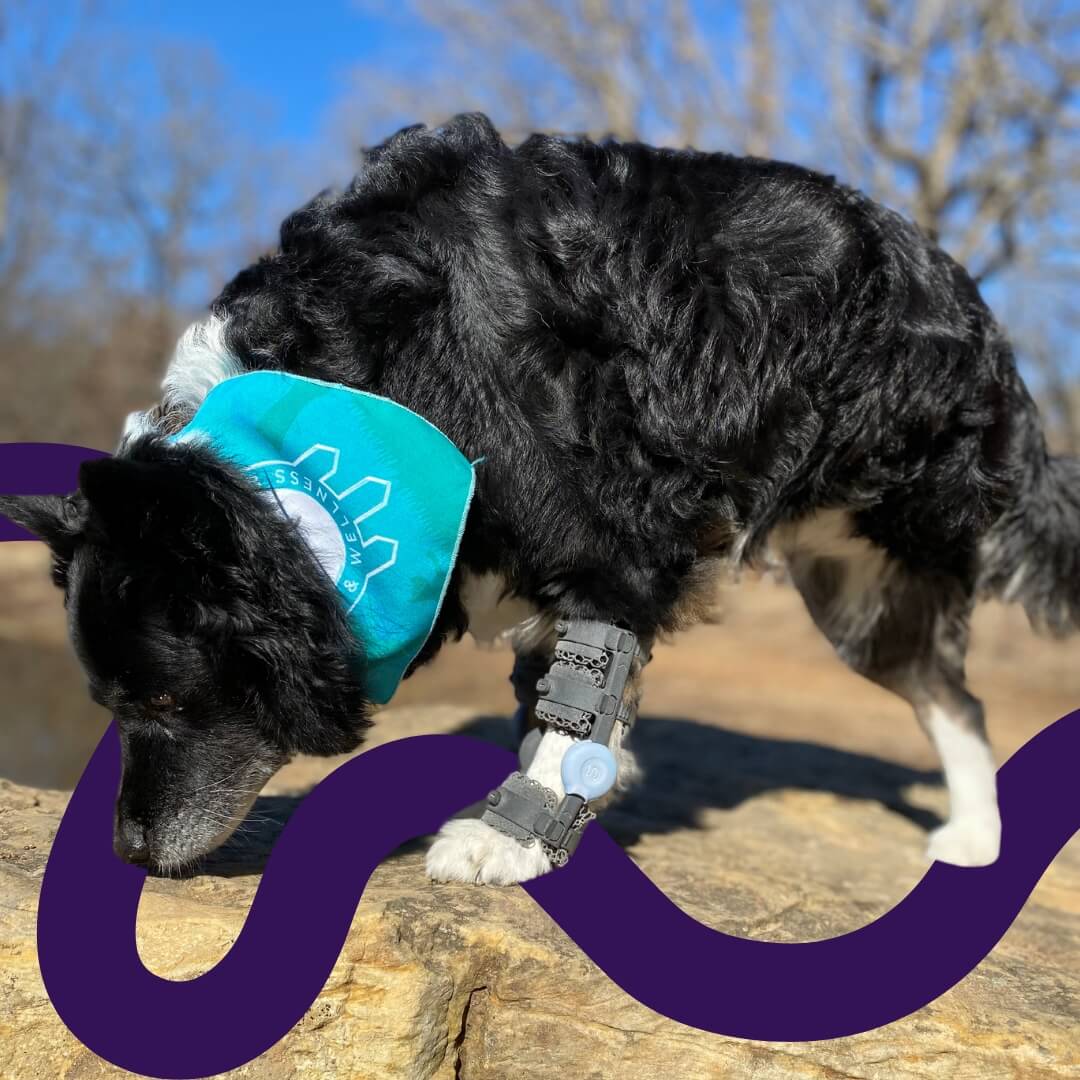
Kalina, an 11-year-old Akita/Border Collie mix managing osteoarthritis, a CCL rupture, and bilateral carpal hyperextension, wears a WIMBA Carpus Orthosis Go. Her care team and owner reported that she resumed activities she had scaled back on, with improved confidence and emotional well-being alongside the physical support.

Amidala, a 9-year-old, 45kg Alaskan Malamute with bilateral carpal hyperextension, wears her orthoses specifically during walks, used together with a supervised weight-loss plan — a reminder that bracing is typically one part of a broader management strategy rather than a stand-alone fix.
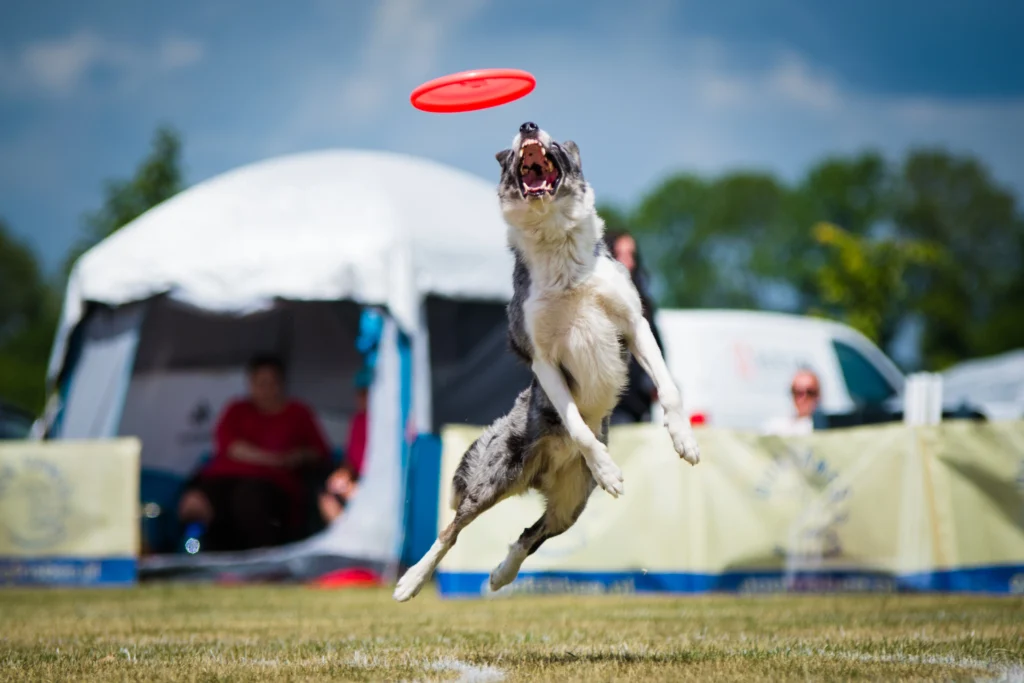
Juri, an 11-year-old Border Collie and former dog-frisbee athlete, uses a WIMBA Carpus Orthosis GO on his remaining right forelimb after left front-limb amputation. The device supports a carpus already affected by degenerative change and a tendency toward hyperextension as it carries the full forelimb load.
More outcomes like these are described on the Patient Stories page, and veterinary teams managing their own carpal hyperextension cases are welcome to submit a patient case for potential inclusion.
Assessment and Fitting Considerations
A carpal orthosis is only as good as the assessment behind it. Before fitting, the prescribing veterinarian typically confirms the underlying cause and severity of the instability, since a puppy with juvenile laxity, a dog recovering from surgery, and an older dog with degenerative change may need different levels of support and different long-term expectations. Limb measurements or a 3D scan are then used to capture the exact contours of the leg, including the paw, carpus, and lower forearm, so the finished device follows the dog’s own anatomy rather than a generic size range. Fit is also reassessed over time: a growing puppy, a dog gaining or losing weight, or a joint that is responding to treatment may all need adjustments or a revised device as circumstances change.
⚠️ Fit and follow-up matter: In the prospective 43-dog study, skin complications were reported in 9 of 10 carpal-orthosis patients during the first three months, and 4 of 10 carpal devices needed mechanical repair. This mixed-device study does not establish a WIMBA-specific complication rate, but it supports gradual introduction, frequent skin checks, and prompt veterinary review if rubbing, redness, device migration, pain, or worsening gait appears.[4]
WIMBA’s Process: From Scan to Custom Device
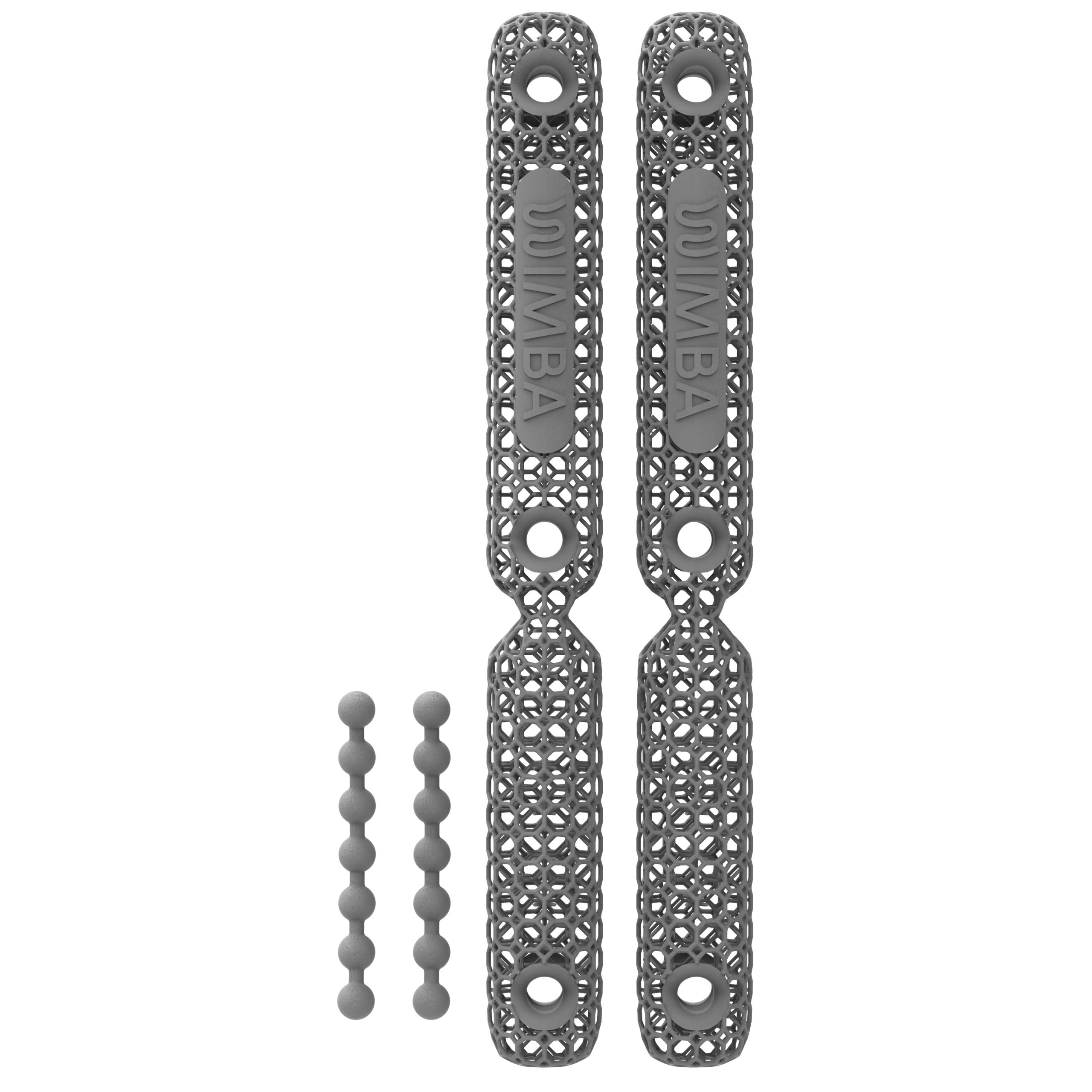
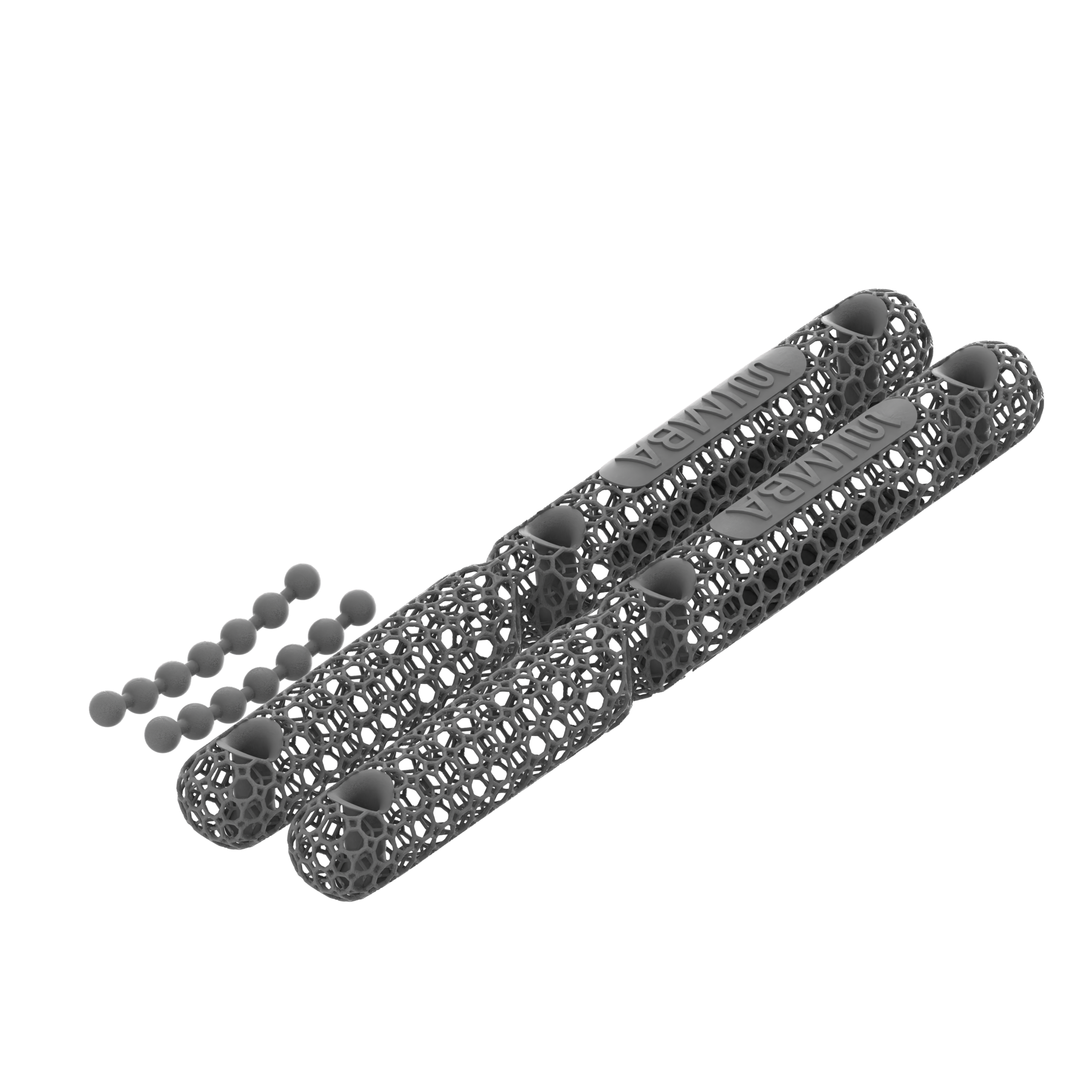
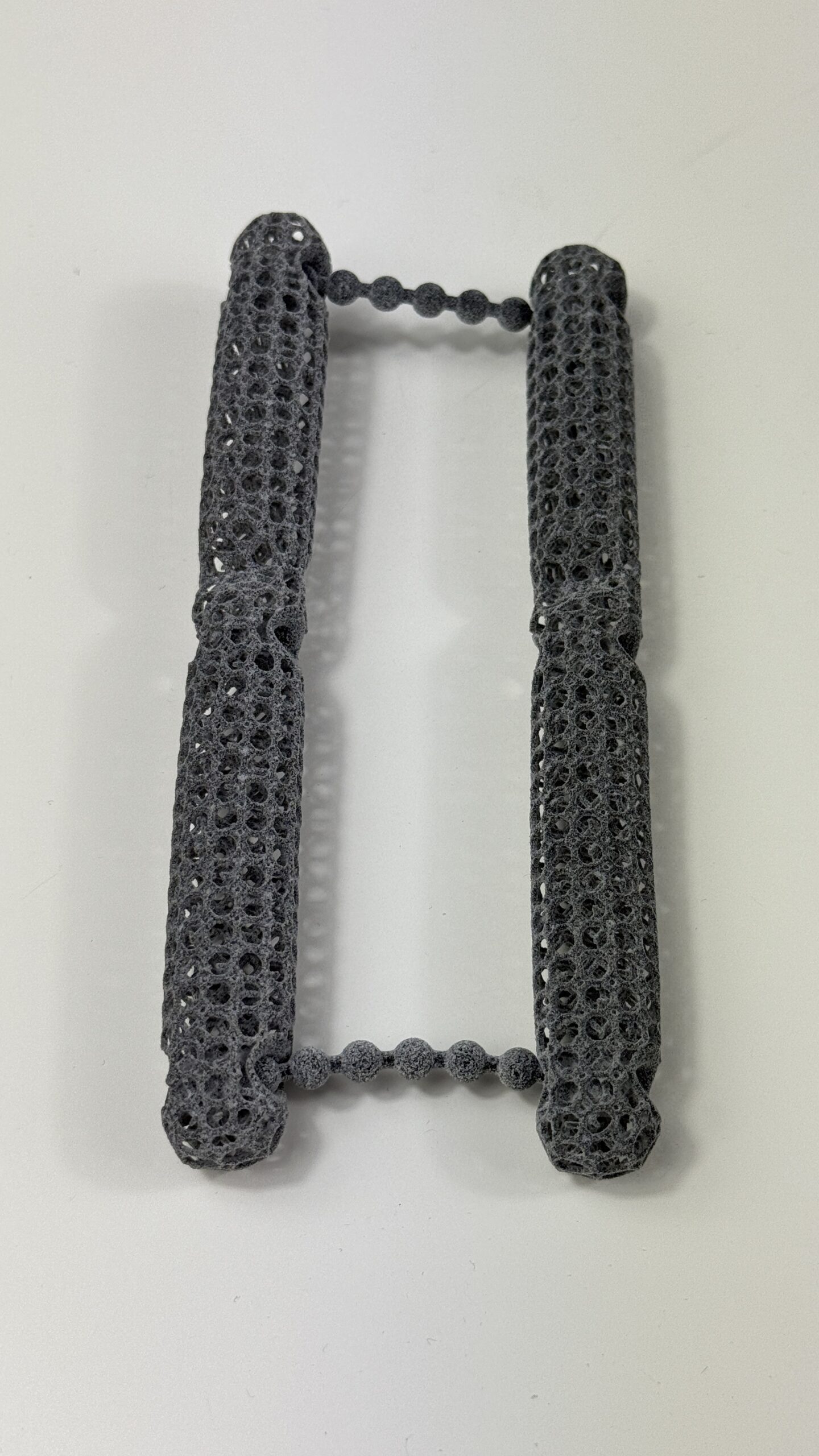
WIMBA builds each Carpal Orthosis around the individual dog rather than a standard mold. The process starts with a 3D scan of the affected limb — taken by the veterinary provider or, where set up for it, using an at-home scanning kit — which captures the precise shape of the carpus and surrounding tissue. That scan data is used to design a device fitted to that dog specifically, accounting for the degree and location of instability identified during assessment. Devices are manufactured using HP Multi Jet Fusion 3D printing, a technology that produces strong, lightweight, and durable parts suited to a brace that needs to hold up to daily wear without adding unnecessary bulk to the limb. The finished orthosis is then fitted and adjusted with the prescribing veterinary team before it goes home with the dog.
Because access to a fitting provider varies by region, dog owners and veterinary teams can use WIMBA’s Find a Provider directory to locate support near them. For a broader look at how orthotic devices fit into rehabilitation planning over months or years, see How to Choose a Veterinary Orthosis for Long-Term Rehabilitation.
Frequently Asked Questions
Is carpal hyperextension painful for dogs?
It can be, particularly in acute or advanced cases, but pain levels vary by cause and severity. Some dogs with mild or chronic laxity show more of a mechanical gait change than overt pain, while dogs with active inflammation, pressure sores, or recent injury are typically more uncomfortable. A veterinary exam is the best way to assess pain and guide treatment.
Can carpal hyperextension be reversed without surgery?
Some cases, especially milder or earlier presentations, can improve meaningfully with conservative management — rest, physiotherapy, and consistent bracing. Juri’s case instead illustrates long-term support of a remaining forelimb after amputation, rather than reversal of the underlying joint disease. More severe or structurally damaged joints may still require surgical stabilization, decided case-by-case with the treating veterinarian.
Will my dog need to wear the brace forever?
Not necessarily. Some dogs wear a carpal orthosis full-time, others only during walks or higher-activity periods, and some transition to reduced use as their condition responds to treatment. This is determined by the prescribing veterinary team based on ongoing reassessment.
Can both front legs be affected at the same time?
Yes. Bilateral carpal hyperextension, affecting both front limbs, is common in cases driven by systemic factors such as degenerative change, immune-mediated arthritis, or breed-related laxity, as seen in Kalina’s and Amidala’s cases above.
How is a custom orthosis different from an over-the-counter wrist wrap?
A custom device is built from a scan of the individual dog’s limb and designed to provide targeted, directional support against hyperextension while preserving functional movement. Generic wraps are not shaped to an individual dog and generally offer more limited, less precise support.
How do I get a WIMBA Carpal Orthosis for my dog?
A carpal orthosis is prescribed and fitted through a veterinary professional. Start by discussing your dog’s gait and carpus with your vet, then use the Find a Provider directory to locate a clinic that works with WIMBA devices.
Talk to Your Veterinary Team
Carpal hyperextension tends to progress when it’s left unaddressed, but with an accurate diagnosis and the right level of support, many dogs — like Kalina, Amidala, and Juri — continue to walk, play, and move through daily life with more stability and confidence. If you suspect your dog is showing signs of a dropped wrist, the first step is a veterinary evaluation. From there, explore the Carpal Orthosis product page, browse more outcomes on Patient Stories, or find a fitting provider through Find a Provider.
This article is for educational purposes only and is not a substitute for veterinary diagnosis or treatment. WIMBA orthotic devices are prescribed and fitted by qualified veterinary professionals as part of an individualized treatment plan. If you are concerned about your dog’s gait, joint stability, or comfort, please consult your veterinarian.
Scientific References
- Çetinkaya MA, Yardimci C, Sağlam M. Carpal laxity syndrome in forty-three puppies. Vet Comp Orthop Traumatol. 2007;20(2):126–130. doi:10.1160/VCOT-06-06-0051
- Whitworth F, Adamantos S, Frowde P, Whitelock R, Black VL. Ligament laxity in nonerosive immune-mediated polyarthritis in dogs: five cases (2009–2017). J Am Anim Hosp Assoc. 2019;55(4):210–214. doi:10.5326/JAAHA-MS-6920
- Tomlinson JE, Manfredi JM. Evaluation of application of a carpal brace as a treatment for carpal ligament instability in dogs: 14 cases (2008–2011). J Am Vet Med Assoc. 2014;244(4):438–443. doi:10.2460/javma.244.4.438
- Rosen S, Duerr FM, Elam LH. Prospective evaluation of complications associated with orthosis and prosthesis use in canine patients. Front Vet Sci. 2022;9:892662. doi:10.3389/fvets.2022.892662
- Bristow PC, Meeson RL, Thorne RM, et al. Clinical comparison of the hybrid dynamic compression plate and the castless plate for pancarpal arthrodesis in 219 dogs. Vet Surg. 2015;44(1):70–77. doi:10.1111/j.1532-950X.2014.12183.x
Related reading: When Do Vets Recommend a Carpal Orthotic for Dogs? · Do Dogs Have Wrists? A Guide to Dog Wrist Anatomy