 Skip to content

Understanding Cat Orthotics for Mobility Problems
When people think about custom orthotic bracing for pets, dogs usually come to mind first. Canine orthotics have a longer track record, a larger body of clinical case experience, and a broader range of published outcomes. Cats, however, can face many of the same joint, soft tissue, and neurological challenges that make dogs candidates for bracing — and in some cases, a custom-fitted orthotic can offer meaningful support for a cat’s mobility, comfort, and daily function. This article introduces the basics of cat orthotics: when they may be appropriate, how a cat’s anatomy and behavior change the approach, and how WIMBA adapts its custom device process for feline patients.
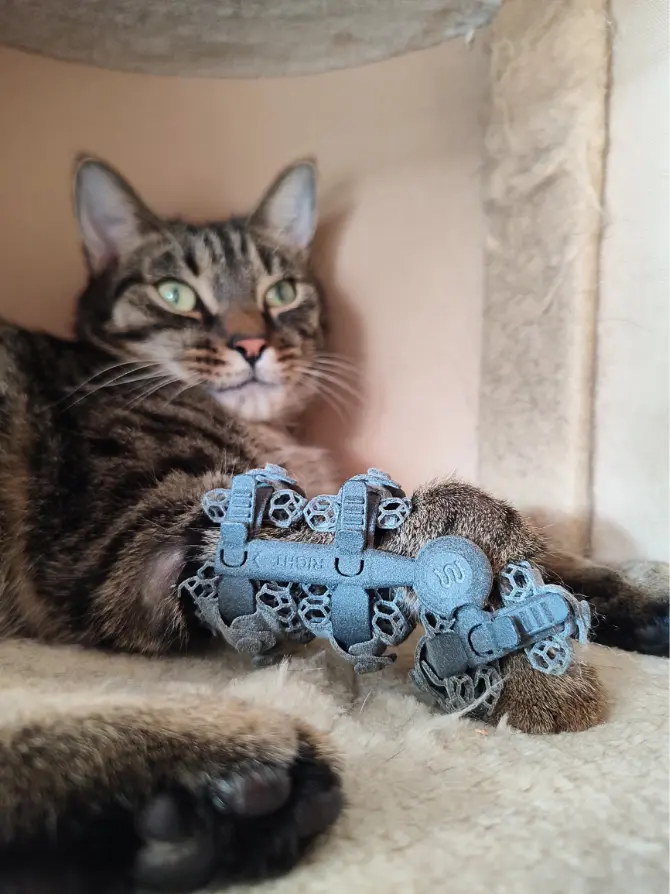
WIMBA makes custom orthoses for cats as well as dogs, including the WIMBA carpal orthosis, designed to the individual limb from photos and measurements. Whether an orthosis is appropriate for a particular cat is a decision for the treating veterinarian. Orthotic options for cats with limb mobility problems are currently limited to selected cases, such as mild carpal or tarsal instability, and sit alongside veterinary assessment, rehabilitation, and pain management.
It’s worth being upfront about where the evidence stands. Cat orthotics are a newer and less commonly discussed application than orthotic bracing in dogs, and the published veterinary literature on feline bracing specifically is thinner than what exists for canine orthotics. Much of what guides feline case selection today comes from extrapolating principles established in dogs, combined with individual clinical judgment and case-by-case monitoring by the treating veterinarian. That doesn’t mean feline orthotics aren’t worth considering — it means expectations should be grounded, and any decision should be made in partnership with a veterinary professional who can assess the specific cat.[1][2]
Why Cat Orthotics Are Different From Dog Orthotics
Cats are not simply small dogs, and that matters for how cat orthotics are designed and fitted in several practical ways.
Anatomy and biomechanics. Feline limbs are proportioned differently than canine limbs, with a lighter skeletal frame, different soft tissue distribution, and a gait pattern built around a more flexible spine and a strong reliance on jumping and climbing rather than sustained walking or running. A device that works well on a dog’s limb geometry can’t simply be scaled down for a cat — it needs to be designed around feline joint angles and limb contours from the start.[2]
Size and precision fitting. Cats are smaller than most dogs, and even modest imprecision in a brace’s fit can affect comfort or function disproportionately. Custom fabrication — built from patient-specific limb data rather than a generic sizing chart — is especially important at this scale.
Temperament and compliance. Cats generally tolerate handling, restraint, and novel objects on their bodies differently than dogs do. Acclimating a cat to wearing a brace, and keeping it in place through normal feline activity (including jumping and grooming), often requires a different approach to introduction, wear scheduling, and owner coaching than a comparable canine case.
Smaller evidence base. Because orthotic devices have historically been used far more often in dogs, there are fewer published case series or outcome studies specific to cats. The evidence base for cat orthotics is still emerging rather than established and heavily documented.[1][2]
What the Published Evidence Actually Shows
Evidence specific to cat orthotics supports caution rather than a standardized bracing protocol. A 2019 clinical review rated the evidence for managing feline carpal injuries as grade III or IV and noted that much of the guidance came from retrospective case series, cadaveric work, or direct extrapolation from dogs.[2]
A 2026 six-center series described 12 cats with idiopathic carpal hyperextension, including frequent bilateral involvement and variable response to treatment. It evaluated rest, analgesia, and pancarpal arthrodesis rather than custom orthoses, so it informs diagnosis and natural history but does not establish the effectiveness of feline bracing.[3]
Common Conditions That May Benefit From Feline Orthotic Support
A treating veterinarian or veterinary rehabilitation specialist is best positioned to determine whether cat orthotics are appropriate for a particular patient, but several categories of conditions are the ones most commonly discussed in this context:
Carpal hyperextension. This is a condition in which the carpus (the joint roughly equivalent to a wrist) loses its normal support and drops toward or below a flat position, often due to tendon or ligament laxity. It can occur from injury, age-related tissue changes, or underlying conditions affecting connective tissue support. A carpal orthosis is intended to hold the joint in a more functional position and provide external support where the cat’s own soft tissues are no longer doing so adequately.[3]
Post-surgical limb support. Following certain orthopedic procedures, a veterinarian may want to protect a repaired limb, limit specific ranges of motion during healing, or provide added stability while tissues recover. An orthotic can be one part of a broader post-operative management plan alongside rest, medication, and rehabilitation exercises as directed by the surgical team.[1]
Neurological or gait-related mobility conditions. Cats with certain neurological conditions affecting limb control or proprioception may knuckle, drag, or place a paw incorrectly during movement. In select cases, an orthotic device can help support correct paw and joint positioning as part of a broader management plan.[1]
Not every cat with one of these conditions is automatically a good candidate for cat orthotics — that determination depends on the individual animal’s diagnosis, severity, temperament, and overall treatment goals, which is why veterinary assessment always comes first.
How WIMBA Adapts Its Process for Feline Patients
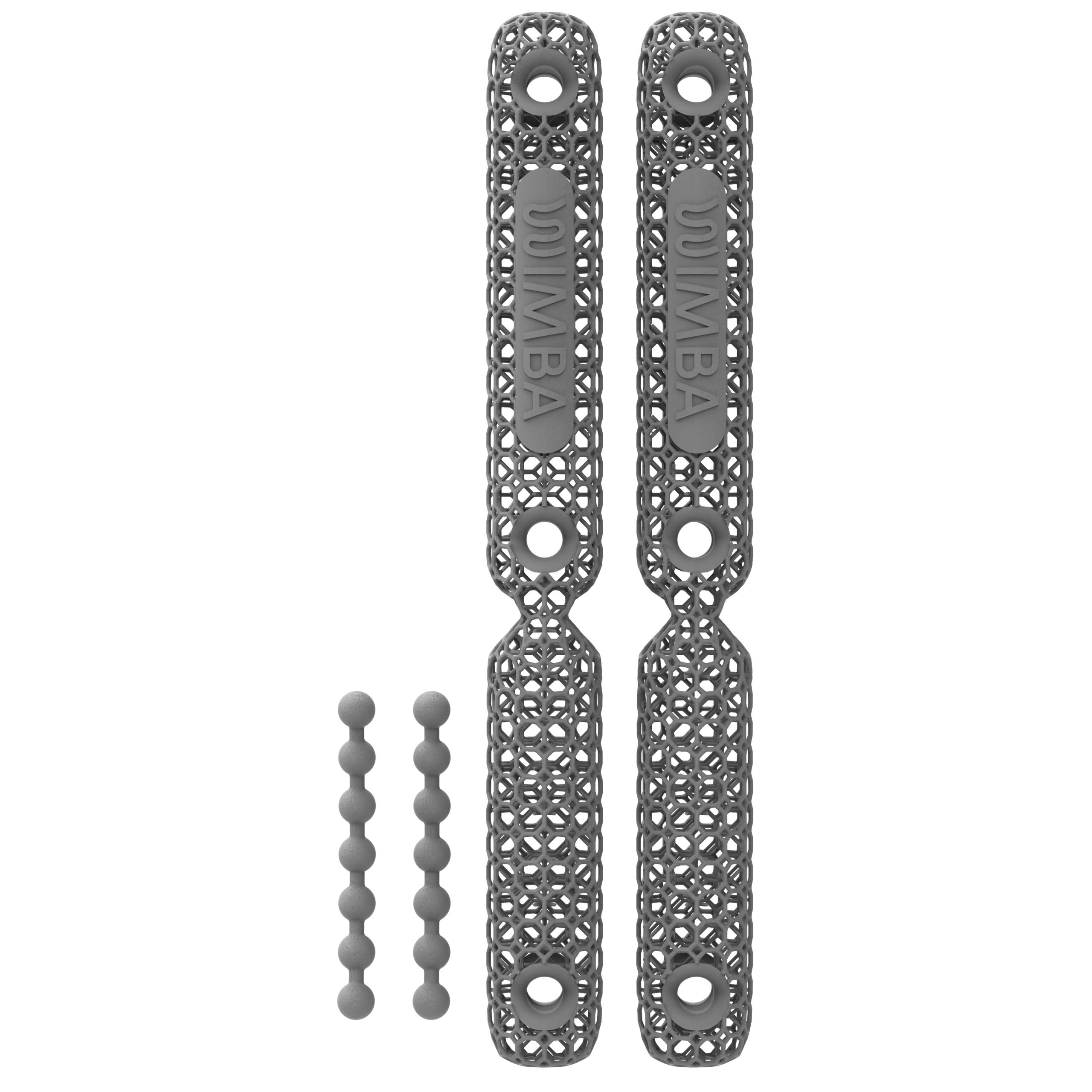
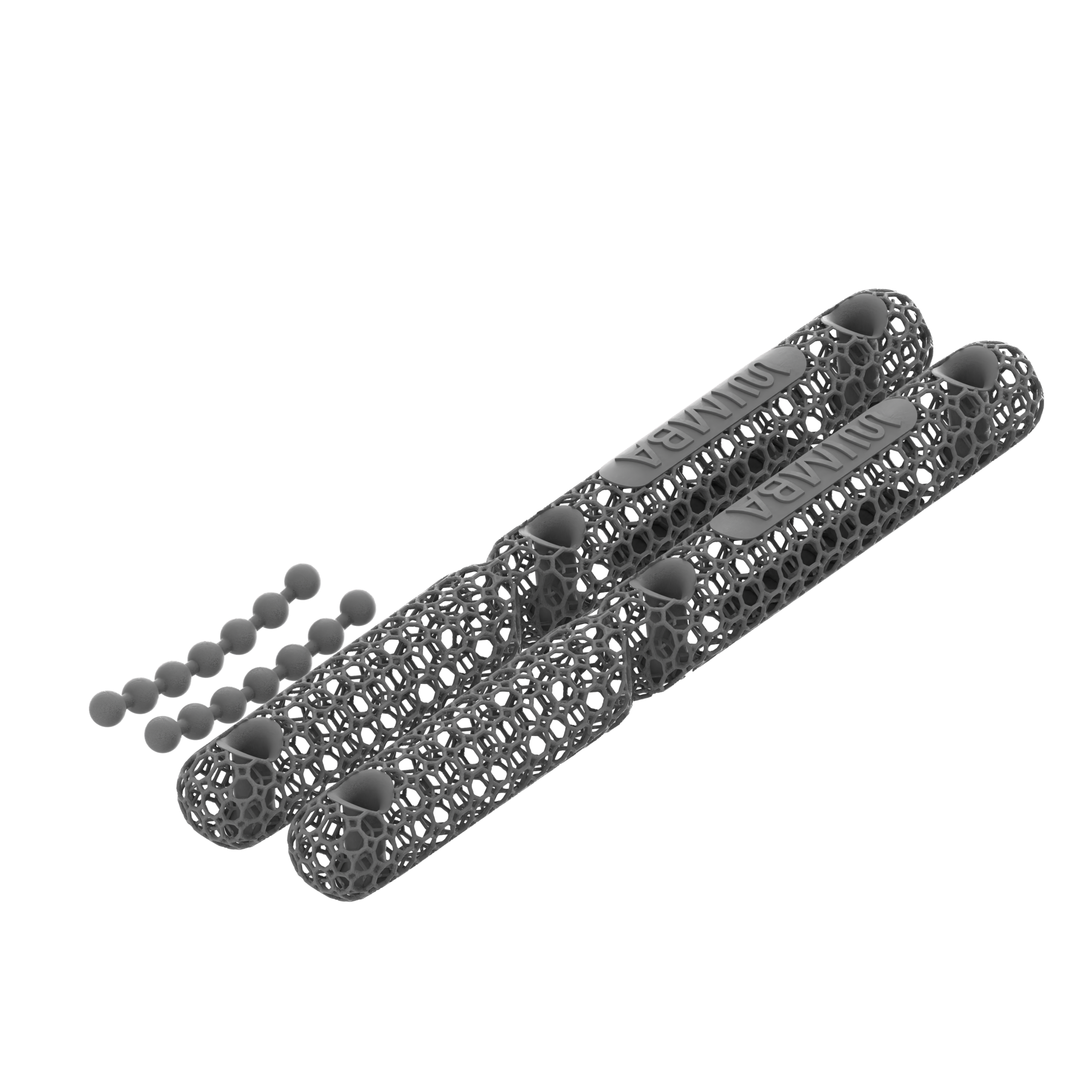
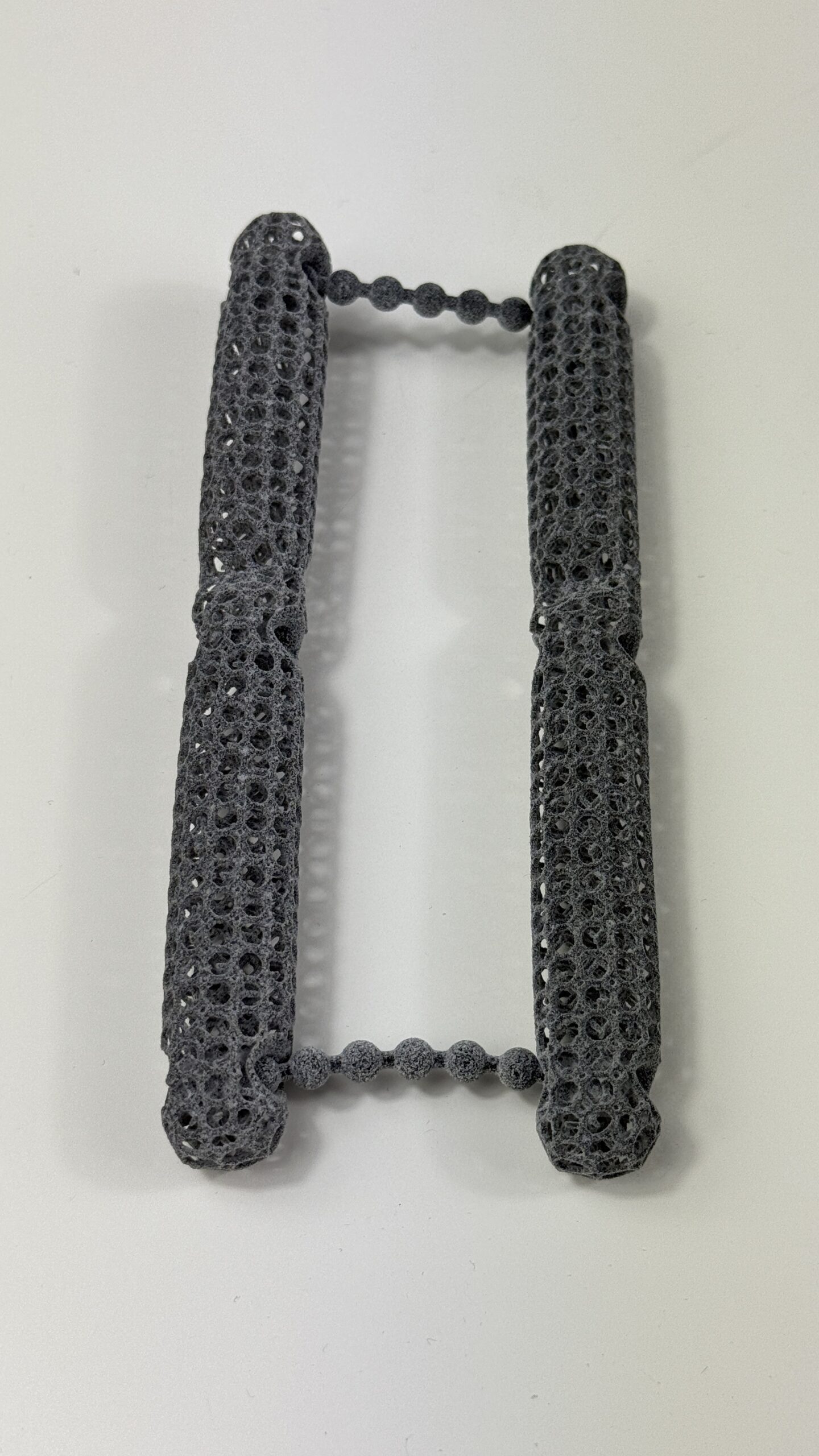
WIMBA’s device line includes options offered for both dogs and cats, including the Carpal Orthosis, which is built as a custom device rather than a one-size-fits-all product. For cat orthotics, the same core process applies, with attention to the differences described above:
- Photos and manual measurements capture the individual limb. For WIMBA Carpus Orthosis Go, the treating veterinary provider takes two required limb photos and manual measurements, then uploads the case through WimbaAPP. This pathway does not require WimbaSCAN.
- Custom design around feline anatomy. That patient-specific data is used to design a device shaped to the cat’s limb contours and joint position, rather than adapting a generic size.
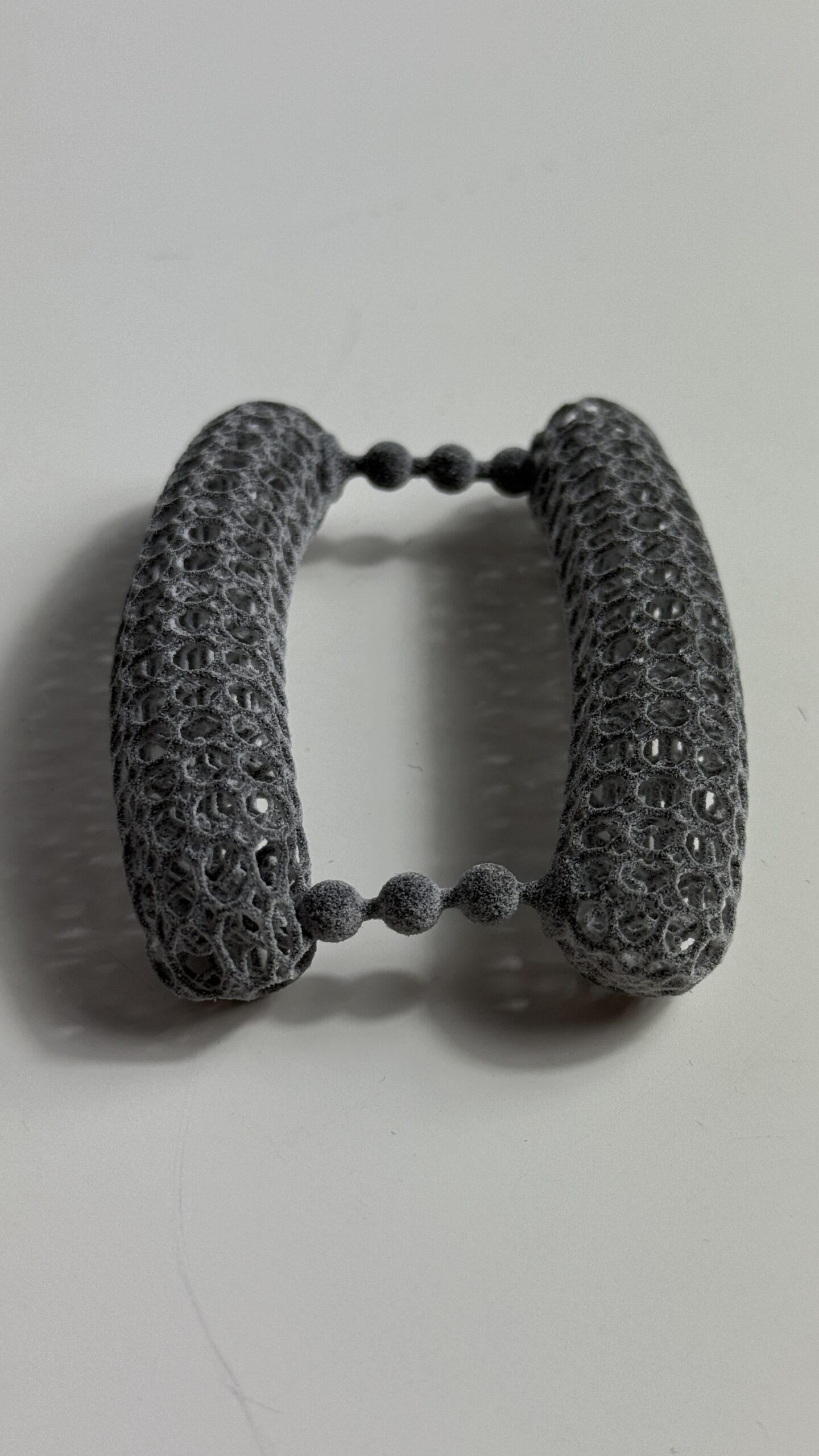
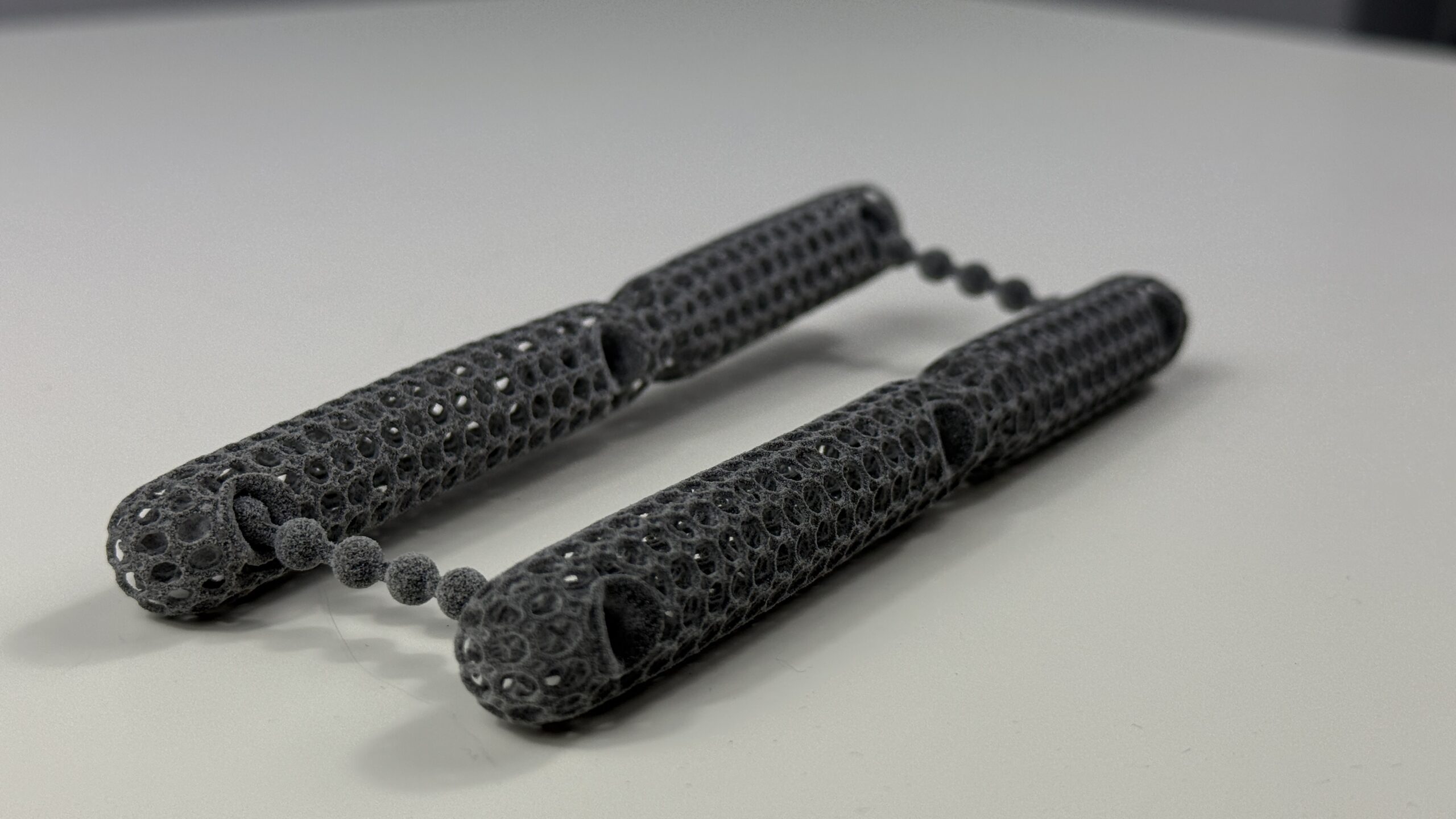
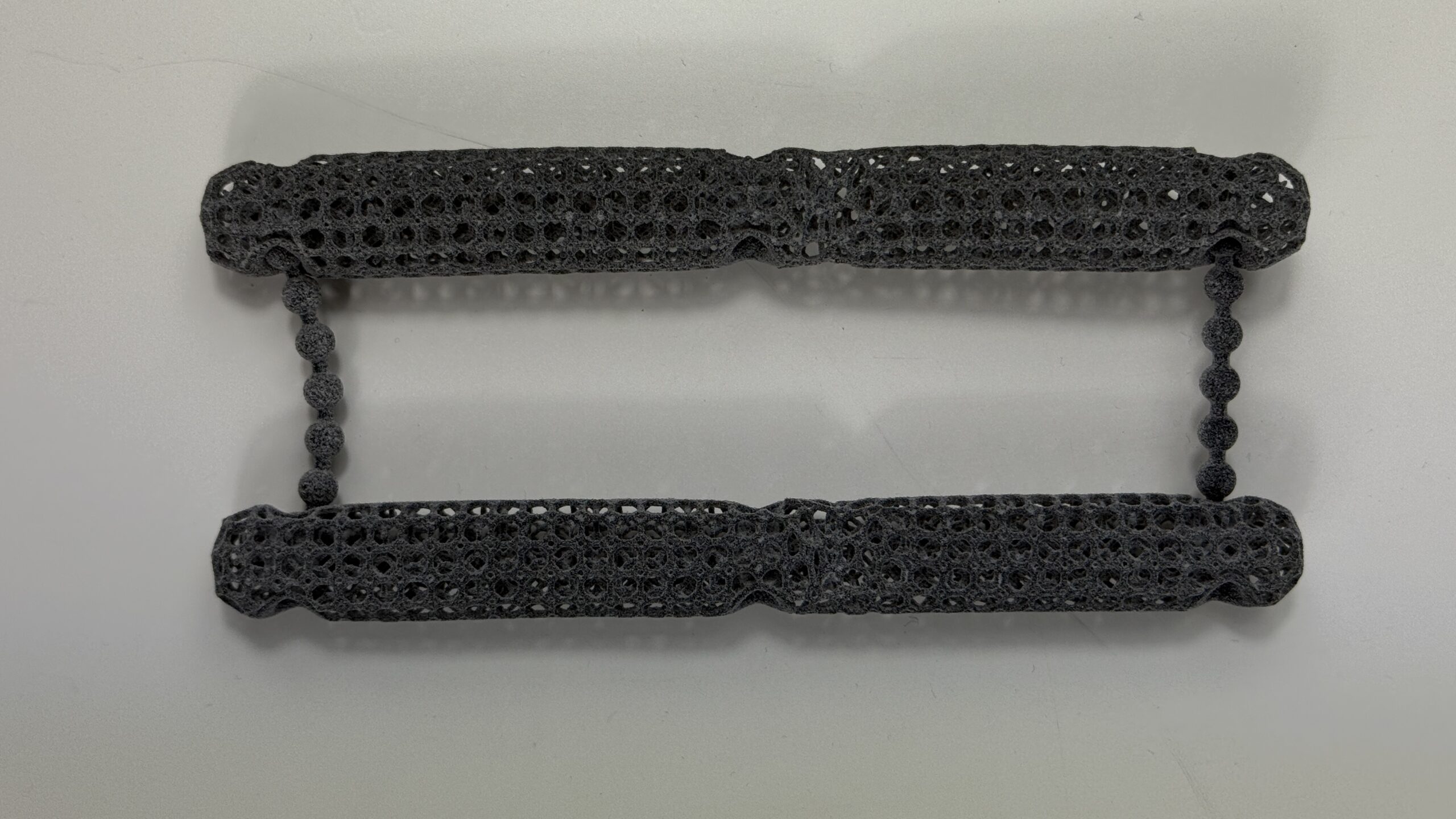
- Lightweight manufacturing materials. Devices are produced using HP Multi Jet Fusion 3D printing, which allows for a strong but lightweight structure — a meaningful consideration for smaller feline patients, where excess bulk or weight can affect comfort and willingness to wear the device.
- Fitting and follow-up through the veterinary team. As with canine devices, cat orthotics are fitted and adjusted by the prescribing veterinary professional, who evaluates how the cat is tolerating and using the brace over time.
What to Expect: Assessment and Fitting Considerations
If a veterinarian is considering cat orthotics for a patient, the process generally starts with a clinical evaluation of the underlying condition, a discussion of goals (support, protection, or gait assistance), and an assessment of whether the cat’s temperament is likely to allow for a bracing period at all. Some cats acclimate to a brace fairly readily; others require a more gradual introduction, closely supervised early wear periods, and ongoing owner involvement to check fit, skin condition, and the cat’s behavior around the device. Because the evidence base for feline bracing is smaller than for canine bracing, outcomes are typically monitored closely on an individual basis rather than measured against large published norms — which makes the treating veterinarian’s ongoing assessment especially important throughout the process. For a cat that is dragging a back leg, see our guide to a cat dragging its back leg; veterinarians who want to discuss whether an orthosis suits a specific feline patient can request a WIMBA case consult.
⚠️ Fit and follow-up matter: The best prospective complication data for veterinary orthoses are still canine. Skin problems, mechanical device issues, and patient non-acceptance were the main complications identified. These figures cannot be treated as feline complication rates, but they support gradual introduction, routine skin checks, and prompt reassessment if rubbing, redness, device movement, distress, pain, or worsening gait appears.[4]
A Real Example From WIMBA’s Patient Stories

Among the cases featured in WIMBA’s Patient Stories, Mimi, a Siamese cat with carpal hyperextension, was fitted with a Carpus Orthosis Go. According to that patient story, Mimi has had no issues with the brace so far and continues to use it. This single case illustrates how cat orthotics can be applied in a feline patient — it is not intended to represent typical results across all cats or all conditions, and outcomes vary based on the individual animal and underlying diagnosis.
Frequently Asked Questions
Are orthotics as commonly used in cats as in dogs?
No. Orthotic bracing has a longer history and a larger volume of clinical experience in dogs. Feline orthotic use is a newer, less common, and less extensively documented application, though it is offered for select feline conditions.
What conditions in cats might a veterinarian consider an orthotic for?
Carpal hyperextension, support during recovery after certain orthopedic surgeries, and select neurological gait issues are the categories most commonly discussed. A treating veterinarian determines whether a specific cat is an appropriate candidate.
How is a cat’s brace made to fit properly given how much smaller cats are than dogs?
For WIMBA Carpus Orthosis Go, the veterinary provider submits required photographs and manual measurements of the individual cat’s limb. These are used to design and fabricate a device sized and shaped to that specific animal rather than a generic template.
Will my cat tolerate wearing a brace?
This varies by individual cat. Temperament, prior handling experience, and the specific condition being addressed all play a role, and the prescribing veterinary team can advise on introduction and acclimation strategies.
Is there strong published research on feline orthotic outcomes?
Not to the same degree as for canine orthotics. This is an emerging area, and case-by-case veterinary judgment currently plays a larger role than large published outcome studies.
How do I find a provider who can evaluate my cat for an orthotic?
WIMBA works with a network of veterinary providers that can assess candidacy and manage fitting; you can use the Find a Provider directory, which also covers feline cases through the same network, to locate one.
Does fitting a cat with WIMBA Carpus Orthosis Go require WimbaSCAN?
No. For WIMBA Carpus Orthosis Go, the treating veterinary provider takes two required limb photographs and the product-specific manual measurements, then submits the case through WimbaAPP. WimbaSCAN is not required for this GO pathway. This does not make fitting fully remote: the veterinary professional must assess candidacy, collect the data, order the device, perform the first fitting, and manage follow-up.
What orthotic options exist for cats with limb mobility problems?
Current WIMBA Go options for feline limb support include Carpus Orthosis Go and Tarsus Orthosis Go for selected cats with mild, predominantly sagittal-plane carpal or tarsal instability, provided the limb meets the product’s anatomical requirements. These devices are not intended for instability in other planes, conditions affecting the paw or metacarpal or metatarsal region, acute postoperative use, or strict immobilisation. Because evidence for feline orthotic outcomes remains limited, a veterinary professional should confirm the diagnosis, severity, skin condition, temperament, and functional goal, using diagnostic imaging when clinically indicated, before selecting a device.
Next Steps
If you’re a veterinary professional evaluating a feline patient for possible support with cat orthotics, WIMBA’s device options, including the Carpal Orthosis, are available for both canine and feline cases. You can review real device applications, including feline cases, in WIMBA’s Patient Stories, learn more about the current ordering process in How to Order WIMBA Devices, or submit a patient case to start the conversation about whether a custom orthotic could help your patient.
This article is for general educational purposes only and is not a substitute for veterinary diagnosis or treatment. WIMBA orthotic devices are custom-designed and fitted under the direction of a licensed veterinary professional, who determines whether a device is appropriate for an individual patient. If you have concerns about your cat’s mobility, gait, or joint function, consult your veterinarian.
Scientific References
- Mich PM. The emerging role of veterinary orthotics and prosthetics (V-OP) in small animal rehabilitation and pain management. Top Companion Anim Med. 2014;29(1):10–19. doi:10.1053/j.tcam.2014.04.002
- Basa RM, Johnson KA. Management of feline carpal injuries: What are the options and when is arthrodesis indicated? J Feline Med Surg. 2019;21(9):809–823. doi:10.1177/1098612X19870388
- Marks TA, Meeson RL, Paran E, et al. Idiopathic carpal hyperextension in 12 cats (2018–2025). J Feline Med Surg. 2026;28(2):1098612X251412747. doi:10.1177/1098612X251412747
- Rosen S, Duerr FM, Elam LH. Prospective evaluation of complications associated with orthosis and prosthesis use in canine patients. Front Vet Sci. 2022;9:892662. doi:10.3389/fvets.2022.892662