 Skip to content


How to Order WIMBA Devices for Your Pet: An Orthotics-Only Guide
How to order WIMBA devices starts with a veterinary assessment, not an online checkout. WIMBA currently focuses on orthotic support for existing limbs and joints. Pet parents do not select, measure, or order a device independently; a veterinary professional confirms the clinical need, chooses the appropriate pathway, submits the patient data, and fits the finished device.
If you found an older WIMBA page or article mentioning prosthetic limbs, please note that this information no longer reflects the current offer. WIMBA no longer designs, manufactures, fits, or accepts orders for prosthetic devices. This updated guide explains how to order WIMBA devices from the current orthotics range without confusing an orthosis, which supports anatomy the pet still has, with a prosthesis, which replaces missing anatomy.
The guide covers WIMBA carpal, tarsal, and stifle orthoses plus WIMBA Cervical Collar GO. WIMBA Wound Care spacers are a separate product category with a different professional ordering pathway and are not covered here. If your goal is to understand how to order WIMBA devices for mobility support, the steps below show where you, your veterinarian, WIMBA Clinical Support, and the manufacturing team each enter the process.
The short answer for pet parents
If you are checking how to order WIMBA devices, begin by arranging a veterinary examination or using the WIMBA Provider Map to find a participating clinic. If your usual veterinarian is not yet a provider, they can contact WIMBA or submit a professional Case Consult. The clinic then determines whether an orthosis is appropriate, collects the required data, places the order through WimbaAPP, and manages fitting and follow-up.4,5,6
That is the essential WIMBA orthotics order process. The product, measurement method, price, wear schedule, and rehabilitation plan come later and depend on the individual patient.
What Can You Order From WIMBA Today?
Before learning how to order WIMBA devices, it helps to understand the current scope. WIMBA provides external orthotic support for selected carpal, tarsal, stifle, and upper-cervical cases. The devices do not all use the same measurements, and not every product is individually scan-based.2,3
| Current WIMBA solution | Region supported | Available pathway | Important ordering point |
|---|---|---|---|
| Carpus Orthosis | Front limb wrist region | GO or PRO | GO uses required photographs and manual measurements; PRO uses WimbaSCAN plus specified clinical data. |
| Tarsus Orthosis | Hind limb hock region | GO or PRO | The clinical presentation determines whether streamlined single-plane support or a more complex PRO configuration is considered. |
| Stifle Orthosis | Hind limb knee region | PRO | Stifle devices follow the scan-based PRO pathway and require an appropriately equipped Provider PRO. |
| Cervical Collar | Selected C1–C2 cases in suitable mini and toy-breed dogs | GO | The collar is selected from five predefined sizes using three measurements. It is not individually WimbaSCAN-modelled. |
These are medical support devices, not general accessories. An orthosis may limit, guide, or support selected movement in an existing joint or body region. It does not create a diagnosis, biologically repair every injured structure, or replace surgery when surgery is indicated. The prescribing veterinarian defines the mechanical goal before a WIMBA dog brace order is submitted.
How to Order WIMBA Devices: Two Ways to Start
For anyone asking how to order WIMBA devices, pet parents have two practical entry routes. Both lead to veterinary assessment and professional ordering. Neither route asks you to diagnose the joint problem, choose GO or PRO alone, or take measurements at home.
OPTION 1
Find an experienced WIMBA Provider
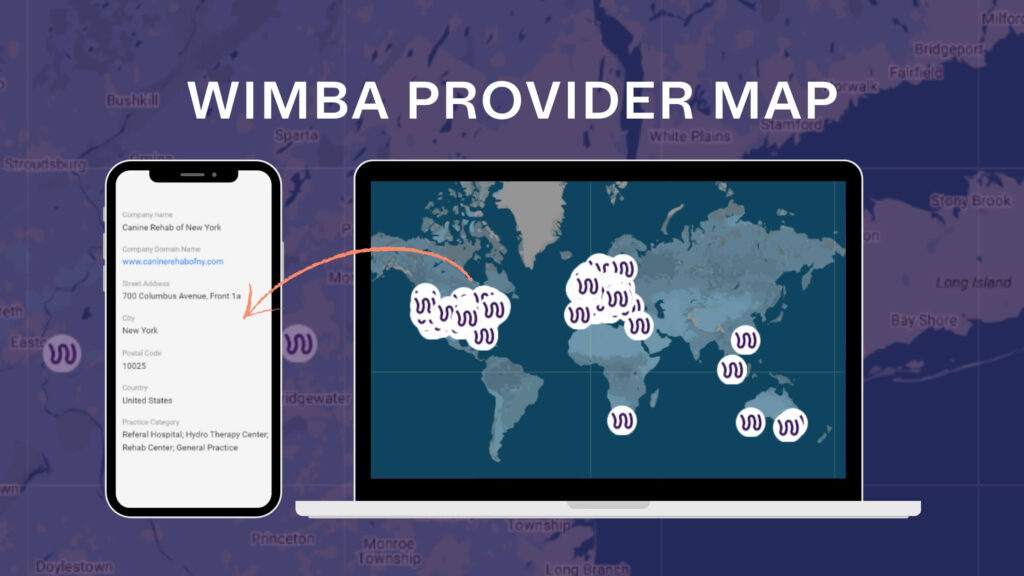
Search the WIMBA Provider Map, check the clinic’s current services, and book an appointment. A listed provider can examine your pet and explain whether a current WIMBA pathway may fit the diagnosis. This is a direct way to learn how to order WIMBA devices through an experienced practice. Map locations can change, so confirm the clinic’s address, appointment availability, and the type of device it currently supports before travelling.4
OPTION 2
Start with your usual veterinarian
If there is no listed provider nearby, your regular veterinary professional can contact WIMBA. This route means how to order WIMBA devices does not depend on changing clinics automatically. Your vet may request pathway guidance through a Case Consult before ordering. The Case Consult is a professional clinical review, not a purchase commitment, and it does not transfer diagnostic responsibility away from the treating clinic.5
The WIMBA Orthotics Order Process, Step by Step
The sequence below explains how to order WIMBA devices without implying that every patient follows the same timeline. Diagnostic tests, wounds, swelling, changing limb volume, case complexity, incomplete data, shipping region, and clinic availability may alter individual stages.
STEP 1
Begin with diagnosis, not device selection
Limping, a lowered wrist or hock, difficulty rising, altered paw placement, reduced activity, or a postoperative support need may prompt the visit. These signs do not identify the affected structure by themselves. Your veterinary team may recommend an orthopaedic or neurological examination, radiographs, ultrasound, advanced imaging, or referral before deciding whether custom pet orthotics belong in the plan.
This clinical stage defines which movement should be limited, assisted, or guided. It also identifies conditions that may make immediate orthotic use unsafe, including an open wound beneath the device, active infection, major swelling, fragile skin, uncontrolled pain, or a problem for which surgical stabilisation should take priority. The safe answer to how to order WIMBA devices therefore starts with the diagnosis and a realistic mechanical goal.
STEP 2
Confirm that a current WIMBA product matches the goal
The treating professional reviews the joint, direction and severity of instability, skin, sensation, range of motion, body condition, activity, behaviour, other limbs, and the owner’s ability to manage daily use. This assessment is why learning how to order WIMBA devices involves more than collecting measurements. A personalised device is not automatically appropriate simply because measurements can be taken.
If the case is uncertain or complex, the veterinary professional can submit history, examination findings, diagnosis, images, and the proposed support goal for a WIMBA Case Consult. The Clinical Support Team reviews suitability for the current orthotics range and may recommend a GO or PRO pathway, request more information, or explain that a WIMBA device is not the appropriate next step.5 This prevents how to order WIMBA devices from becoming a catalogue-based decision.
STEP 3
Choose the correct data-capture pathway
When understanding how to order WIMBA devices, remember that GO, PRO, and Cervical Collar GO do not share one universal set of measurements. The clinic follows the current product card in WimbaAPP and the relevant clinical guidance. This distinction is central to the WIMBA orthotics order process.
| Pathway | Patient data collected by the clinic | What pet parents should know |
|---|---|---|
| Carpus GO or Tarsus GO | Two required weight-bearing photographs plus current product-specific manual measurements.7,8 | No WimbaSCAN is required. GO is not a generic seven-measurement method, and the exact fields depend on the product. |
| Carpus, Tarsus, or Stifle PRO | WimbaSCAN, specified manual measurements, and clinical case information.10 | WimbaBOX contains the tools used to perform WimbaSCAN. It is not a separate alternative measurement pathway. |
| Cervical Collar GO | Three soft-tape measurements used to suggest the closest of five predefined sizes.9 | The clinician reviews and confirms the size. No WimbaBOX or 3D scan is required. |
Plaster casting is not part of these current WIMBA measurement routes. Sedation is not routinely required for the photographs, manual measurements, or WimbaSCAN itself, although a veterinarian may recommend sedation for separate diagnostic procedures or safe handling in an individual patient. Knowing how to order WIMBA devices does not remove the need for appropriate diagnostics.
STEP 4
The clinic submits the order through WimbaAPP
In practical terms, this is how to order WIMBA devices: WimbaAPP is an ordering platform for registered veterinary professionals, so pet parents do not create the clinical prescription or place the final order. The clinic selects the patient and device, enters the required measurements, uploads photographs or scan data, provides the requested clinical information, and reviews the order before submission.6
Accurate inputs are part of how to order WIMBA devices safely. The veterinary team should verify the patient, affected side, units, limb position, visible landmarks, image quality, scan completeness, and consistency with the diagnosis. If the patient has developed new swelling, a wound, pain, or a change in posture since assessment, the clinic may pause the WIMBA dog brace order and reassess.
For pet parents, this means there is no safe shortcut based on sending a few home photographs directly to manufacturing. The professional review, correct measurements, and later fitting are all parts of the same prescription.
STEP 5
WIMBA designs, manufactures, and ships the device
At this stage of how to order WIMBA devices, WIMBA has accepted the required data and prepares the geometry for the selected product using HP Multi Jet Fusion 3D printing. Digital production allows the frame and components to be created for the submitted patient data or selected collar size, but “custom” does not guarantee a perfect first fitting or a particular clinical result.11
Current product pages state a production target of about 10 business days for Carpus GO and Tarsus GO and about 15 business days for Orthotics PRO after complete data and order processing.7,8,10 Cervical Collar GO is typically prepared for dispatch more quickly because it is selected from predefined sizes.9 These are current targets, not guaranteed dates. Review, missing data, holidays, destination, customs, courier time, and the clinic’s fitting schedule affect the total time.
The device is shipped to the veterinary practice rather than treated as a finished consumer product delivered for unsupervised use. This clinic delivery is a deliberate part of how to order WIMBA devices.
STEP 6
The clinic fits the device and teaches daily use
At the fitting appointment, the veterinary professional verifies the correct patient and side, frame position, joint alignment, strap tension, edge clearance, circulation, skin contact, and whether the device rotates, slips, or changes gait during controlled movement. A completed WIMBA dog brace order is the start of supported use, not the end of clinical care.
Your clinic should provide the device-specific application method, wear schedule, permitted activities, cleaning instructions, skin-check routine, and recheck plan. Do not copy an adaptation schedule from another dog. Diagnosis, surgery, tissue healing, pain, behaviour, and the selected orthosis may all change how quickly use progresses.
Published evidence supports active monitoring. In a prospective 12-month study of 43 dogs using custom orthoses or prostheses, 39 experienced at least one complication, with skin and mechanical problems among the reported events.1 The study did not evaluate WIMBA alone, but it shows why fitting, gradual introduction, owner education, and follow-up are essential whenever custom pet orthotics are used.
Stop use and contact the treating team when needed
Remove the device and contact the clinic for persistent redness, swelling, a blister, abrasion, open skin, bleeding, marked pain, sudden refusal to use the limb, worsening gait, repeated rotation or slipping, or a damaged component. Do not continue use to “toughen” the skin, reshape the rigid frame, drill new holes, change range-of-motion components, or add improvised padding without professional direction.
What Should You Bring to the First Appointment?
Preparing a concise case history can make the first conversation more useful. It does not replace examination, but it helps the team understand why you are asking how to order WIMBA devices and whether additional records should be requested.
- Relevant medical records: previous diagnoses, operative reports, imaging reports, medication list, rehabilitation notes, and information about wounds or skin disease.
- A simple timeline: when the problem started, whether it was sudden or progressive, and what has already been tried.
- Short gait videos: if safe, record the pet walking on a non-slip surface from the front, side, and behind. These support history taking but do not replace the clinic’s assessment.
- Daily activity information: typical walk length, stairs, flooring, slipping, fatigue, jumping, work or sport, and any postoperative restrictions.
- Your practical questions: expected wear, fitting visits, cleaning, rehabilitation, price, production estimate, and who to contact if the device moves or irritates the skin.
Do not take definitive limb measurements unless the clinic specifically guides you. Product-specific position and technique matter, and inaccurate home measurements can delay the WIMBA orthotics order process.
How to Order WIMBA Devices in Practice: Oslo

CASE REPORT
Oslo: a defined diagnosis before a GO orthosis
Oslo, a five-year-old Australian Shepherd, developed carpal hyperextension after surgery for a partial tendon rupture. His veterinary plan defined the support goal before WIMBA Carpus Orthosis GO was selected with staged WimbaTHERAPY settings. This individual report shows a clinically led pathway, not a typical or guaranteed result.12
Patient: Oslo, Australian Shepherd
Clinical concern: Post-surgical carpal hyperextension after tendon injury
Solution: WIMBA Carpus Orthosis GO
A single case cannot predict another dog’s outcome. Oslo’s case is useful here because it shows the logic behind how to order WIMBA devices: identify the pathology, define the intended control, select the corresponding product, fit it professionally, and continue veterinary and rehabilitation follow-up.
Price, Timing, and What “Custom” Does Not Guarantee
When reviewing how to order WIMBA devices, remember that the prescribing clinic provides the relevant price because the total may include the device, assessment, diagnostics, measurement or scanning appointment, fitting, local taxes, shipping, and follow-up services. WIMBA does not sell orthoses directly to pet parents, so a website device price alone would not describe the full clinical pathway.
Ask the clinic which elements are included before confirming a WIMBA dog brace order. Also ask whether a recheck or fitting adjustment is included, what happens if the patient’s limb volume changes, and which costs would apply to replacement components. This makes the WIMBA orthotics order process easier to compare without treating different clinics as simple online retailers.
Patient-specific geometry can improve anatomical conformity, but no manufacturing method guarantees immediate acceptance, freedom from skin irritation, faster healing, avoidance of surgery, or a normal gait. Custom pet orthotics still require appropriate case selection, accurate data, professional fitting, acclimatisation, cleaning, skin checks, and reassessment as the patient changes.
Questions to Ask Before You Order a WIMBA Dog Brace
- What is the confirmed diagnosis, and which movement should the orthosis control?
- Is an orthosis appropriate now, or should surgery, wound care, pain control, or further diagnostics take priority?
- Does the patient match a current GO product, require PRO and WimbaSCAN, or need a different solution?
- Who will perform the measurements or scan and who will fit the device?
- What is included in the clinic’s price?
- What is the current production and delivery estimate for this device and destination?
- Which activities are allowed before and after fitting?
- What skin changes or gait changes require immediate removal and a recheck?
- When is the first planned follow-up appointment?
These questions turn how to order WIMBA devices into a treatment-planning conversation. The goal is not merely to obtain an object; it is to introduce the right external support safely into the patient’s wider veterinary and rehabilitation plan.
Frequently Asked Questions
Can pet parents order WIMBA devices directly?
No. WIMBA orthoses and the cervical collar are ordered by veterinary professionals. The clinic assesses the patient, selects the clinical pathway, captures the required data, submits the order through WimbaAPP, fits the finished device, and provides the owner with wear and follow-up instructions.
Does WIMBA still offer prosthetic devices?
No. WIMBA no longer designs, manufactures, fits, or accepts orders for prosthetic devices. The current mobility-support offer focuses on orthoses for existing carpal, tarsal, and stifle joints plus WIMBA Cervical Collar GO. A pet needing prosthetic assessment must be referred to a different specialist provider.
How do I find a clinic that can order WIMBA orthotics?
Use the WIMBA Provider Map and confirm the selected clinic’s current services and appointment availability. If there is no provider nearby, ask your usual veterinary professional to contact WIMBA. A veterinarian can also submit a Case Consult for guidance before deciding whether a current WIMBA orthosis matches the patient.
What is the difference between WIMBA GO and WIMBA PRO ordering?
Eligible Carpus GO and Tarsus GO cases use two required photographs and product-specific manual measurements without WimbaSCAN. PRO carpal, tarsal, and stifle orthoses require WimbaSCAN plus specified measurements and clinical information. Cervical Collar GO uses three measurements to select the closest of five predefined sizes.
Does my pet need a 3D scan or sedation?
Only PRO limb orthoses require WimbaSCAN. Carpus GO and Tarsus GO use photographs and manual measurements, while Cervical Collar GO uses three measurements without scanning. Sedation is not routinely required for these WIMBA data-capture steps, although a veterinarian may recommend it for separate diagnostics or safe handling in an individual patient.
How long does a WIMBA orthotics order take?
Current product pages state production targets of about 10 business days for Carpus GO and Tarsus GO and about 15 business days for Orthotics PRO after complete data and order processing. Cervical Collar GO is typically prepared for dispatch within two business days. Shipping, customs, data corrections, clinical review, and the clinic’s fitting schedule add time, so ask your provider for the current case-specific estimate.
Start With Your Veterinary Team
The safest explanation of how to order WIMBA devices is simple: start with a veterinary assessment, use the Provider Map or involve your usual vet, confirm the correct orthotic pathway, let the clinic submit the patient data, and return for professional fitting and follow-up.
Medical disclaimer: This article is intended for general educational purposes only and is not a substitute for veterinary examination, diagnosis, prescription, surgery, postoperative instructions, device-specific guidance, or an individual rehabilitation plan. Do not select, measure, fit, modify, or progress an orthosis without direction from the treating veterinary or rehabilitation professional. Seek prompt veterinary care for severe pain, complete non-weight-bearing lameness, major trauma, deformity, rapidly increasing swelling, an open wound, neurological change, device-related skin injury, or an unexpected postoperative setback.
Scientific and Clinical References
- Rosen S, Duerr FM, Elam LH. Prospective evaluation of complications associated with orthosis and prosthesis use in canine patients. Frontiers in Veterinary Science. 2022;9:892662. doi:10.3389/fvets.2022.892662.
- WIMBA. Veterinary Orthotic Devices: A Clinical Guide for Veterinarians. Updated August 7, 2026. Current device scope, candidacy, and GO/PRO pathway guide.
- WIMBA. WIMBA Devices: Veterinary Orthoses and Cervical Collars. Accessed August 31, 2026. Current mobility-support range.
- WIMBA. Dog Orthotics Near Me: WIMBA Provider Map. Accessed August 31, 2026. Provider search and local-veterinarian pathway.
- WIMBA. Submit Your Case for a WIMBA Orthosis Case Consult. Accessed August 31, 2026. Professional clinical review pathway.
- WIMBA. WimbaAPP: Order Pet Orthotics Easily. Accessed August 31, 2026. Veterinary professional ordering platform.
- WIMBA. Carpus Orthosis GO. Accessed August 31, 2026. Current photographs, measurements, and production information.
- WIMBA. Tarsus Orthosis GO. Accessed August 31, 2026. Current photographs, measurements, and production information.
- WIMBA. Cervical Collar GO. Accessed August 31, 2026. Three-measurement, five-size, scan-free ordering pathway.
- WIMBA. Orthotics PRO. Accessed August 31, 2026. Current WimbaSCAN, WimbaAPP, product, and production pathway.
- WIMBA. WIMBA Opens In-House 3D Printing Facility for Pet Orthotics. Accessed August 31, 2026. Digital manufacturing information.
- WIMBA. Carpal Hyperextension After Tendon Injury in Dogs: Case Study Oslo. Individual case report.