 Skip to content

Digital Dog Brace Fitting: From Measurement to Safer Rehabilitation
A custom orthosis can be beautifully engineered and still fall short if it rotates, creates a pressure point, or is introduced faster than a patient can tolerate. Digital dog brace fitting matters because rehabilitation depends on the entire pathway: diagnosis, accurate data capture, device design, first fitting, gradual acclimatisation, skin monitoring, and reassessment as the dog changes.
This guide explains what digital measurement and 3D printing can genuinely improve, where their limits remain, and what veterinary teams and pet owners should expect after delivery. Digital dog brace fitting can create a traceable, patient-specific workflow without plaster casting, but technology cannot replace clinical judgement or follow-up.
For a broader discussion of how an orthosis may fit into recovery or long-term care, see WIMBA’s Veterinary Orthosis for Long-Term Rehabilitation. This article focuses specifically on measurement quality, fit, adaptation, and the decisions made after a device arrives.
Digital does not mean “fit once and forget”
The value of digital dog brace fitting is consistency and traceability, not a guarantee that every first device will be problem-free. Measurements can be inaccurate, a scan can capture an unsuitable limb position, swelling can change, and a dog may move differently inside the orthosis than while standing. A hands-on fitting and a planned recheck remain essential.
Why Fit Is a Clinical Variable in Dog Orthotic Rehabilitation
An orthosis must do several jobs at once. It should support the intended joint and control the prescribed direction of movement, remain suspended during gait, avoid vulnerable tissue, and allow the dog to perform the activity selected by the rehabilitation team. A custom dog brace fit is therefore not judged from appearance alone. The clinician needs to observe alignment, stability, skin contact, circulation, comfort, and movement with the device on and again after it is removed.
The importance of monitoring is supported by a prospective study of 43 canine orthosis and prosthesis users followed for 12 months. Thirty-nine dogs experienced at least one complication; skin problems, mechanical issues, and device non-acceptance were all reported, with skin complications particularly common early in use.1 These events should not all be blamed on poor fit—diagnosis, anatomy, behaviour, disease progression, wear schedule, and device type also matter—but they show why digital dog brace fitting must include surveillance rather than end at manufacture.
43 dogs
were prospectively followed after receiving an orthosis or prosthesis in the Rosen study.
12 months
of follow-up captured problems that a one-time delivery check could have missed.
39 patients
had at least one reported complication, underscoring the need for active follow-up.
What Digital Dog Brace Fitting Actually Includes
Digital dog brace fitting is better understood as a five-stage clinical loop than as a single scan. Each stage can affect the next, and a technically accurate digital file cannot rescue an unsuitable prescription.
1. Diagnose the structure and define the mechanical goal
Before digital dog brace fitting begins, the veterinary team should identify the affected joint or tissue, direction of instability, pain, skin status, range of motion, neurological function, and relevant surgical options. “Support the leg” is not specific enough. The plan should state which movement the orthosis should allow, limit, or guide and during which activities.
2. Capture the correct product-specific data
The dataset depends on the device. It may include weight-bearing photographs, circumference and length measurements, joint angles, or a WimbaSCAN. Positioning, visible landmarks, correct side, units, and consistency between images and measurements are quality-control issues, not clerical details. Reliable digital dog brace fitting starts with reliable input.
3. Translate anatomy and prescription into a manufacturable design
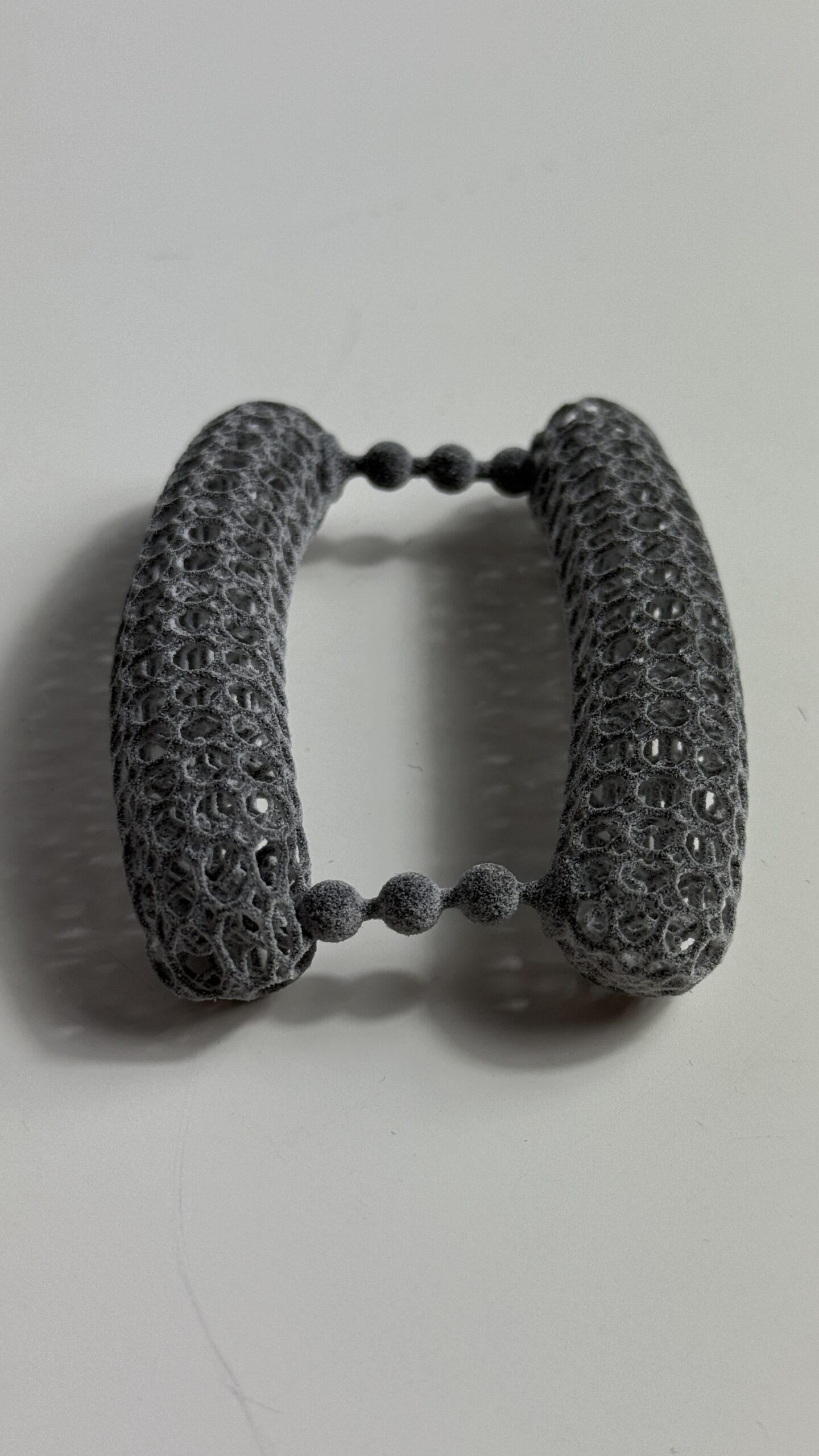
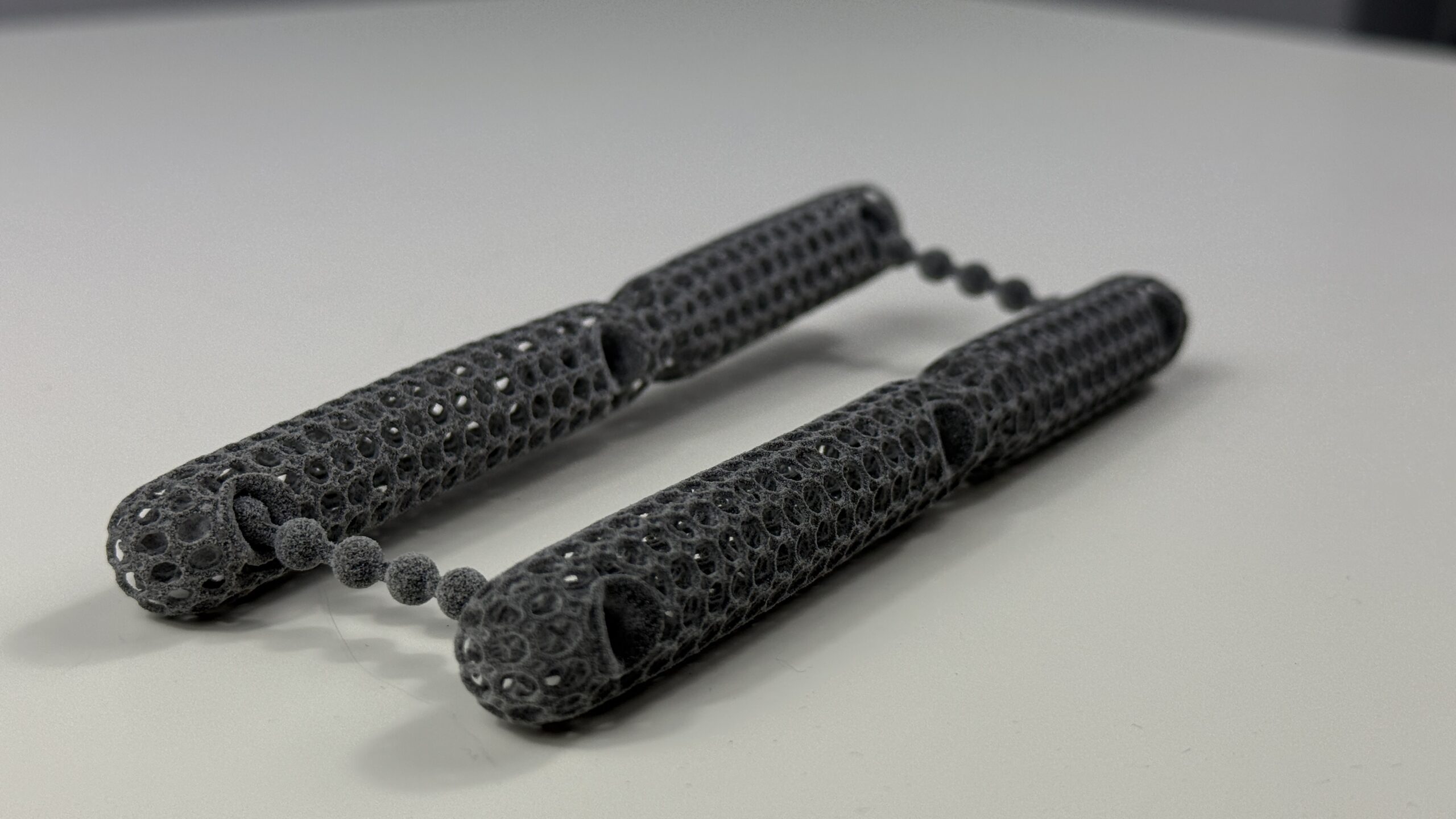
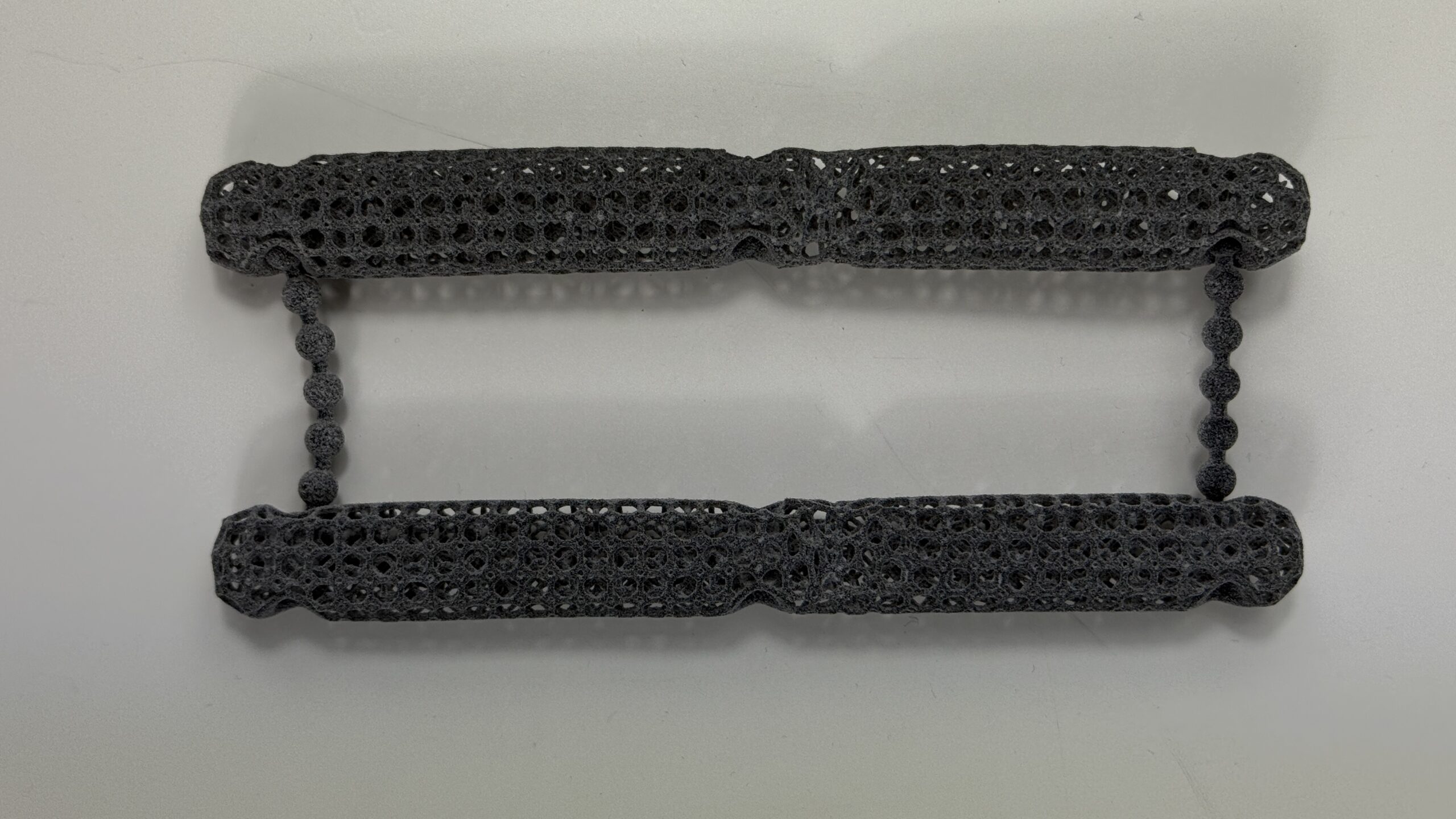
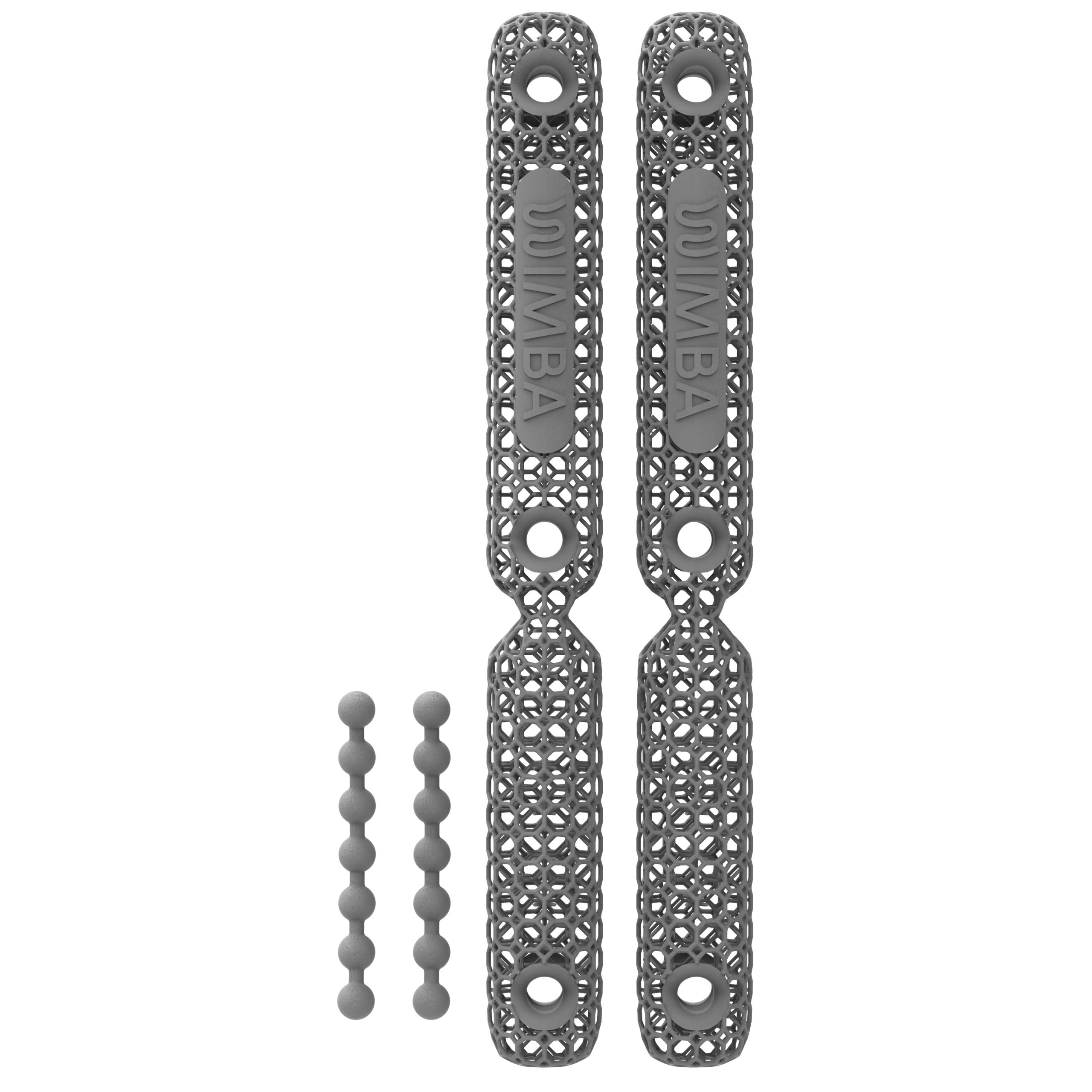
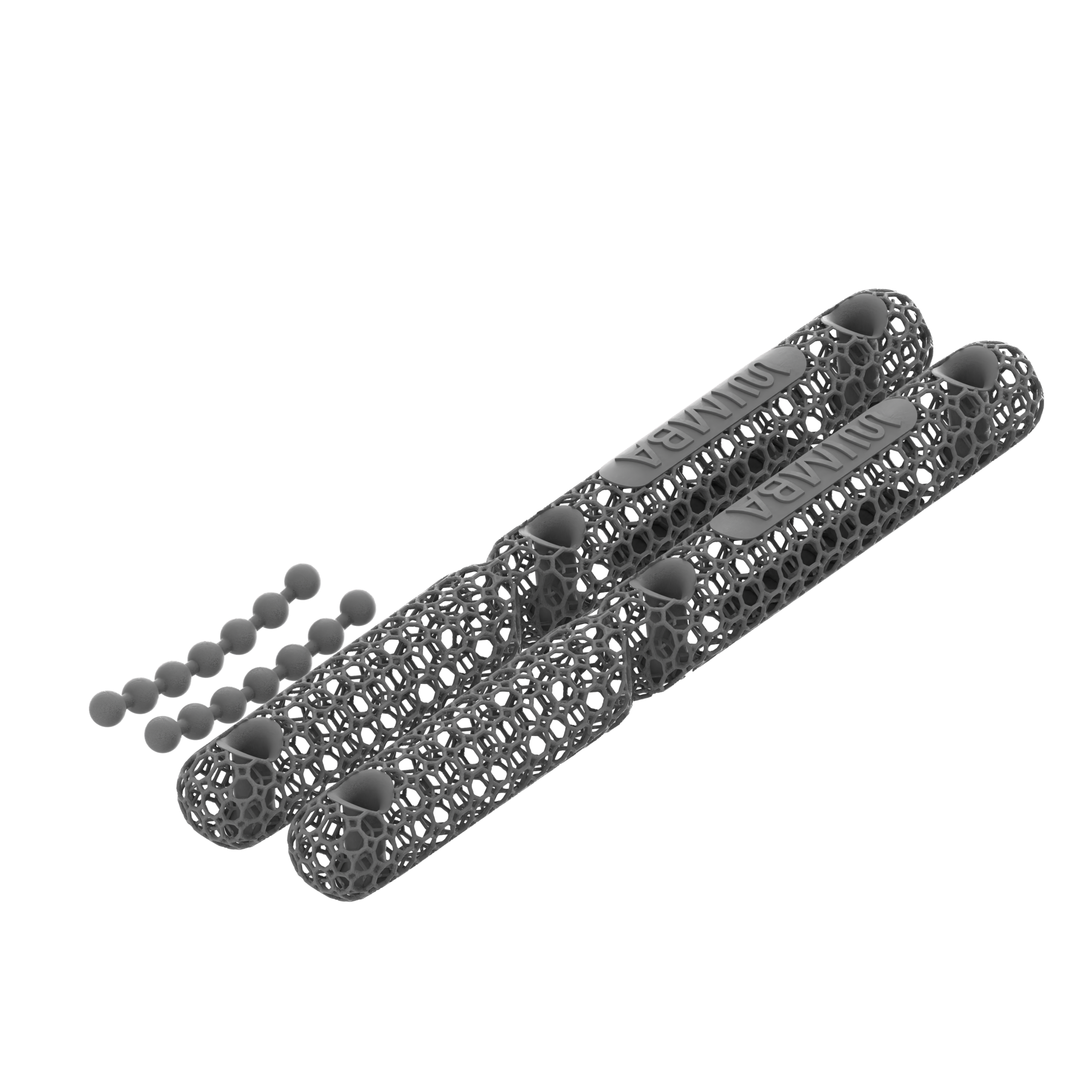
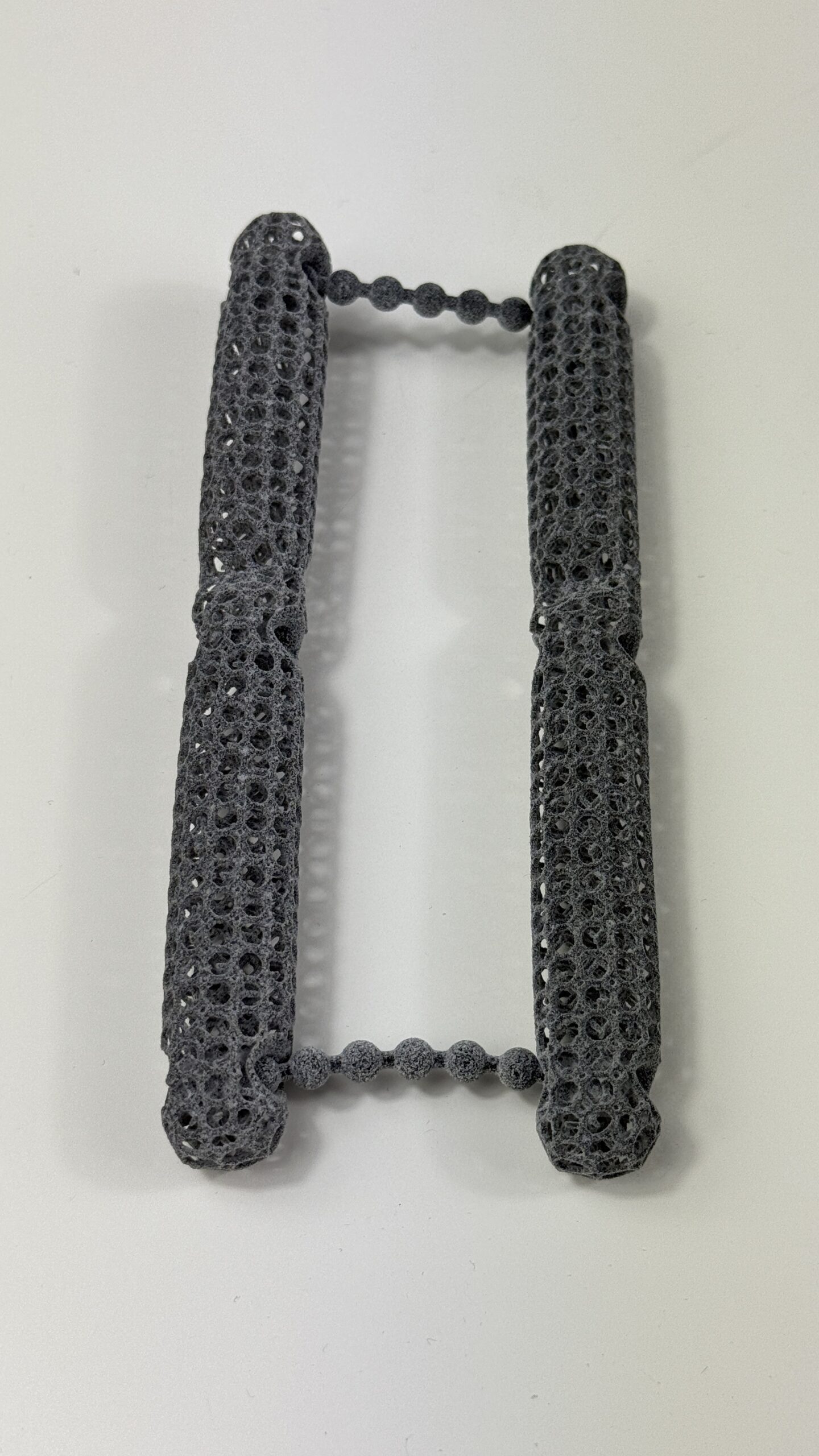
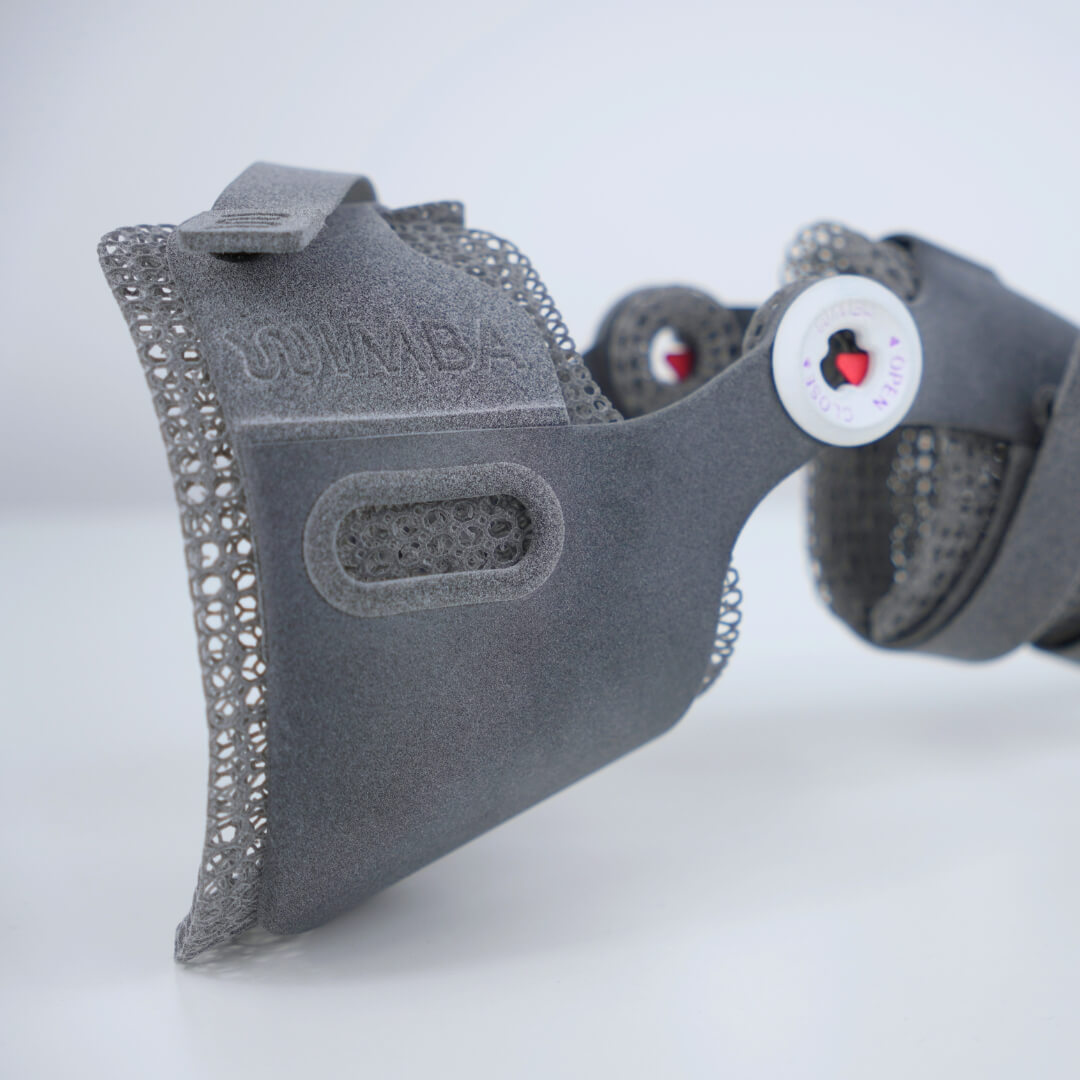
The digital design defines frame geometry, joint alignment, contact areas, straps, inserts, and any configured range-of-motion components. HP Multi Jet Fusion then produces the patient-specific parts. A 3D printed orthosis for dogs can reproduce complex geometry consistently, but the printer does not decide whether the clinical goal, captured position, or proposed joint control is appropriate.
4. Perform a hands-on first fitting
At delivery, the veterinary or rehabilitation professional should check orientation, joint alignment, strap tension, suspension, edge clearance, circulation, and skin contact. The dog should be observed standing and during controlled walking, then the device should be removed so the interface can be checked again. This first WIMBA orthosis fitting is where a digital design meets real movement.
5. Reassess fit, gait, and the rehabilitation goal
Dog orthotic rehabilitation changes the patient. Oedema may resolve, muscle may be lost or rebuilt, body weight may change, and the dog may load the joint differently. A recheck asks whether the orthosis remains stable, whether the skin tolerates it, and whether the original movement settings still match the current stage of recovery.
WIMBA Go and Pro Use Different Measurement Pathways
One of the most important corrections to the original draft is that there is no universal seven-measurement workflow for every WIMBA device. Digital dog brace fitting follows the current product instructions and clinical complexity.5
WIMBA Go
Eligible Carpus Go and Tarsus Go cases use the requested weight-bearing photographs and product-specific manual measurements submitted through WimbaAPP; the current product pages describe two photos and manual measurements, with no WimbaSCAN.6,7 This streamlined digital dog brace fitting pathway is intended for cases within current Go indications, not every level of instability.
The cervical collar follows another Go workflow: it is selected from five predefined sizes using three measurements. That is why “Go equals seven measurements” is not an accurate general rule.
WIMBA Pro
Pro carpal, tarsal, and stifle devices require the specified manual measurements, clinical data, and WimbaSCAN captured by an appropriately equipped Provider Pro.5,8 WimbaBOX is the equipment kit that supports Pro scanning; it is not an alternative to WimbaSCAN. This pathway captures three-dimensional limb geometry for more complex or multiplanar support.
Pet owners do not independently perform the Pro scan or prescribe the device. The treating clinic remains responsible for the diagnosis, submitted data, first WIMBA orthosis fitting, wear plan, and clinical follow-up.
How 3D Printing and Materials Affect the Device
WIMBA reports using HP Multi Jet Fusion for its orthoses, with PA11 for the primary rigid frame, PA12 for components such as Tokens and hinge caps, and flexible TPU for inserts that contact the limb.9 In a 3D printed orthosis for dogs, geometry and material can be planned together: a rigid region can provide structural control while selected interface elements remain flexible.
These manufacturing properties should not be turned into a clinical promise. A named polymer does not prove that the custom dog brace fit is comfortable for a particular patient, and 3D printing alone has not been shown to guarantee faster healing or a better outcome than every cast-based or stock alternative. Digital dog brace fitting still depends on correct case selection, accurate inputs, device positioning, patient tolerance, and monitoring. It is a clinical workflow, not a material specification.
Modular parts may make maintenance or prescribed changes more practical. For example, some WIMBA devices use interchangeable components to control range of motion. Owners should not change Tokens, resistance, stops, straps, or the rehabilitation setting on their own; the prescriber should decide when the supported movement can safely change.
How Digital Dog Brace Fitting Handles Change During Rehabilitation
A stored digital case can make review, communication, and production of some replacement components more efficient. It also preserves the geometry and prescription used for the earlier device. That is a meaningful advantage of digital dog brace fitting, but it does not mean the original dataset remains anatomically current forever.
Updated photographs, manual measurements, or a new scan may be required after growth, weight change, muscle loss, rehabilitation-related muscle gain, surgery, prolonged swelling, progressive disease, or a visible change in limb position. The clinic should compare the current patient with the recorded baseline instead of assuming that clicking “reorder” will preserve a safe custom dog brace fit.
Re-measure when the patient—not just the device—has changed
A replacement strap is different from redesigning the frame around a limb that has changed shape. The veterinary team should decide which data can be reused and which must be recaptured. Digital dog brace fitting supports iteration; it does not remove the need to verify anatomy.
Break-In and Skin Safety After Digital Dog Brace Fitting
A safe dog orthotic rehabilitation plan treats early wear as part of digital dog brace fitting: tolerance, skin response, device position, and gait are observed before time or activity is progressed.
The first days are a tolerance assessment, not a test of how long the dog can keep the device on. Current WIMBA user manuals for applicable Tarsus Go and Stifle Pro devices give a starting pattern of controlled leash walks for up to about 15 minutes, no more than three times daily, followed by increases of roughly 15 minutes every two days when tolerated.10,11 This is a product-manual starting point, not a universal protocol. The prescriber may choose a different schedule based on surgery, tissue healing, pain, behaviour, or the rehabilitation goal.
WIMBA limb orthoses are not intended for uninterrupted 24-hour wear, and a dog should not be left unattended while wearing one. During digital dog brace fitting and follow-up, the owner should receive written instructions covering donning, strap sequence, approved activity, rest periods, skin checks, cleaning, and a clear contact route for concerns.
Before each use
- Check that the skin is clean, dry, and free from an open sore or active irritation.
- Inspect the frame, inserts, straps, fasteners, hinges, and prescribed settings for damage or change.
- Apply the orthosis in the demonstrated orientation and sequence; do not improvise extra padding that changes alignment.
After each early session
- Remove the device and inspect every contact area, including beneath straps and around edges.
- Note persistent redness, swelling, heat, abrasions, moisture, hair loss, pain, or a new odour.
- Record whether the device rotated or slipped and whether gait, confidence, or weight-bearing worsened.
Cleaning
Follow the manual for the exact device. Current limb-orthosis instructions describe hand-cleaning with lukewarm water and mild soap, followed by air-drying. Do not use a washing machine, tumble dryer, hair dryer, or unapproved chemical cleaner. The orthosis should be fully dry before the next session.
Remove the device and contact the treating team
Stop the session and request review for persistent redness, swelling, a blister or open sore, bleeding, marked pain, repeated device migration, a damaged component, sudden refusal to use the limb, or worsening gait. A skin problem should not be “broken in.” Prompt review protects the patient and gives the team useful information about fit, activity, and tolerance.
What the Evidence Can—and Cannot—Tell Us
Canine orthotic evidence is promising but still small and device-specific. A retrospective report of ten dogs with cranial cruciate ligament insufficiency described improved weight-bearing during stifle orthosis management, but it had no randomised control group.2 An experimental study also showed that a stifle orthosis changes pelvic-limb kinematics, which confirms biomechanical influence but does not prove long-term healing or superiority for every patient.3
Rehabilitation itself contributes to recovery. In a controlled study of 51 dogs after cranial cruciate ligament repair, a postoperative rehabilitation programme produced better force-platform outcomes at six months than exercise restriction alone.4 That study did not test WIMBA or digital dog brace fitting, but it supports the wider point: an orthosis should be integrated into a structured plan rather than treated as the whole treatment.
There is currently no high-quality comparative evidence showing that every 3D printed orthosis for dogs produces better rehabilitation outcomes than every cast-made custom device or stock brace. The responsible claim is narrower: digital design enables a mold-free, traceable, patient-specific manufacturing pathway; clinical value still depends on diagnosis, a safe custom dog brace fit, adherence, and objective reassessment.
Digital Dog Brace Fitting in Practice: Keti
Case Report
Keti: WimbaSCAN, custom geometry, and clinical recheck
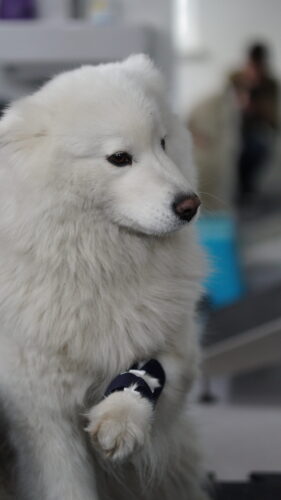
Keti, a five-year-old Samoyed with severe carpal hyperextension and lateral instability, received Carpus Orthosis Pro through a scan-based pathway. Her WIMBA orthosis fitting connects WimbaSCAN, patient-specific 3D-printed geometry, and follow-up: reduced hyperextension and functional progress were documented at the first recheck. The case illustrates digital dog brace fitting in practice, not a controlled comparison.
Frequently Asked Questions
Does digital dog brace fitting guarantee a perfect fit?
No. Digital dog brace fitting provides patient-specific and traceable design data, but it does not eliminate measurement error, unsuitable limb positioning, movement-related migration, skin sensitivity, or changes in anatomy. The first fitting, gradual introduction, skin checks, gait observation, and planned rechecks determine whether the device is safe and functional for that patient.
What information is needed for a WIMBA Go limb orthosis?
Current eligible Carpus Go and Tarsus Go workflows use two required photographs and product-specific manual measurements submitted through WimbaAPP, without WimbaSCAN. The exact checklist depends on the selected device, so the clinic should follow the current in-app measurement card rather than reuse one universal measurement list.
Is WimbaBOX an alternative to WimbaSCAN?
No. WimbaBOX refers to the equipment used by an appropriately onboarded Provider Pro to capture WimbaSCAN data. A Pro order uses WimbaSCAN together with the requested manual measurements and clinical information. WimbaBOX and WimbaSCAN should not be presented as two interchangeable measurement pathways.
Can the original digital file always be reused if my dog changes?
No. Stored design data may help with review or replacement, but growth, swelling, surgery, weight change, muscle loss or gain, disease progression, and a changed limb position may require new photographs, measurements, or another scan. The treating clinic should verify current anatomy before ordering an adjusted or replacement frame.
What skin signs mean the orthosis should come off?
Remove the device and contact the treating team for persistent redness, swelling, a blister, abrasion, open sore, bleeding, heat, discharge, marked pain, or a new odour. Repeated slipping, rotation, device damage, or worsening gait also requires review. Do not keep using the device to “toughen” the skin.
Does a 3D-printed orthosis heal an injury on its own?
No. An orthosis can support, align, or restrict movement in a selected joint, but it does not establish the diagnosis, repair a torn structure, reverse arthritis, or replace surgery when surgery is indicated. It should be used within a veterinary plan that may also include pain management, activity modification, rehabilitation, weight management, or surgery.
Build Fit and Follow-Up Into the Prescription
Successful digital dog brace fitting combines the correct clinical goal, the appropriate Go or Pro pathway, accurate data, professional fitting, gradual acclimatisation, and scheduled reassessment. Veterinary professionals can submit a case for pathway guidance, while pet owners can locate a WIMBA Provider for diagnosis-led support.
Medical disclaimer: This article is intended for general educational purposes only and is not a substitute for veterinary examination, diagnosis, prescription, postoperative instructions, device-specific user manuals, or an individual rehabilitation plan. Do not order, fit, modify, or progress an orthosis without direction from the treating veterinary or rehabilitation professional. Remove the device and seek prompt professional advice for skin injury, swelling, severe pain, sudden non-weight-bearing lameness, worsening gait, neurological change, device damage, or a postoperative setback.
Scientific and Clinical References
- Rosen S, Duerr FM, Elam LH. Prospective evaluation of complications associated with orthosis and prosthesis use in canine patients. Frontiers in Veterinary Science. 2022;9:892662. doi:10.3389/fvets.2022.892662
- Carr BJ, Canapp SO, Meilleur S, Christopher SA, Collins J, Cox C. The use of canine stifle orthotics for cranial cruciate ligament insufficiency. Veterinary Evidence. 2016;1(1). doi:10.18849/ve.v1i1.10
- Torres BT, Fu Y-C, Sandberg GS, Budsberg SC. Pelvic limb kinematics in the dog with and without a stifle orthosis. Veterinary Surgery. 2017;46(5):642–652. doi:10.1111/vsu.12634
- Marsolais GS, Dvorak G, Conzemius MG. Effects of postoperative rehabilitation on limb function after cranial cruciate ligament repair in dogs. Journal of the American Veterinary Medical Association. 2002;220(9):1325–1330. doi:10.2460/javma.2002.220.1325
- WIMBA. Veterinary Orthotic Devices: A Clinical Guide for Vets. Updated 2026. Current Go and Pro pathway guide.
- WIMBA. Carpus Orthosis Go. Accessed August 25, 2026. Current product and ordering information.
- WIMBA. Tarsus Orthosis Go. Accessed August 25, 2026. Current product and ordering information.
- WIMBA. Stifle Orthosis Pro. Accessed August 25, 2026. Current product, WimbaSCAN, and ordering information.
- WIMBA. 3D Printing Materials for Pet Orthotics: Part 2—Ultrasint TPU01 Inserts. Material information.
- WIMBA Knowledge Base. Tarsus Orthosis Go User Manual. Accessed August 25, 2026. Wear, monitoring, and care instructions.
- WIMBA Knowledge Base. Stifle Orthosis Pro User Manual. Accessed August 25, 2026. Wear, monitoring, and care instructions.