 Skip to content

Veterinary orthotics and prosthetics can support selected patients when examination identifies a defined mechanical or functional need. An orthosis supports an existing limb or joint, whereas a prosthesis replaces part of a missing limb. Neither device is a diagnosis or a universal alternative to surgery. Safe use begins with patient selection, a measurable treatment goal, accurate data capture, professional fitting, and planned follow-up.
This evidence-informed FAQ is written for veterinary professionals considering canine orthotics and prosthetics or feline bracing within a clinical and rehabilitation pathway. It explains when custom veterinary orthotics may be appropriate, how WIMBA Go and Pro orders differ, what a responsible veterinary orthotic fitting should include, and how to prepare owners for device management.
When to Consider Veterinary Orthotics and Prosthetics
In veterinary orthotics and prosthetics, the clinical question is not simply whether a brace or prosthesis is available. The team must determine which structure requires support, which movement should be limited or guided, whether the skin and limb can tolerate the interface, and how success will be measured. Reviews of veterinary orthotics and prosthetics emphasise diagnosis-led prescription, biomechanical design, rehabilitation, and reassessment rather than device selection from a symptom alone.[1][2]
Keep these two device categories separate:
- Orthosis: supports, protects, aligns, or controls motion in an existing limb or joint.
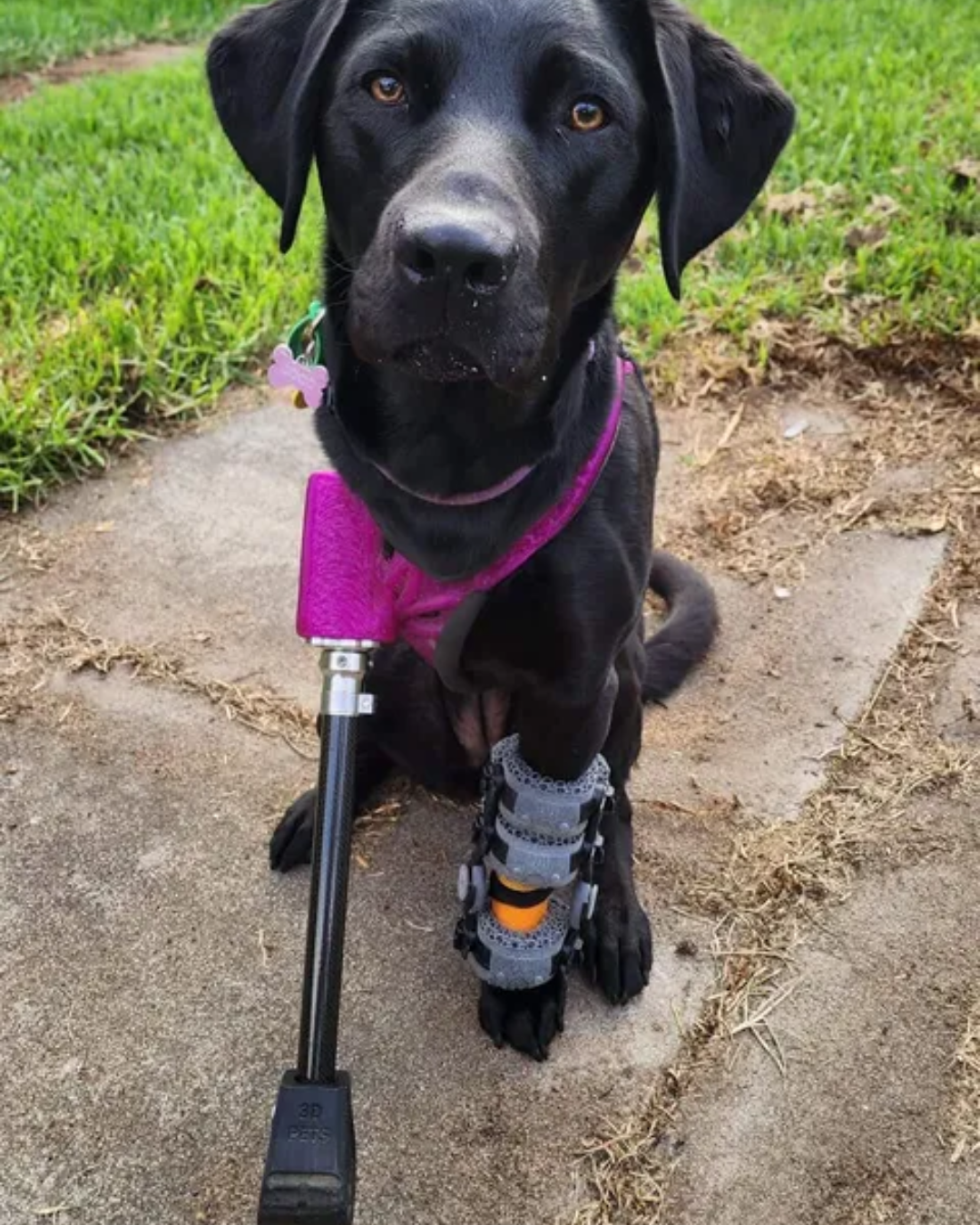
- Socket prosthesis: replaces a missing distal limb segment and transfers load through a suitable residual limb.
- Assistive device: a cart, harness, boot, or other aid that solves a different mobility or protection problem.
- Surgery and external devices: may be alternatives in selected cases or complementary parts of the same plan; the diagnosis and evidence determine the route.
When may an orthosis be considered instead of surgery?
An orthosis may be considered when the veterinary team has diagnosed a condition that can be managed with external control and has selected conservative care after discussing options. Relevant situations can include a patient with substantial anaesthetic or surgical risk, an owner who declines surgery after informed discussion, a condition for which clinician-directed bracing is appropriate, or a post-operative plan that specifically calls for external support. The device should not delay referral or surgery when operative stabilisation is the recommended treatment.
Evidence for canine orthotics and prosthetics differs by joint and indication. A retrospective series of 14 dogs treated with a custom carpal brace reported improved lameness scores and return to normal function in 11 dogs, but there was no untreated control group.[3] Studies of stifle orthoses include retrospective data, modelling, kinematic analysis, owner-reported comparisons, and a two-dog prospective report; together they support possible use in selected cases but do not establish equivalence to surgical stabilisation.[4][5][6][7][10]
What makes a patient a poor candidate?
Active infection, open wounds outside an approved wound-management plan, significant dermatitis at the interface, uncontrolled pain, marked oedema, rapidly changing limb volume, or anatomy that cannot provide safe suspension can prevent or postpone fitting. Severe behavioural distress, repeated device removal, and inability to attend reviews also matter. For a socket prosthesis, residual-limb length, soft-tissue coverage, joint range, sensation, scar position, and the proposed amputation level require specialist assessment.
Owner capacity is part of candidacy rather than an afterthought. Application, removal, skin inspection, cleaning, controlled introduction, and rechecks require consistent participation. In a survey of 56 owners, owner-perceived patient quality of life was associated with the owner’s own reported quality of life and willingness to recommend the experience.[8] A realistic plan for custom veterinary orthotics should therefore account for both the patient and the household.
Are orthoses suitable for cats?
Selected cats may be considered for a lightweight, patient-specific orthosis, including eligible carpal cases. However, evidence for custom veterinary orthotics in cats remains limited, and tolerance cannot be assumed. The clinic should evaluate diagnosis, handling, grooming, skin condition, activity, and the owner’s ability to supervise use. Check the current feline indication with WIMBA through a case consultation before promising a device.
Can a device be combined with physiotherapy or hydrotherapy?
Yes, when the rehabilitation plan and the device prescription are compatible. Rehabilitation can address strength, range of motion, balance, coordination, endurance, and compensatory movement that an orthosis or prosthesis cannot resolve alone. Whether the device is worn during land exercise or hydrotherapy depends on the device, treatment goal, water exposure guidance, and patient response. The rehabilitation professional should define permitted activities and progression criteria instead of assuming that every waterproof component is appropriate for every aquatic session.
What the Evidence Shows About Canine Orthotics and Prosthetics
Evidence for veterinary orthotics and prosthetics is useful but still limited by small samples, heterogeneous diagnoses and devices, retrospective designs, owner-reported outcomes, and few controlled trials. The strongest practical conclusion is that canine orthotics and prosthetics can help selected patients, while fit problems, skin complications, mechanical issues, and device non-acceptance remain clinically important.
In a prospective cohort of 43 dogs using stifle, carpal, or tarsal orthoses or socket prostheses, 39 experienced at least one complication. During the first three months, at least one skin complication occurred in 58% of stifle cases, 90% of carpal cases, 60% of tarsal cases, and 58% of prosthesis cases. The study also recorded mechanical problems and device non-acceptance. Although objective improvement was seen in many evaluated carpal and stifle patients, the absence of a control group means the improvement cannot be attributed to the device alone.[9]
Within canine orthotics and prosthetics, socket prostheses have been evaluated in a 2023 prospective series of 12 dogs after partial-limb amputation. Eleven of the 12 demonstrated quadrupedal gait during objective analysis, but complications included suspension difficulty, pressure sores, bursitis, infection, aversion, and dermatitis; two owners discontinued use.[11] Earlier retrospective studies also reported generally positive owner assessments alongside frequent, usually manageable complications.[12][13]
A 2025 systematic review identified only ten clinical reports of canine socket-type exoprostheses. The review found reported mobility and quality-of-life benefits, but also pressure lesions, dermatitis, fixation difficulties, repeated adjustments, inconsistent outcome measures, and insufficient standardised long-term follow-up.[14] These findings support careful consent and monitoring, not blanket claims that a device will prevent surgery, reverse osteoarthritis, regenerate a ligament, or deliver a guaranteed outcome.
How the WIMBA Device and Ordering Process Works
WIMBA uses two ordering pathways, and the data requirements should not be mixed. Current WIMBA Go devices are ordered in WimbaAPP using the measurements and clear photographs requested for the specific product. WIMBA Pro devices require a trained WIMBA Provider, the relevant WimbaSCAN tools, a scan captured by the veterinary team, and any additional measurements or clinical materials requested for that device.
The app is for veterinary professionals. Pet owners should not be asked to create a clinical order or independently capture a diagnostic-quality scan. The veterinarian or appropriately authorised team member remains responsible for the examination, case information, device selection, data quality, fitting, and follow-up. The current WimbaAPP guidance shows which materials are needed for Go and Pro orders.
Does the patient need sedation for data capture?
Sedation is not automatically required solely because measurements, photographs, or a surface scan are being collected. The veterinary professional should decide how to obtain accurate data safely, considering pain, anxiety, positioning, motion, handling risk, and any medical contraindications. If sedation is considered, it is a patient-specific clinical decision rather than a standard feature of the WIMBA workflow.
How is a custom device manufactured?
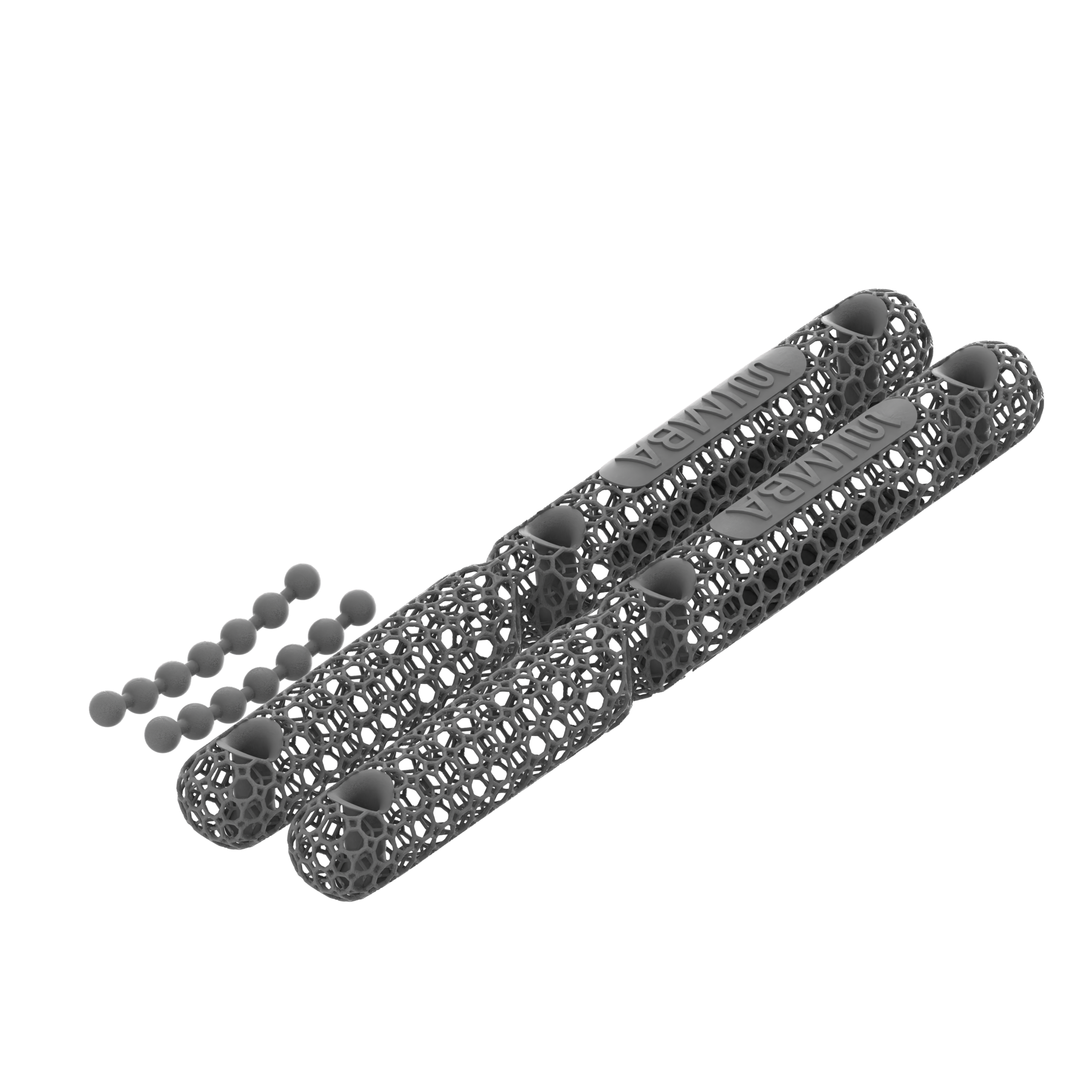
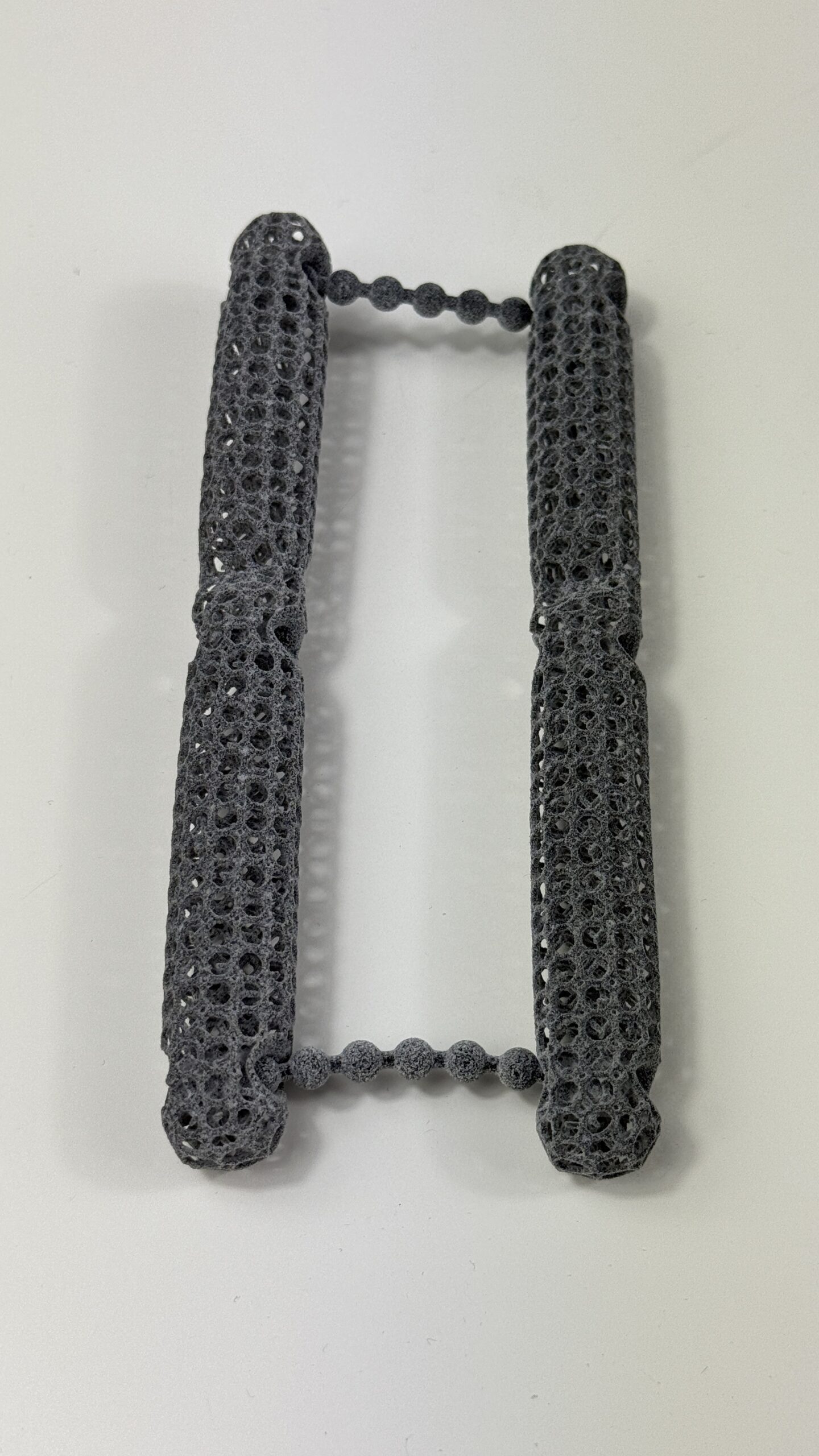
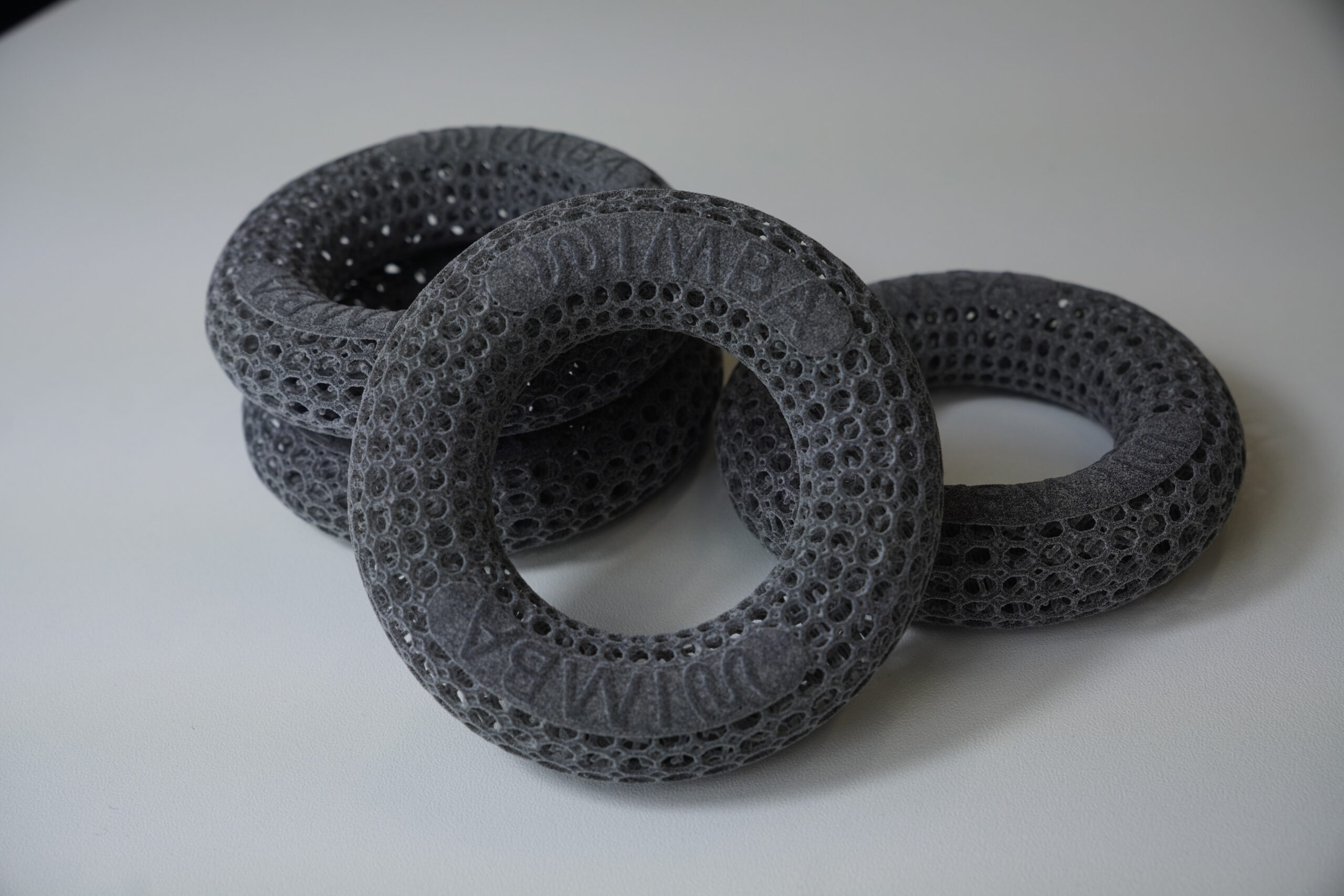
After the required case data pass review, the clinical and design teams translate the prescription and patient geometry into a digital model. The device is manufactured using WIMBA’s additive-manufacturing workflow, assembled with its intended interfaces and closures, quality checked, and shipped to the clinic for professional fitting. Digital production supports repeatability, but it does not eliminate the biological variability that makes veterinary orthotic fitting and follow-up essential.
How long does production take?
Do not promise one universal turnaround. Production and delivery vary with the Go or Pro pathway, device type, case complexity, completeness of submitted materials, design approval, destination, and current capacity. WimbaAPP can be used to track an order. Confirm the current estimate when submitting the case, especially when support is being coordinated with surgery or a time-sensitive rehabilitation plan.
Veterinary Orthotic Fitting and First-Use Checks
The clinic, not the courier box, completes the treatment pathway. At each veterinary orthotic fitting, the team should confirm the patient, device, side, intended joint position, and prescribed configuration before controlled walking begins. A structured veterinary orthotic fitting creates a baseline for later comparisons and gives the owner a supervised opportunity to practise application and removal.
Document these checks at the first fitting:
- Correct limb, orientation, hinge or joint alignment, and component configuration
- Full contact pattern, edge clearance, strap path, and secure suspension without excessive compression
- Device position during standing, controlled walking, turning, sitting, and transitions relevant to the patient
- Skin appearance before use and immediately after the initial supervised trial
- Gait, weight acceptance, rotation, slipping, noise, behavioural response, and the defined functional goal
- Owner competence with application, removal, cleaning, skin checks, and the prescribed wearing schedule
What if the device does not fit correctly?
Stop progression and reassess application, alignment, strap tension, suspension, padding position, contact areas, and movement. Photograph or video the issue according to WIMBA support guidance and document any skin change or gait deterioration. Do not grind, heat, drill, cut, or structurally modify the shell unless WIMBA has provided explicit case-specific instructions. The WIMBA Provider should contact the support team before continued use when a significant fit concern remains.
The appropriate response may be education, configuration correction, an approved adjustment, replacement of a component, design review, repeat data capture, or a new clinical assessment. The cause matters: a manufacturing or design concern is different from oedema reduction, muscle change, growth, weight change, disease progression, or a new wound after the original data were collected.
Owner Management for Veterinary Orthotics and Prosthetics
There is no safe universal instruction to begin with two-hour sessions. Introduction should follow the current device manual and the prescribing professional’s plan, usually beginning with short, controlled, supervised use and increasing only when skin, gait, comfort, and device position remain acceptable. The owner should inspect the entire interface after every early session and continue regular checks throughout use.
Brief, mild pressure marking may need interpretation in context, but persistent redness, heat, swelling, hair loss, abrasion, discharge, pain, new licking, reluctance, rotation, slipping, unusual noise, damaged components, or worsening gait should trigger device removal and contact with the clinic. Prospective complication data make this monitoring a core part of custom veterinary orthotics, not an optional precaution.[9]
Should the device be worn overnight?
Not routinely. WIMBA guidance states that devices should not be used continuously or without supervision. Remove the device for rest, skin recovery, and inspection unless the treating professional has issued a specific plan for a defined post-operative or immobilisation indication. Owners should never independently convert an activity orthosis into a 24-hour device.
How should the device be cleaned?
Follow the product-specific instructions. Current WIMBA guidance recommends removal and cleaning with mild soap and water, followed by rinsing or wiping and complete drying before reapplication. Inspect padding, straps, fasteners, hinges, edges, and the structural shell at the same time. Avoid harsh chemicals, uncontrolled heat, and unapproved lubricants or repairs.
How long will an orthosis or prosthesis last?
Do not use a fixed 12–24 month promise. Service life varies with device type, patient size, activity, surface exposure, care, component wear, growth, body-weight change, muscle or limb-volume change, and disease progression. Replaceable components may wear before the structural body, while intact custom veterinary orthotics may become clinically unsuitable if the patient’s anatomy changes. Device condition and fit should be reviewed periodically by a WIMBA Provider.
Setting Measurable and Honest Outcome Expectations
Define the outcome before ordering. Depending on the diagnosis, a reasonable goal may be improved joint position during stance, reduced collapse in a specific plane, safer controlled exercise, better paw clearance, increased use of a partial limb, protection of a healing area, or improved tolerance of a prescribed activity. Record baseline gait, skin, pain, activity, and owner observations so that change can be evaluated.
Record the agreed goal, permitted activities, baseline photographs, review date, and clear stop criteria in the medical record so every team member gives the owner consistent daily instructions.
Veterinary orthotics and prosthetics do not reverse osteoarthritis, regenerate ligaments, stop neurological disease, guarantee pain relief, or ensure that surgery will never be needed. A positive owner experience does not replace objective assessment, and a device that appears cosmetically intact may require adjustment as the patient changes. Rechecks should compare the current result with the original clinical goal and revise the plan when needed.
For partial-limb prostheses, explain that preserving quadrupedal gait can be possible in selected dogs, but suspension, pressure, skin health, repeated adjustments, rehabilitation, cost, and long-term commitment must be discussed before amputation planning. The evidence base for canine orthotics and prosthetics supports a balanced consent conversation rather than a guaranteed mobility claim.[11][14]
Working with WIMBA
Veterinary professionals can create a WimbaAPP account and order eligible Go devices after credential verification. Access to Pro devices requires the applicable WIMBA Provider pathway, training, and scanning tools. Clinics should review the current provider information because product access, onboarding, equipment, and regional terms may change.
If candidacy or device selection is uncertain, submit the history, diagnosis, relevant imaging, photographs, and clinical question through the current case-consult route before ordering. A consultation supports decision-making but does not transfer responsibility for examination, prescribing, fitting, monitoring, or compliance with local professional rules away from the treating veterinary team.
Prosthetic cases require separate review. WIMBA Prosthetics Pro is intended for eligible partial limbs rather than complete-limb replacement, and current case acceptance or availability may be limited. Confirm anatomy, timing, and service availability before making an amputation plan or financial commitment. For a first complex case, an experienced WIMBA Provider should involve WIMBA early rather than after surgery or wound closure.
Frequently Asked Questions for Veterinary Professionals
Can veterinary orthotics and prosthetics replace surgery?
Not as a general rule. They may provide conservative support in selected diagnosed cases, complement surgery or rehabilitation, or offer an option when surgery is not pursued. The clinical team should not delay recommended surgery or describe an external device as equivalent without indication-specific evidence.
What is the difference between WIMBA Go and WIMBA Pro?
Eligible Go devices use the product-specific manual measurements and photographs submitted through WimbaAPP. Pro devices require the relevant provider pathway, WimbaSCAN equipment, a veterinary-team scan, and any additional case data requested for the device.
Can a pet owner scan the limb and order directly?
No. WimbaAPP and the clinical ordering pathway are intended for veterinary professionals. The veterinary team is responsible for assessment, required measurements or scanning, case submission, fitting, owner instruction, and follow-up.
What should happen during veterinary orthotic fitting?
The clinic should verify orientation and alignment, evaluate all contact areas and suspension, observe controlled movement, compare skin before and after the trial, document gait and behaviour, and teach the owner correct application, removal, monitoring, and care.
Should a brace be worn all day or overnight?
Not unless a qualified professional has prescribed that schedule for a defined indication. Use should begin gradually, remain supervised, and include regular removal for skin inspection and rest. The current device manual and patient-specific prescription take priority.
What skin changes require action?
Persistent redness, heat, swelling, abrasion, hair loss, discharge, pain, or repeated licking should prompt removal and contact with the clinic. Device rotation, slipping, breakage, aversion, or worsening gait also warrants reassessment before use continues.
How do I become a WIMBA Provider?
Create a professional WimbaAPP account for eligible Go orders. For access to Pro devices, complete the current provider onboarding and obtain the required scanning tools. Check the official provider page for current training, equipment, product access, and regional terms.
Medical Disclaimer: This material is intended for veterinary professional education and does not replace patient-specific examination, diagnosis, informed consent, prescribing, or treatment planning. Device selection, fitting, wearing schedules, rehabilitation, and follow-up should be directed by a qualified veterinary professional. Product indications, availability, procedures, and timelines may change; confirm current WIMBA guidance before ordering. No specific clinical outcome is guaranteed.
Scientific References
- Wendland T, Hart J, Mich PM, Moe J. Veterinary orthotics, prosthetics, and assistive devices. In: Zink C, Van Dyke JB, editors. Canine Sports Medicine and Rehabilitation. 2nd ed. Wiley; 2025. doi:10.1002/9781394251452.ch15
- Marcellin-Little DJ, Drum MG, Levine D, McDonald SS. Orthoses and exoprostheses for companion animals. Vet Clin North Am Small Anim Pract. 2015;45(1):167–183. doi:10.1016/j.cvsm.2014.09.009
- Tomlinson JE, Manfredi JM. Evaluation of application of a carpal brace as a treatment for carpal ligament instability in dogs: 14 cases (2008–2011). J Am Vet Med Assoc. 2014;244(4):438–443. doi:10.2460/javma.244.4.438
- Carr BJ, Canapp SO Jr, Meilleur S, Christopher SA, Collins J, Cox C. The use of canine stifle orthotics for cranial cruciate ligament insufficiency. Veterinary Evidence. 2016;1(1). doi:10.18849/ve.v1i1.10
- Bertocci GE, Brown NP, Mich PM. Biomechanics of an orthosis-managed cranial cruciate ligament-deficient canine stifle joint predicted by use of a computer model. Am J Vet Res. 2017;78(1):27–35. doi:10.2460/ajvr.78.1.27
- Torres BT, Fu YC, Sandberg GS, Budsberg SC. Pelvic limb kinematics in the dog with and without a stifle orthosis. Veterinary Surgery. 2017;46(5):642–652. doi:10.1111/vsu.12634
- Hart JL, May KD, Kieves NR, Mich PM, Goh CS, Palmer RH, et al. Comparison of owner satisfaction between stifle joint orthoses and tibial plateau leveling osteotomy for the management of cranial cruciate ligament disease in dogs. J Am Vet Med Assoc. 2016;249(4):391–398. doi:10.2460/javma.249.4.391
- Lee S, Wendland TM, Rao S, Magee C. Orthotic device use in canine patients: owner perception of quality of life for owners and patients. Front Vet Sci. 2021;8:709364. doi:10.3389/fvets.2021.709364
- Rosen S, Duerr FM, Elam LH. Prospective evaluation of complications associated with orthosis and prosthesis use in canine patients. Front Vet Sci. 2022;9:892662. doi:10.3389/fvets.2022.892662
- Muršec A, Pavlović M, Lampe T, Erjavec V. The impact of knee orthoses on lameness and weight distribution in canine after rupture of the cranial cruciate ligament. Animals. 2025;15(4):545. doi:10.3390/ani15040545
- Wendland TM, Seguin B, Duerr FM. Prospective evaluation of canine partial limb amputation with socket prostheses. Vet Med Sci. 2023;9:1521–1533. doi:10.1002/vms3.1146
- Wendland TM, Seguin B, Duerr FM. Retrospective multi-center analysis of canine socket prostheses for partial limbs. Front Vet Sci. 2019;6:100. doi:10.3389/fvets.2019.00100
- Phillips A, Kulendra E, Bishop E, Monk M, Parsons K, House A. Clinical outcome and complications of thoracic and pelvic limb stump and socket prostheses. Vet Comp Orthop Traumatol. 2017;30(4):265–271. doi:10.3415/VCOT-16-09-0127
- Souza MMN, Lima JNG, Menezes DJA, Carvalho LRRA. Impacts of exoprosthesis use in dogs with partial amputation and limb malformations: a systematic review. Front Vet Sci. 2025;12:1699152. doi:10.3389/fvets.2025.1699152