




Traumatic Cervical Spine Injury

Case Study Kacperek: WIMBA Cervical Collar GO
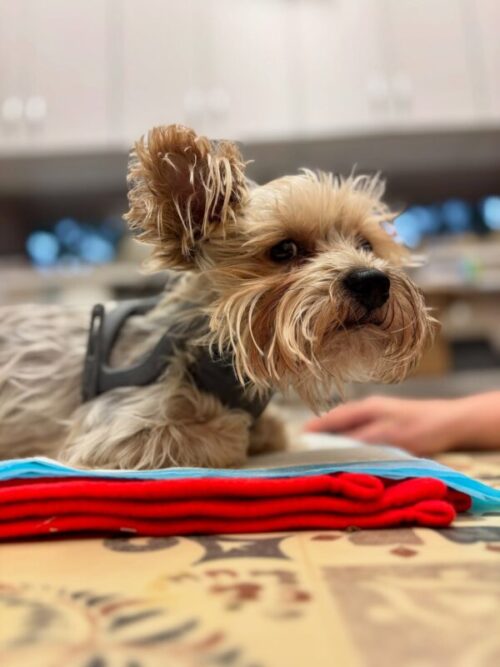
Case presentation
In case study Kacperek, diagnostic imaging revealed fractures of the occipital bone, displacement within the cervical spine, and significant spinal cord compression. Due to the high surgical risk, conservative management was chosen, focusing on stabilization and preventing further injury.

- Name: Kacperek
- Age: 4 years
- Weight: 4 kg
- Breed: Yorkshire Terrier
- Clinic: Puławskie Centrum Weterynaryjne
- Medical Condition: Severe Cervical Spine Trauma
Veterinarian’s Goals
Meet Kacperek supported by WIMBA Cervical Collar Go
Medical Examination
Neurological examination and advanced imaging confirmed extensive injuries involving both the skull and cervical spine. MRI revealed fracture of the occipital bone, cerebellar compression with edema, displacement of the odontoid process, cervical vertebral fractures, and spinal cord compression resulting in secondary myelopathy. Clinical findings included tetraplegia, absent postural reactions, loss of most spinal reflexes, and preserved deep pain sensation.


Therapy and Results
To protect the cervical region and prevent additional spinal cord compression, a WIMBA Cervical Collar was introduced as a key element of the therapy. The device provided essential immobilization while allowing safe handling and ongoing medical care.
With consistent monitoring, rehabilitation support, and strict movement restriction, the patient showed gradual neurological improvement. Over time, Kacperek progressed from complete tetraplegia and inability to bear weight to regaining independent mobility.


Feedback from WIMBA Providers
“Kacperek was presented in a critical condition following a severe neck trauma caused by a larger dog. MRI confirmed extensive injuries involving the occipital region and cervical spine, while neurological examination revealed tetraplegia with preserved deep pain sensation.
In such a challenging case, one of the key priorities was to provide proper cervical stabilization. The WIMBA Cervical Collar helped protect the neck, limit uncontrolled movement, and create safer conditions for ongoing treatment and rehabilitation. This allowed us to continue conservative management with greater confidence for both the patient and the caregiver.
Kacperek remains under close care, receiving laser therapy as well as anti-inflammatory and pain-management treatment. The WIMBA Cervical Collar has become an important part of the overall therapy, helping to protect the injured cervical region during daily handling and recovery. Combined with the exceptional dedication of his caregiver, we are now seeing gradual improvement and a return to greater independence.”

Łukasz Juszkiewicz, DVM, Veterinary Surgeon
Graduate of the Faculty of Veterinary Medicine at the Warsaw University of Life Sciences (SGGW). He completed a clinical internship at the Queen Mother Hospital for Animals, Royal Veterinary College (RVC) in London. Dr. Juszkiewicz has over 9 years of clinical experience gained in one of the leading veterinary clinics in Dubai, UAE, where he worked as a surgeon and consultant at Zabeel Veterinary Clinic. He has also practiced in Sweden at Lapplands Djurklinik and DinVet Katrineholm.
Together with the MVC team, he participated in performing the first total hip replacement surgery in a dog in the United Arab Emirates. He is a member of the Polish Society of Veterinary Orthopaedics and Traumatology (PTOiTW) and the European Society of Veterinary Orthopaedics and Traumatology (ESVOT).
Privately, he is the owner of Cwaniak (dog) and Mini (cat), both adopted.
WIMBA Cervical Collar should be used according to the veterinarian’s medical recommendations; WIMBA is not responsible for misuse or any activities beyond veterinary guidance.
WIMBA Case Studies & Reports
See How WIMBA Cervical Collar Supports Neck Stabilization and Recovery
About WIMBA Providers
Puławskie Centrum Weterynaryjne is a modern veterinary clinic in Puławy, offering advanced diagnostics and treatment with a strong focus on orthopedics, surgery, physiotherapy, and imaging. Founded by veterinarians with international clinical experience, the clinic combines high medical standards with an individualized approach to patient care.

Think Your Dog Might Have a Similar Condition? Let’s See How We Can Help
Submit Your Pet’s Details to See If WIMBA Can Help
If your dog is experiencing a similar issue, we’re here to support you. Fill out a short form to tell us more about your pet’s case — including your contact details and your vet’s information. Our team will review it and let you know how we can help you and your pet. It’s the first step toward restoring your dog’s comfort and mobility.