 Skip to content

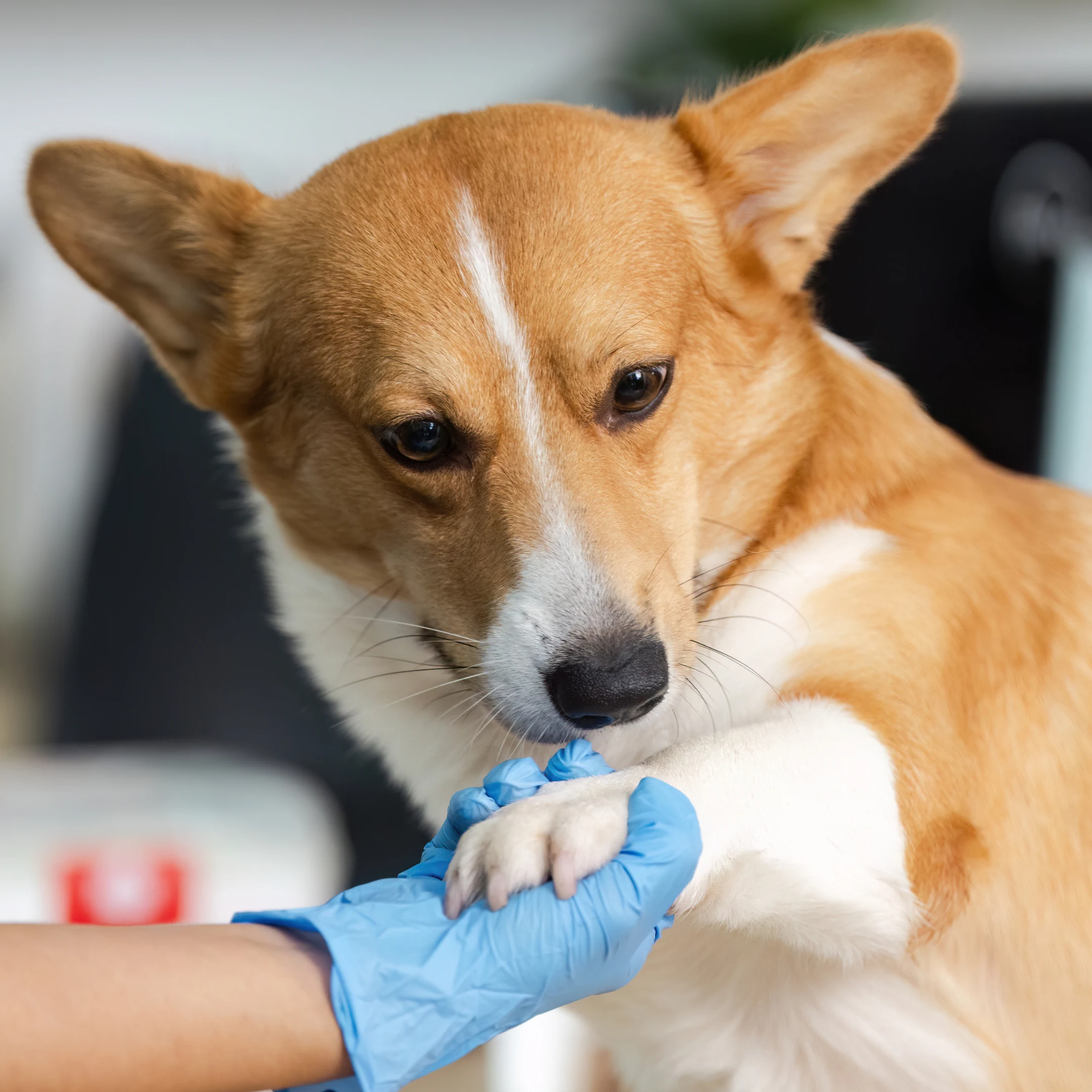
Medial shoulder instability in dogs is a soft-tissue condition in which the inner stabilizers of the shoulder no longer control movement normally. It may cause recurring dog shoulder lameness, reduced reach, discomfort after activity, or a subtle change in how the paw and limb move. These signs overlap with several other shoulder and neurological conditions, so appearance alone cannot confirm the diagnosis.
A reliable assessment of medial shoulder instability in dogs combines history, gait observation, a focused orthopedic examination, and selected imaging or arthroscopy. The appropriate shoulder instability treatment depends on the structures affected, the degree of laxity, the dog’s activity demands, and its response to rehabilitation. This guide explains the evidence, the limits of each test, and an important product distinction: WIMBA does not currently manufacture a shoulder-specific orthosis.
What Is Medial Shoulder Instability in Dogs?
The canine shoulder, or scapulohumeral joint, is a ball-and-socket joint with substantial mobility. Unlike a deeply constrained joint, it relies heavily on muscles, tendons, ligaments, the joint capsule, and normal neuromuscular control for stability. On the inner side of the shoulder, the medial glenohumeral ligament, subscapularis tendon, and adjacent capsule contribute to restraint against excessive abduction. Because medial shoulder instability in dogs describes a functional problem, the exact damaged structure can differ from patient to patient.
Medial shoulder instability in dogs develops when these stabilizing tissues are damaged, stretched, or functionally insufficient. The joint can then open too far toward the body during testing or move abnormally under load. The term canine shoulder instability describes the mechanical problem, but it does not identify one universal lesion. Arthroscopy may reveal injury to the medial glenohumeral ligament, subscapularis tendon, capsule, or more than one structure.
Instability also varies in direction. Medial instability is most frequently discussed, but lateral and multidirectional patterns have been reported. In a retrospective cohort of 130 dogs with shoulder instability, 23% had lateral or multidirectional rather than purely medial instability.[4] This is one reason a general label such as “shoulder sprain” is not enough to plan care.
How the Medial Shoulder Becomes Unstable
Some dogs develop signs after a clear traumatic event, such as a slip, collision, or awkward landing. In others, the history suggests repeated loading over time rather than one identifiable accident. In a 2024 survey of veterinary surgery and sports-medicine specialists, 56.4% of respondents considered chronic or repetitive strain the likely cause of medial shoulder syndrome or instability.[2] That survey reports professional opinion, not proof that repetitive strain caused every case.
Active dogs may be exposed to rapid turns, repeated jumping, abrupt deceleration, or uneven footing. However, medial shoulder instability in dogs is not limited to athletes, and activity history cannot establish the diagnosis. Age-related tissue change, previous injury, deconditioning, body weight, limb conformation, and another painful joint may influence loading. A suspected medial shoulder ligament injury must therefore be evaluated in the context of the whole patient.
The distinction between an acute soft-tissue injury and chronic canine shoulder instability matters. Rest may settle pain after a minor strain, but persistent laxity can require a structured rehabilitation or surgical plan. Conversely, recurring pain does not automatically mean the joint is unstable. Biceps tendon disease, osteochondritis dissecans, osteoarthritis, muscle injury, elbow disease, neck pain, and nerve disorders can create similar signs to medial shoulder instability in dogs.
Signs That May Suggest a Shoulder Problem
The signs of medial shoulder instability in dogs can be intermittent or persistent. Owners may first notice dog shoulder lameness after exercise, a shorter step on one front limb, reduced willingness to turn sharply, or hesitation before jumping into a vehicle. Some dogs appear improved after rest and become lame again when activity increases.
Arrange a veterinary assessment if you notice:
- A front limb limp that persists, recurs, or worsens after activity
- A shortened front limb stride or reduced forward reach
- Reluctance to turn, jump, climb, play, or continue a normal walk
- Visible loss of muscle around one shoulder
- Pain when the shoulder is extended or moved away from the body
- A new paw position or outward swing that accompanies lameness
None of these observations is specific to medial shoulder instability in dogs. A dog that paddles the limb or rotates the paw outward does not have a confirmed medial shoulder ligament injury on that basis. Keeping a brief record of dog shoulder lameness can help the veterinarian identify patterns. Sudden inability to bear weight, major trauma, marked swelling, severe pain, progressive weakness, or signs of illness warrant prompt veterinary care.
How Medial Shoulder Instability Is Diagnosed
Diagnosis begins by locating the source of pain. The veterinarian observes the dog at a walk and, when appropriate, at a trot, then compares muscle mass, joint motion, pain responses, and neurological function. The neck, elbow, carpus, paw, and opposite limb also matter. A diagnosis of medial shoulder instability in dogs should explain the clinical pattern and be supported by findings that distinguish it from other causes of front limb lameness.
Shoulder abduction angle
With the dog relaxed or sedated, the clinician can compare how far each shoulder abducts. A 2005 study found significantly greater abduction angles in shoulders with clinically and arthroscopically diagnosed medial instability than in normal shoulders.[1] Measurement technique, patient positioning, body size, muscle tension, and bilateral disease can affect interpretation.
The test is useful but should not be treated as a stand-alone answer. In the 2024 specialist survey, 78% of respondents used abduction angles, while many rated the test only questionable or somewhat accurate.[2] A 2026 study comparing dogs with arthroscopically confirmed disease found that bilateral abduction-angle assessment using the opposite shoulder as a reference had greater diagnostic sensitivity than MRI in that study sample.[3] The result supports careful comparative examination, not a universal numeric cut-off for every dog.
Imaging and arthroscopy
Radiographs cannot show every ligament or tendon lesion directly, but they can identify bone and joint changes and help rule out other diagnoses. Musculoskeletal ultrasound can assess selected tendons and soft tissues in experienced hands. MRI provides cross-sectional soft-tissue information, although image quality, protocol, equipment, and lesion type influence what is detected. The same 2026 study found that MRI did not identify every arthroscopically confirmed case of medial shoulder instability in dogs.[3]
Arthroscopy lets the surgeon inspect internal joint structures and may allow treatment during the same procedure. It is more invasive than an examination or imaging study, so its value must be weighed against anesthesia, cost, and the question being asked. In difficult cases of canine shoulder instability, referral to a clinician experienced in shoulder disease can help integrate the examination, imaging, and functional findings.
Treatment Is Based on Severity and Function
There is no single protocol for medial shoulder instability in dogs. The shoulder instability treatment plan may be conservative, surgical, or staged. Important factors include the tissues involved, direction and degree of instability, duration of signs, pain, body condition, other orthopedic or neurological disease, and the level of function the dog needs.
The evidence does not support a guarantee that every mild case of medial shoulder instability in dogs will recover without surgery or that every surgical case will return to unrestricted activity. Published studies use different diagnostic criteria, operations, rehabilitation programs, and outcome measures. Many are retrospective and lack a randomized comparison group. Owners should therefore discuss the expected benefit, limitations, risks, and reassessment point for the individual dog.
Conservative management and rehabilitation
A clinician-directed conservative plan may include temporary activity restriction, controlled leash exercise, weight management, pain relief, and progressive rehabilitation. Rehabilitation can address trunk and limb control, comfortable range of motion, strength, balance, and a gradual return to the activities that matter to the patient. Exercise selection should change as pain and control improve. Repeated slipping, jumping, tight turns, and uncontrolled play may be limited during early recovery.
In the 2024 survey, 86.9% of respondents preferred rehabilitation first, with surgery for unresponsive cases.[2] That finding describes specialists’ recommendations rather than proving that one sequence is best for all patients. The response of medial shoulder instability in dogs should be measured with agreed outcomes, such as lameness frequency, comfortable walk duration, muscle symmetry, strength, and performance of defined daily activities.
Medication, injections, or other interventions should be selected by the treating veterinarian for a defined indication. Pain relief can improve comfort but does not prove that instability has resolved. Any plan for a suspected medial shoulder ligament injury needs a scheduled review, especially if lameness returns when activity increases.
Surgical stabilization
Surgery may be considered for marked instability, a confirmed structural lesion, persistent functional limitation, or an inadequate response to an appropriate conservative program. Techniques include capsular tightening, radiofrequency-induced thermal capsulorrhaphy, reconstruction with a prosthetic ligament, and newer video-assisted procedures. The operation and postoperative restriction depend on the surgeon’s findings and the affected structures. The shoulder instability treatment pathway should also define how recovery will be measured.
Retrospective evidence suggests that selected dogs can improve. In the 130-dog cohort, dogs with medial instability treated by reconstruction were more likely to have a successful outcome than those managed nonsurgically, but treatment was not randomized.[4] In another retrospective series, 30 of 39 dogs regained full function and nine regained acceptable function after extracapsular prosthetic-ligament stabilization. Six dogs had complications, all of which were treated successfully.[5]
Earlier work reported improvement after radiofrequency-induced thermal capsulorrhaphy, but the study was retrospective and had no untreated comparison group.[6] A 2025 report of video-assisted ligamentoplasty described excellent recovery in five dogs and good recovery in one, with no complications in six cases.[7] The very small series is promising, but it cannot establish how the technique compares with other operations or conservative care.
Can a Shoulder Brace Correct the Instability?
The shoulder is harder to control externally than the carpus, tarsus, or stifle because it lies close to the chest and moves through several planes. A generic wrap may influence motion or remind an owner to restrict activity, but that does not show that it stabilizes the injured tissues. There is not enough clinical trial evidence to claim that an off-the-shelf shoulder brace repairs medial shoulder instability in dogs or replaces indicated surgery.
WIMBA does not currently manufacture a shoulder-specific orthosis. Its published WIMBA Orthotics Pro range provides custom carpal, tarsal, and stifle support, not a device for canine shoulder instability. The 3D scanning and multiplanar features of WIMBA Pro should not be interpreted as a pathway for ordering a shoulder device.
A veterinary professional can submit a case for clinical review when a dog has a separate need at a currently supported joint or when product eligibility needs confirmation. Review does not guarantee that a device can be manufactured. For medial shoulder instability in dogs, decisions should remain focused on diagnosis, rehabilitation, activity management, and surgery where indicated.
Monitoring Recovery and Return to Activity
Recovery should be progressed against observable criteria rather than a calendar alone. Useful measures include the frequency and severity of dog shoulder lameness, comfort after rest, stride length, muscle mass, tolerance of controlled walking, and the quality of specific exercises. A short video recorded on the same surface and from the same angles can help the clinical team compare movement between visits.
A dog may look comfortable during a brief walk but become lame later that day or the next morning. Owners should record delayed responses as well as what happens during exercise. If a planned increase leads to recurring pain, shorter strides, reluctance, or compensatory loading of another limb, return to the previous tolerated level and contact the treating team.
Following surgery, restrictions and progression must follow the surgeon’s protocol. Following conservative care, the veterinarian or rehabilitation professional should still define when running, jumping, sharp turns, sport training, or off-leash play can resume. A successful shoulder instability treatment plan aims for sustainable function, not simply one good day without an obvious limp.
Questions to Ask the Veterinary Team
- Which findings localize the problem to the shoulder rather than the neck, elbow, or paw?
- Is instability present in one direction or more than one?
- Which structure is suspected to be injured, and would imaging or arthroscopy change the plan?
- What are the goals and review criteria for conservative care?
- What evidence, limitations, and complications apply to the proposed operation?
- Which activities are allowed now, and what milestones must be met before progression?
- Which changes require an earlier recheck?
Clear answers help owners understand whether the working diagnosis is a medial shoulder ligament injury, a different soft-tissue problem, or another source of lameness. They also make it easier to judge whether medial shoulder instability in dogs is responding to the prescribed plan.
Start With a Veterinary Diagnosis
Recurring front limb lameness deserves an examination even when it is mild or intermittent. Early assessment can identify pain, exclude urgent causes, and determine whether shoulder testing or referral is appropriate. This is the safest starting point when medial shoulder instability in dogs is suspected. If your dog needs evaluation, use the WIMBA Provider Map to find a veterinary professional. Clinics can review the current WIMBA orthosis range or submit a documented case when a supported-joint question remains.
Frequently Asked Questions About Medial Shoulder Instability in Dogs
What is medial shoulder instability in dogs?
Medial shoulder instability in dogs is abnormal laxity involving the inner stabilizers of the shoulder. The medial glenohumeral ligament, subscapularis tendon, capsule, or several tissues may be involved. It can cause pain and altered movement, but a clinical assessment is needed because other conditions can look similar.
What signs should owners watch for?
Possible signs include recurring dog shoulder lameness, a shorter front limb stride, reduced reach, reluctance to turn or jump, pain after exercise, and shoulder muscle loss. These signs are not diagnostic. Sudden non-weight-bearing lameness, major trauma, severe pain, or progressive weakness needs prompt veterinary attention.
How is canine shoulder instability diagnosed?
Diagnosis combines history, gait and orthopedic examination, comparative shoulder abduction testing, and selected imaging. Radiographs help assess bones and other joint changes. Ultrasound or MRI may add soft-tissue information, while arthroscopy allows direct inspection. No single finding should be interpreted without the complete clinical picture.
Can medial shoulder instability improve without surgery?
Some dogs may improve with activity modification, pain management, weight control, and structured rehabilitation. The chance of success depends on lesion severity, function, duration, and the patient’s needs. Lack of improvement or marked instability may lead the veterinarian to discuss surgery. Reassessment is essential.
When is surgery considered?
Surgery may be considered when a dog has substantial laxity, a confirmed structural lesion, ongoing functional limitation, or an inadequate response to conservative care. The selected shoulder instability treatment should reflect the affected structures, surgeon’s findings, likely benefits, complications, and postoperative rehabilitation requirements.
Can a shoulder brace fix the condition?
A brace does not repair a damaged ligament or prove that abnormal shoulder motion is controlled. Evidence is insufficient to claim that a generic shoulder wrap corrects medial shoulder instability in dogs. External support should not delay diagnosis, prescribed rehabilitation, or surgery when surgery is indicated.
Does WIMBA make a shoulder orthosis?
No. WIMBA’s current published orthosis range supports the carpus, tarsus, and stifle. It does not include a shoulder-specific device for a medial shoulder ligament injury. A case consultation can clarify eligibility for a separate supported-joint need, but it does not guarantee product availability.
Medical Disclaimer: All information on this website is intended for instruction and information purposes only. The authors are not responsible for any harm or injury that may result. Significant injury risk is possible if you do not seek suitable professional advice about your patient’s specific situation. No guarantees of specific results are expressly made or implied on this website.
Scientific References
- Cook JL, Renfro DC, Tomlinson JL, Sorensen JE. Measurement of angles of abduction for diagnosis of shoulder instability in dogs using goniometry and digital image analysis. Vet Surg. 2005;34(5):463–468. doi:10.1111/j.1532-950X.2005.00070.x
- Rocheleau PJ, Dycus D, Lotsikas PJ, Robson A. Internet-based survey on diagnosis and treatment recommendations for medial shoulder syndrome and instability in dogs. Can Vet J. 2024;65(8):781–790. PMCID: PMC11265817
- Berg JA, Sævik BK. Diagnostic value of abduction angle and magnetic resonance imaging in dogs with arthroscopically confirmed medial shoulder instability. Can Vet J. 2026;67(5):546–552. PMID: 42095164
- Franklin SP, Devitt CM, Ogawa J, Ridge P, Cook JL. Outcomes associated with treatments for medial, lateral, and multidirectional shoulder instability in dogs. Vet Surg. 2013;42(4):361–364. doi:10.1111/j.1532-950X.2013.01110.x
- O’Donnell EM, Canapp SO Jr, Cook JL, Pike F. Treatment of medial shoulder joint instability in dogs by extracapsular stabilization with a prosthetic ligament: 39 cases (2008–2013). J Am Vet Med Assoc. 2017;251(9):1042–1052. doi:10.2460/javma.251.9.1042
- Cook JL, Tomlinson JL, Fox DB, Kenter K, Cook CR. Treatment of dogs diagnosed with medial shoulder instability using radiofrequency-induced thermal capsulorrhaphy. Vet Surg. 2005;34(5):469–475. doi:10.1111/j.1532-950X.2005.00071.x
- Hebrard L, Copet A, Blondel M, Cachon T. Video-assisted ligamentoplasty effectively treats medial shoulder instability in dogs: a retrospective study of 6 cases. Am J Vet Res. 2025;86(8):ajvr.24.12.0388. doi:10.2460/ajvr.24.12.0388